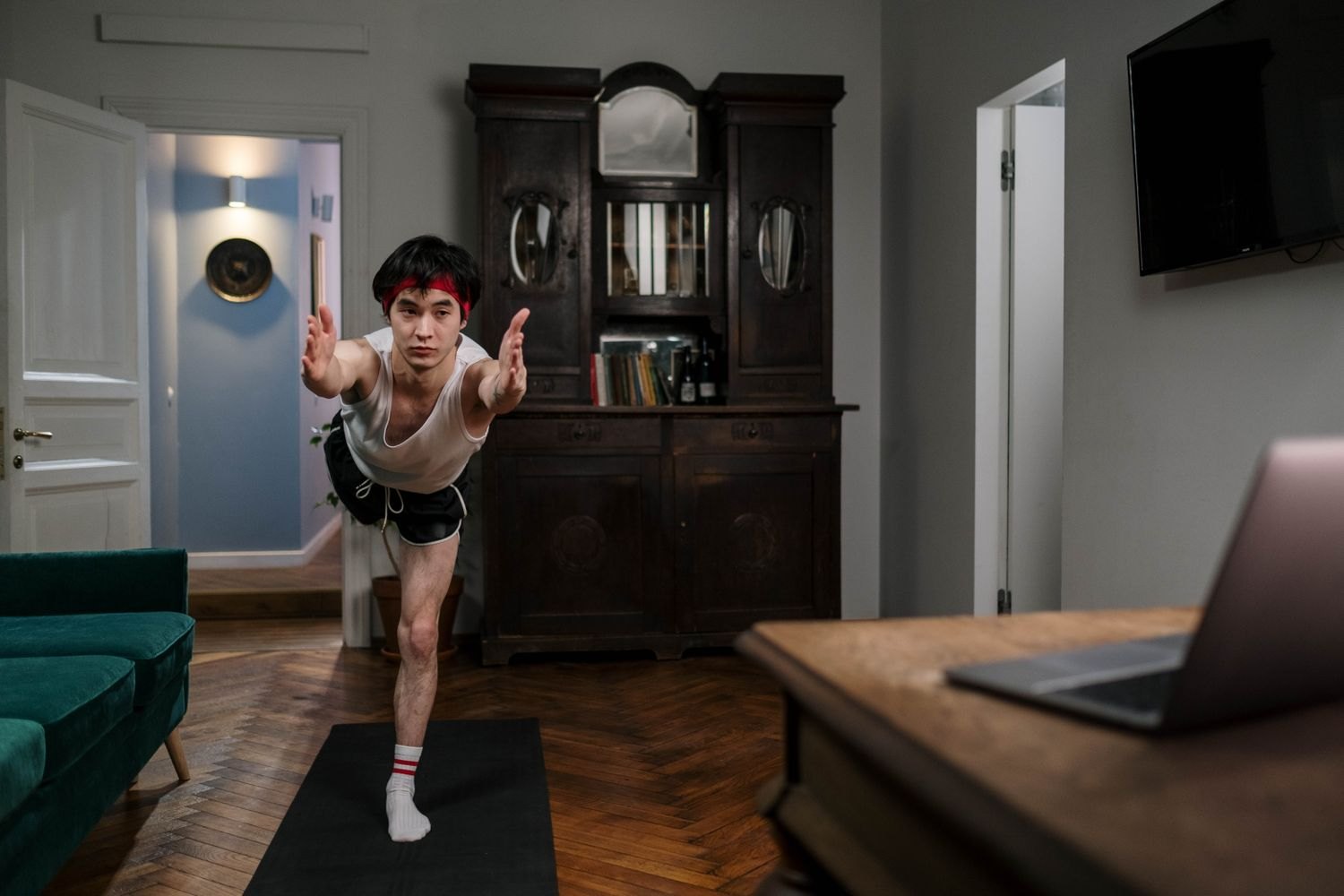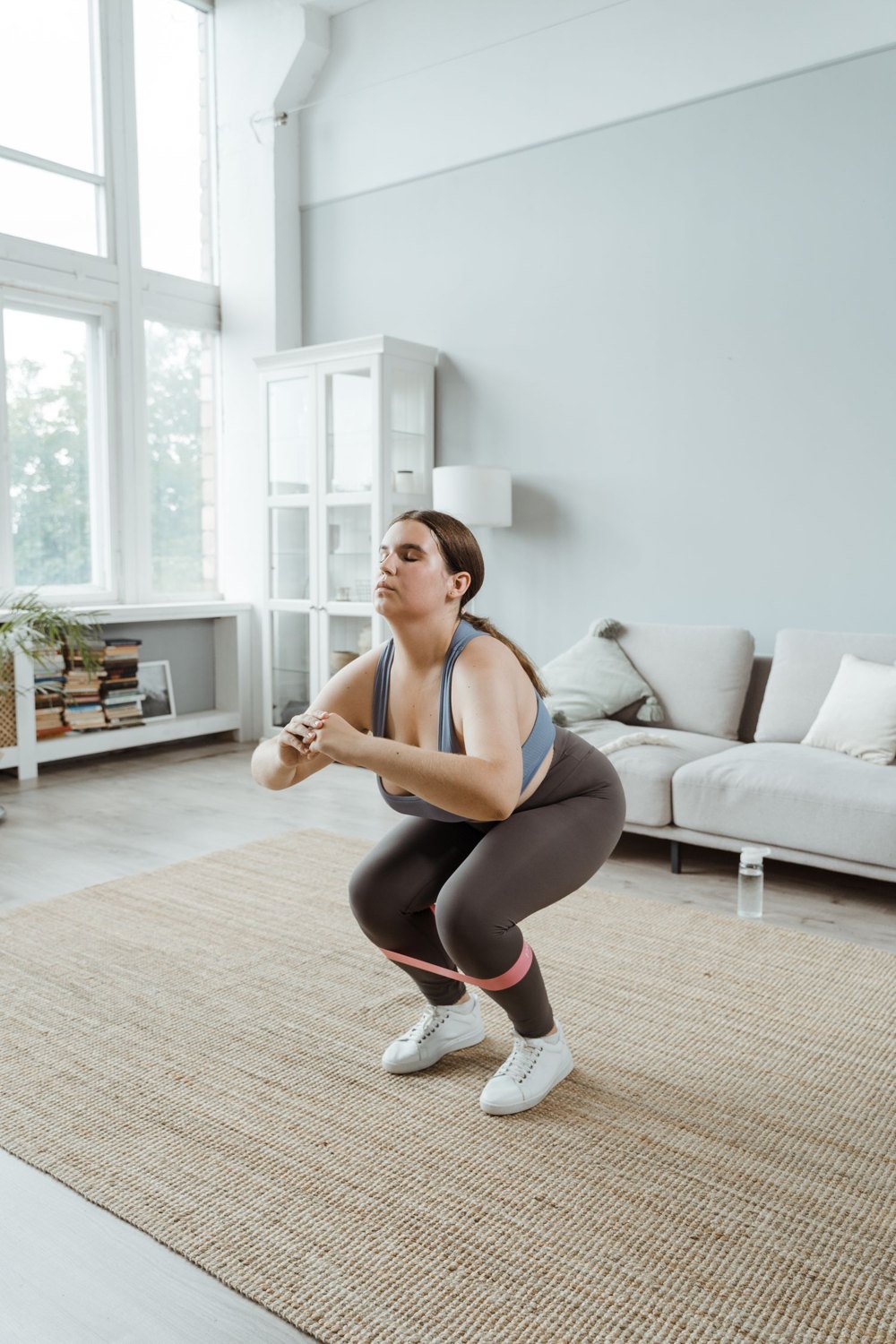
A circuit is simply a sequence of exercises. It does not have to be a race from one position to the next. At home, where a mat, weight and chair may share a small area, the transition often deserves as much planning as the exercise.
Choose a short list of movements you already understand. Grouping similar positions can reduce unnecessary trips to the floor: standing movements first, then floor work, for example. Another option is to complete all the sets of one exercise before moving on. The circuit format is useful only if it makes the session easier to carry out.
Walk through the empty version
Rehearse the sequence without weights. Notice where you will stand, where you will put equipment down and which way you will turn. If the next exercise begins where the previous weight is resting, change the layout now. A clear route is more valuable than a tightly packed arrangement.
Add a transition period long enough for a controlled change. That may mean setting a separate rest interval on a timer or ignoring the timer until you are ready. Use a sound that tells you to check the next step, not a command to abandon a movement halfway through it.
For exercises performed on both sides, decide whether each side has its own place in the sequence. Otherwise, it is easy to finish one side, hear a beep and move on. A simple note with left and right written separately can prevent that mistake without turning the routine into a complicated chart.
Keep equipment changes modest. A circuit that requires adjusting a dumbbell, installing a band anchor and moving a bench between exercises may be poorly suited to a short session. Use compatible loads and familiar setups, or allow proper breaks to make those changes.
Let effort settle before the next task
If breathing is too hurried to organize the next movement comfortably, rest. Fatigue is not a reason to rush a transition, particularly one involving balance or getting up from the floor. Choose easier variations or fewer rounds when the sequence repeatedly becomes untidy.
After the first round, make one useful adjustment. You might move the bottle away from your turning foot or allow more time before floor work. Finish with enough attention to put the equipment away. A circuit that works well at home should leave the space organized, not scattered with the evidence of trying to keep up.