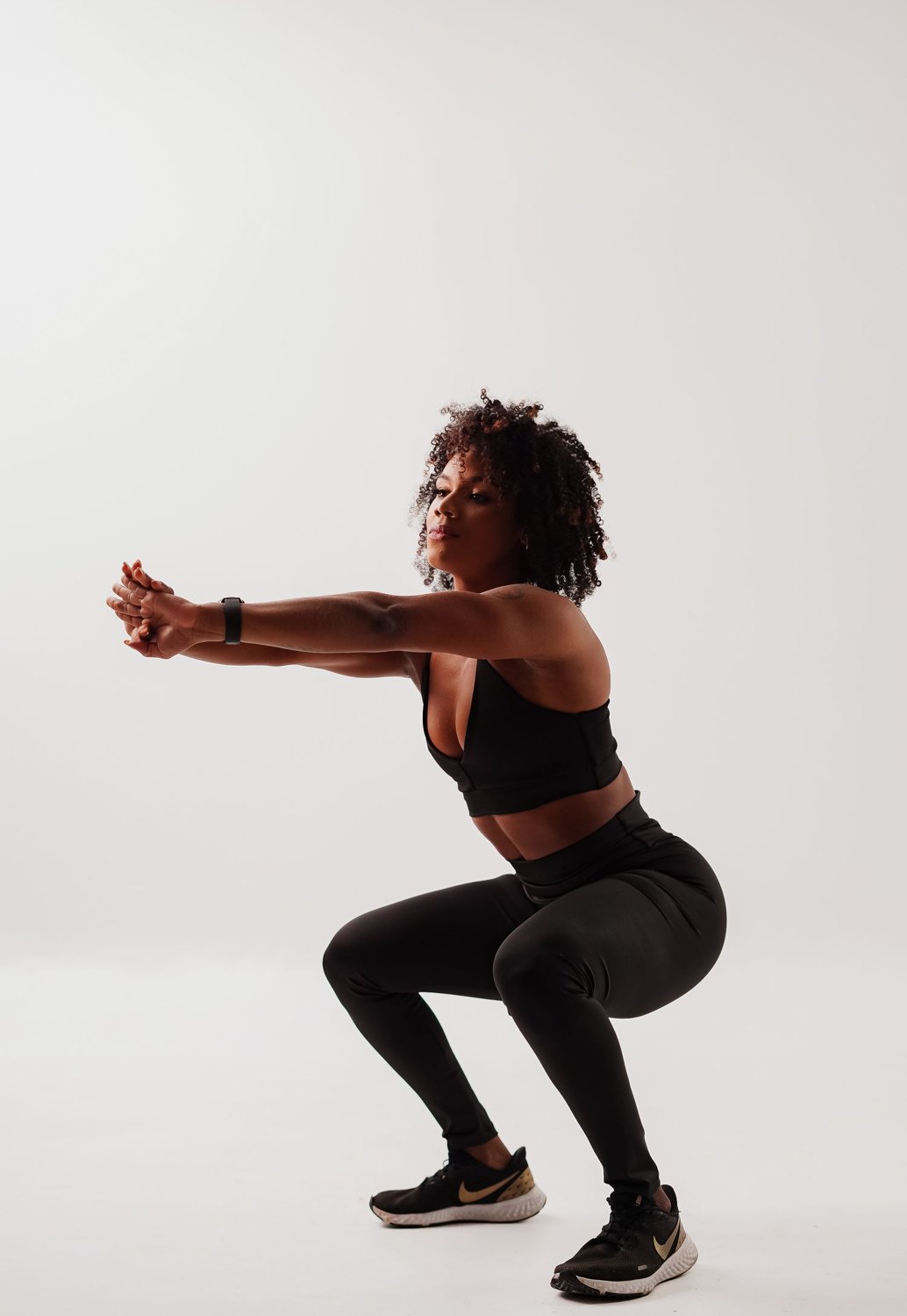
Two people can perform comfortable squats and produce noticeably different silhouettes. One keeps a relatively upright torso; another leans farther forward. One turns the feet out slightly more. Those differences are not, by themselves, evidence that someone needs correcting.
A squat asks the hips, knees and ankles to share movement while you stay balanced over your feet. Limb proportions, available movement, footwear and the position of a load all influence the result. Copying a photograph precisely can make the exercise less comfortable rather than more accurate.
Start without added weight. Choose a stance that gives you room to bend your knees and hips, then lower only as far as you can return with control. Let your knees move in a direction that feels compatible with your feet. Avoid forcing the toes perfectly forward simply because a demonstration uses that position.
Change one thing at a time
If the movement feels crowded, a small adjustment in stance width or toe angle may help. Try one change, repeat a few easy movements and compare. Making the stance wider, turning the feet farther out and moving onto a different shoe all at once makes it difficult to learn which change mattered.
A stable chair or exercise box behind you can provide a repeatable depth reference. Use a height that is accessible, and lower deliberately rather than dropping onto the seat. It is reasonable to start higher. A lower box is not automatically a better exercise, especially if reaching it makes you lose balance or changes the task into a backward fall.
The familiar instruction to keep the knees behind the toes can also be misleading when treated as an absolute rule. Knee travel depends on the squat and the person. Deliberately holding the knees back may simply shift more movement elsewhere. If you are unsure about your pattern, ask a qualified trainer to observe several light repetitions instead of trying to enforce one isolated angle.
Compare like with like
Keep your own setup reasonably consistent while learning. A front-held weight and a weight across the upper back change the demands; a deeper repetition with a lighter load is not directly comparable to a shallow heavy repetition.
Useful checks are more ordinary than matching a textbook outline: your feet remain secure, the descent is controlled, you can return without a scramble and the exercise does not cause pain. A coach may adapt those checks to your circumstances. The aim is a squat you can understand and repeat, with a range and load suited to the work you intend to do.