Wet shoes beside a heater seem like an obvious shortcut. The problem is that strong heat can affect materials and construction in ways that are not obvious until later. Use the footwear maker’s drying guidance, and favor gentle airflow over an improvised high-temperature treatment.
Remove the laces and removable insoles if the instructions allow it. Open the tongue to expose the interior and clear loose dirt before it dries into hard deposits. Keep the shoes somewhere ventilated at an ordinary room temperature, away from direct heat sources. REI’s boot-care advice recommends drying without heaters or other intense heat.
Help air reach the damp areas
Position the shoes so air can circulate rather than pressing them together in a closed cupboard. A suitable fan can move air without heating the material. If the manufacturer permits absorbent paper inside, replace it as it becomes damp instead of leaving a saturated wad in place.
Do not put footwear into a dryer or washing machine unless the maker explicitly allows it. Different uppers, membranes, adhesives, and leather treatments have different needs. A cleaning method that worked for a fabric sneaker may be inappropriate for a hiking boot.
Allow the insoles and laces to dry separately where applicable. The shoe can feel dry outside while the interior remains damp. Check before storing it, especially around the toe and beneath the insole. A closed bag should be for transporting wet shoes briefly, not for completing the drying process.
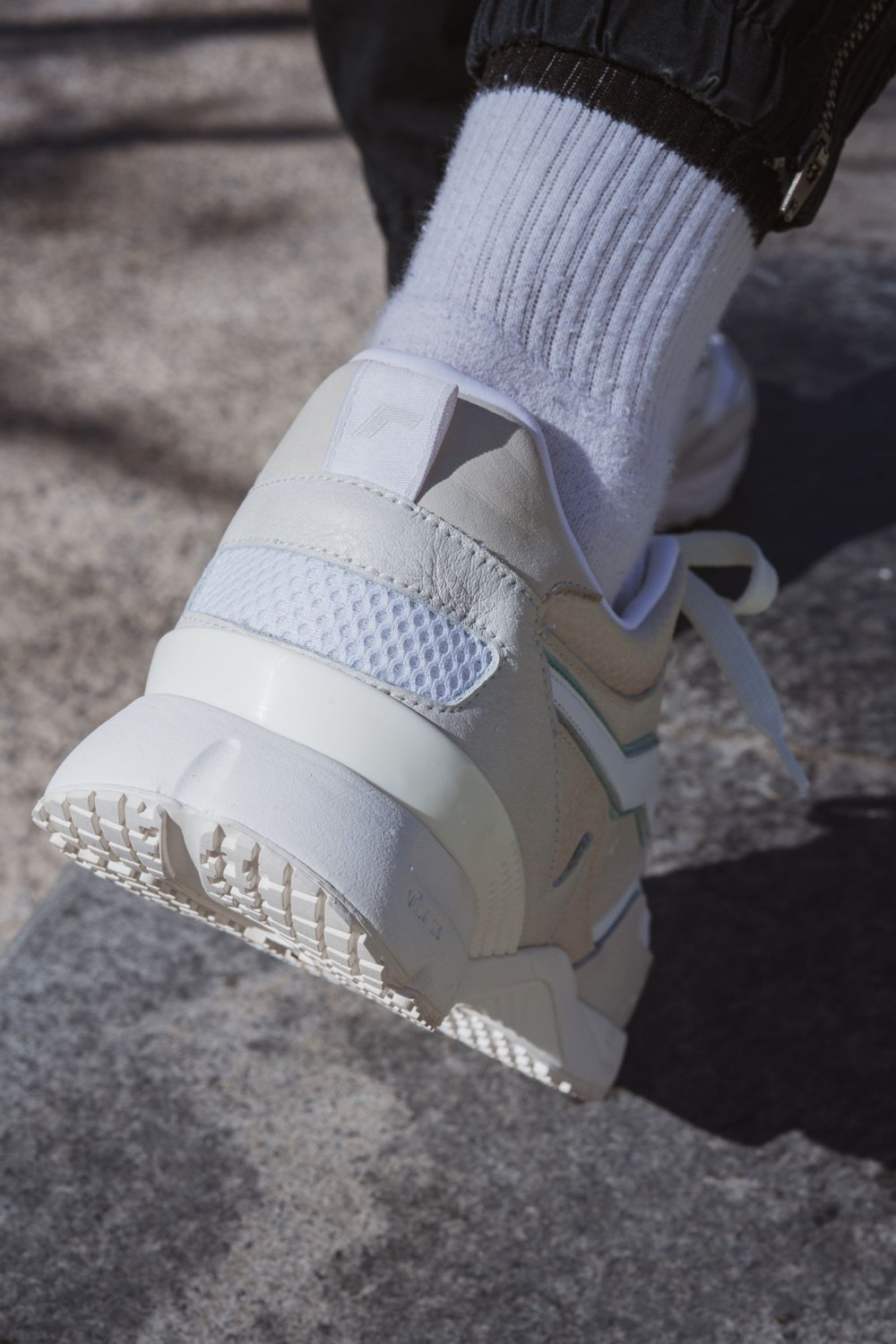
Use the pause to inspect the sole, seams, and upper. Remove lodged stones carefully and look for separation or damage. If water repeatedly enters at a particular spot, investigate the cause rather than assuming that every wet interior means the waterproofing has failed; moisture can also enter over the collar or come from sweat.
For frequent wet outings, having enough time between uses may matter more than buying a stronger drying device. Plan cleaning after the walk rather than moments before the next one. If the shoes are still damp when you need them, choose another suitable pair or adjust the outing.
Gentle drying is not an exciting maintenance task, but it respects the materials. The goal is footwear that is ready for another walk without having traded one wet afternoon for avoidable damage from an impatient drying method.