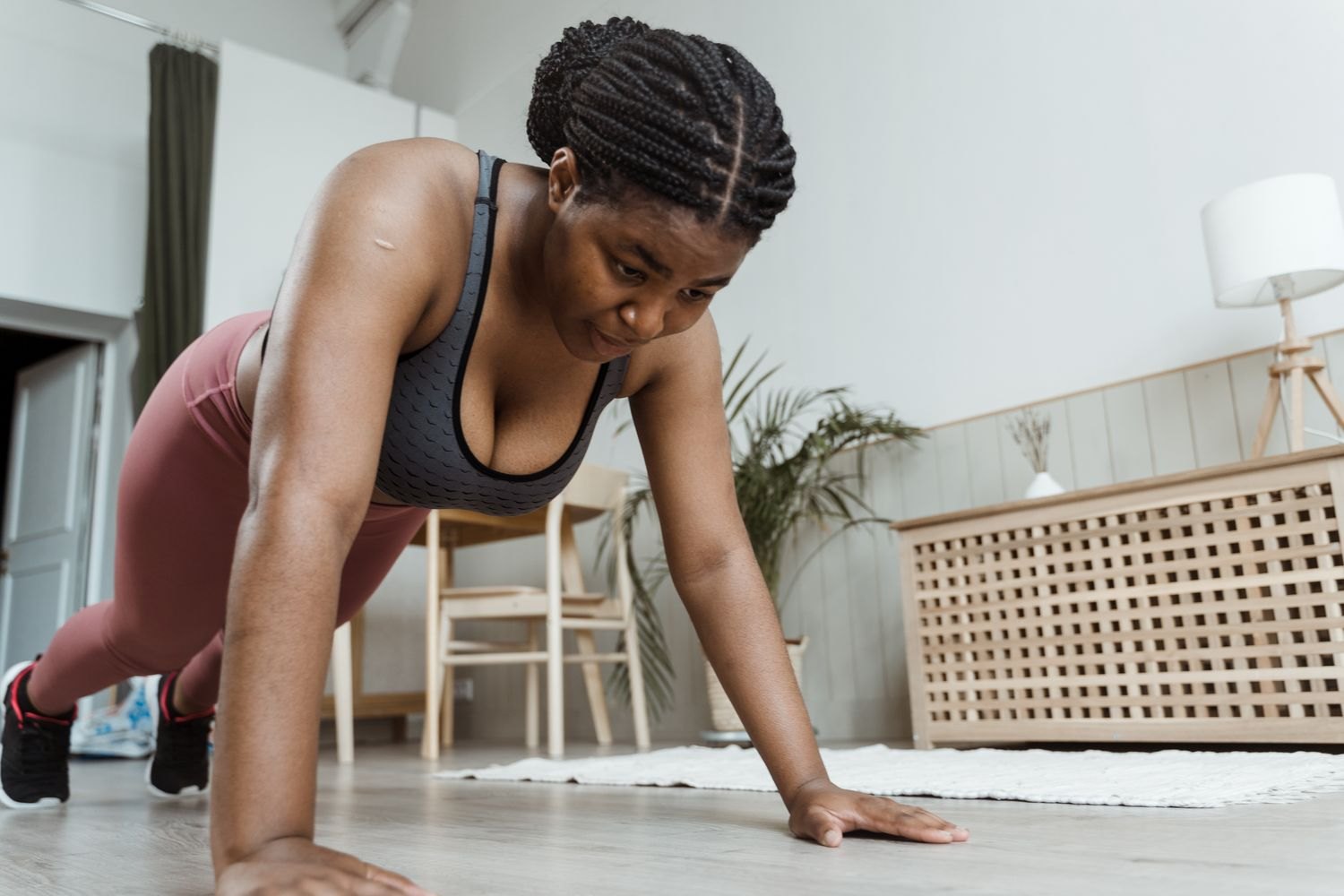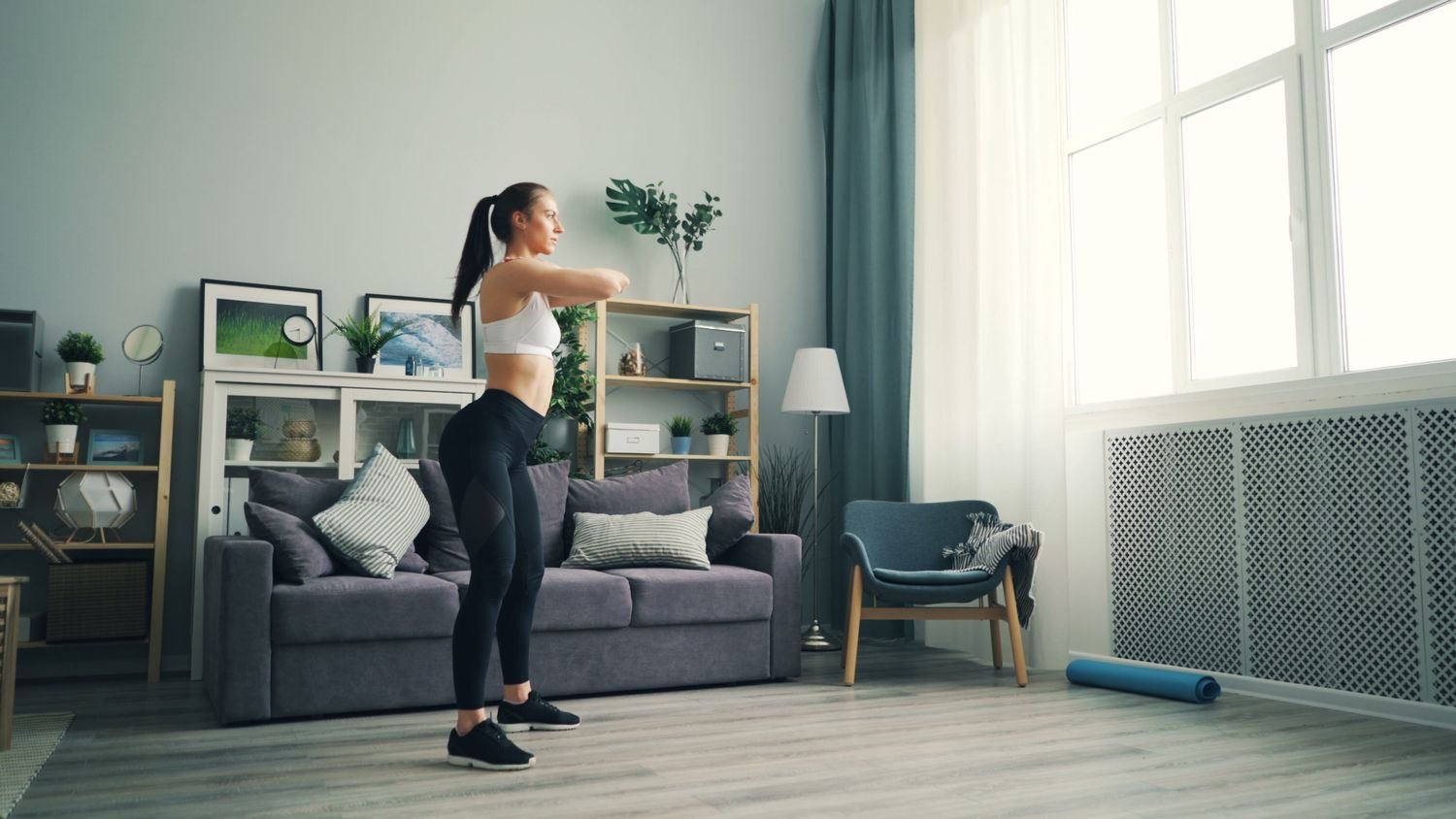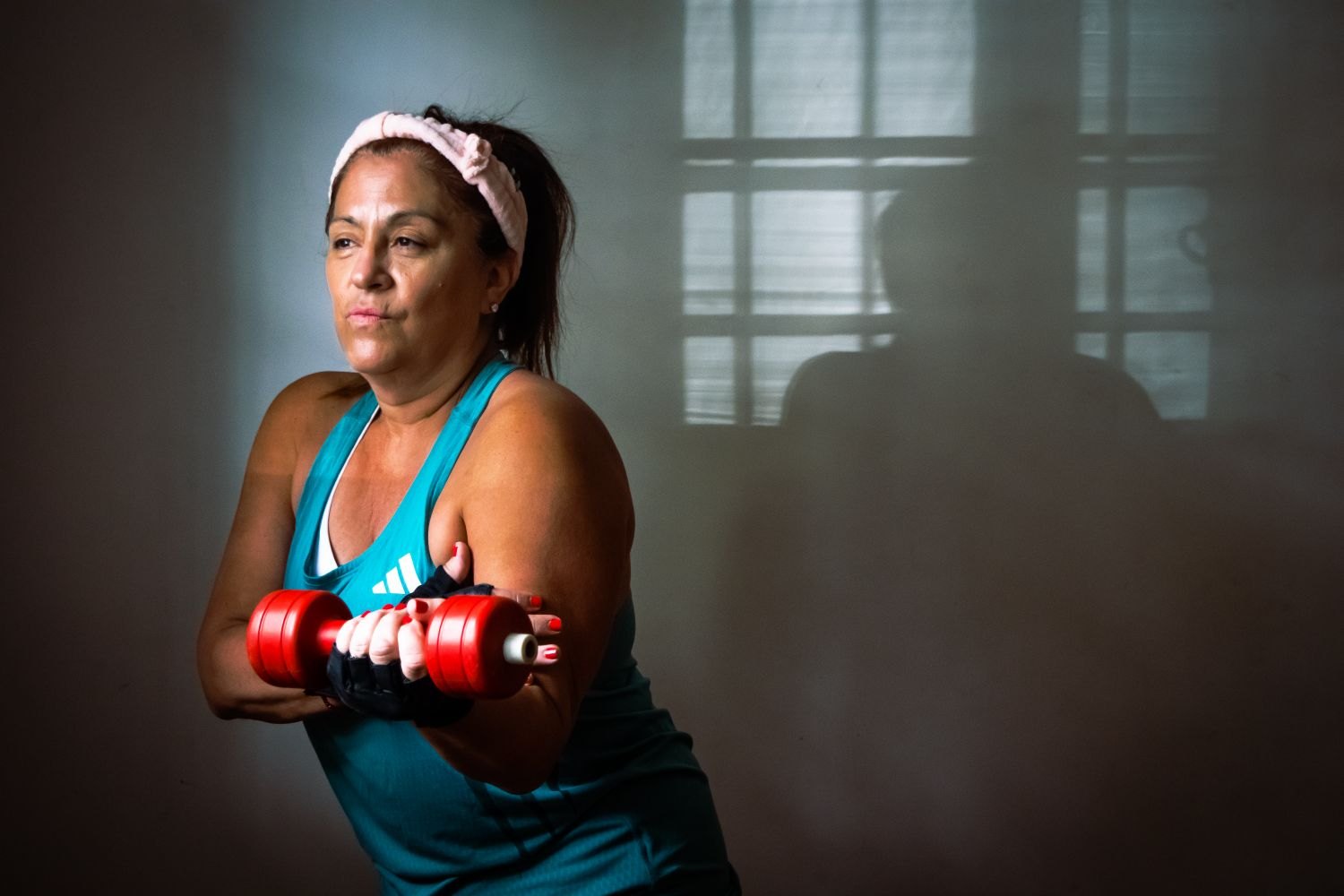
You are halfway through putting a dumbbell down when the instructor begins the next exercise. There are two choices: rush to catch up, or pause. The pause is usually the more useful one. It lets the transition take as long as the transition actually needs.
Before starting, decide which parts of the video you want to follow closely. You might use its exercise order and demonstrations while choosing your own rest periods. Or you might follow the timed sections but pause between them to arrange equipment. Making that decision early prevents each interruption from feeling like a failure.
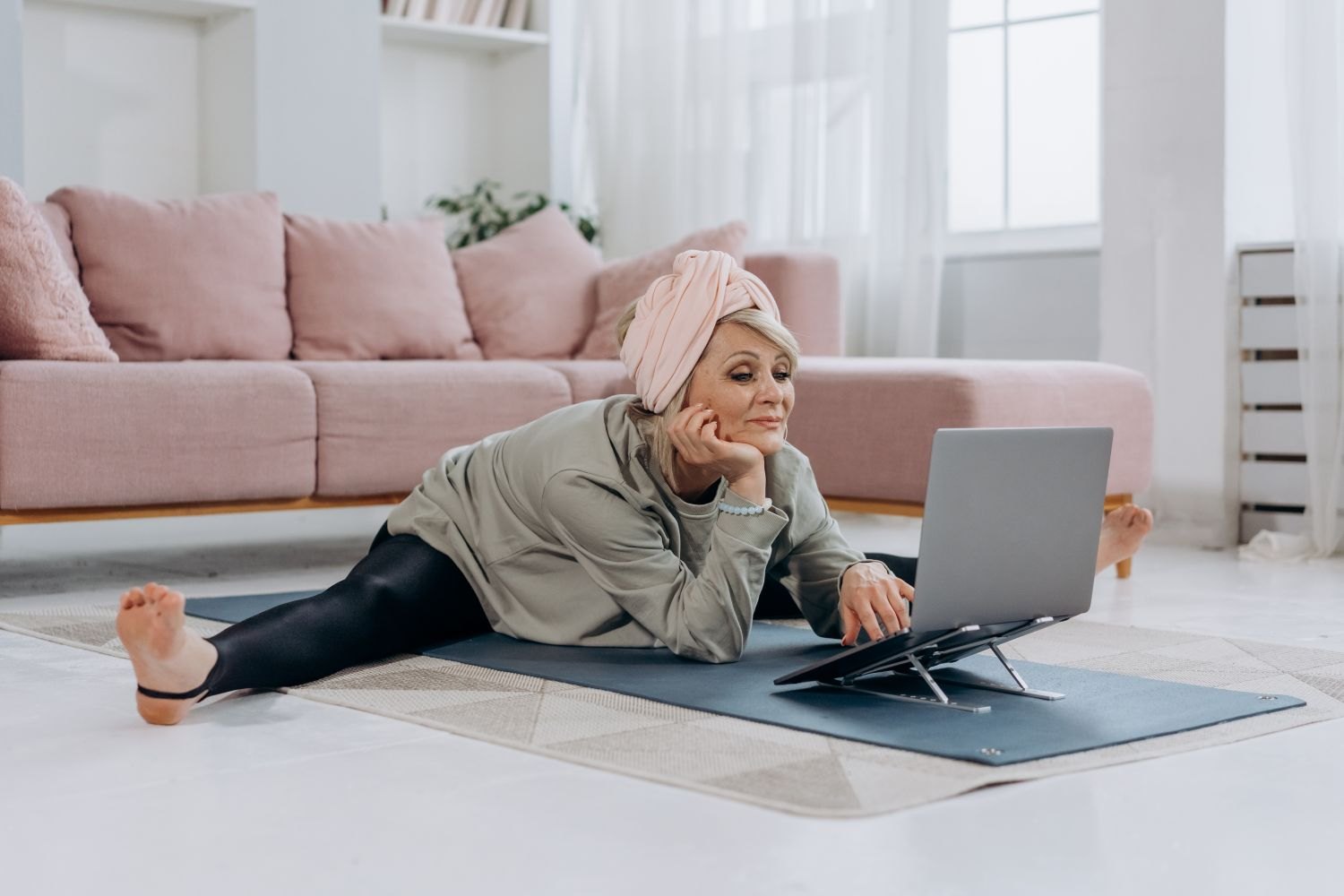
Keep the device outside the movement area but within easy reach during a rest. If the only way to pause is to step over a weight, move the device. Voice control or a remote may be convenient if it works reliably, but a complicated setup can become another distraction.
Finish the movement before touching the screen
Return the weight or band to a safe resting state, then pause. Do not reach for a phone with one hand while the other holds a stretched band. If the video advances in the meantime, it can be rewound. There is no need to chase the countdown.
When you resume, allow a moment to understand where the instructor is in the sequence. Starting halfway through a demonstration can leave you copying the end position without knowing how to get there. Replaying a short section is often more efficient than guessing and then restarting the exercise.
Use pauses for specific reasons: catching your breath, checking the next setup, making space, or reviewing a technique point. If each pause turns into several minutes of messages or browsing, put the phone in a mode that reduces interruptions or use a written version of the routine instead.
It helps to have an end point that is independent of the video's running time. Perhaps your aim is to complete a few familiar exercises before dinner. If extra rest means you do fewer rounds, you can still meet that aim. Adding a rushed final round only to reach the end screen does not improve the session automatically.
Afterward, note the one transition that caused the most trouble. Arrange that piece of equipment differently next time, or choose a slower-paced video. A recording is fixed; your use of it does not have to be.