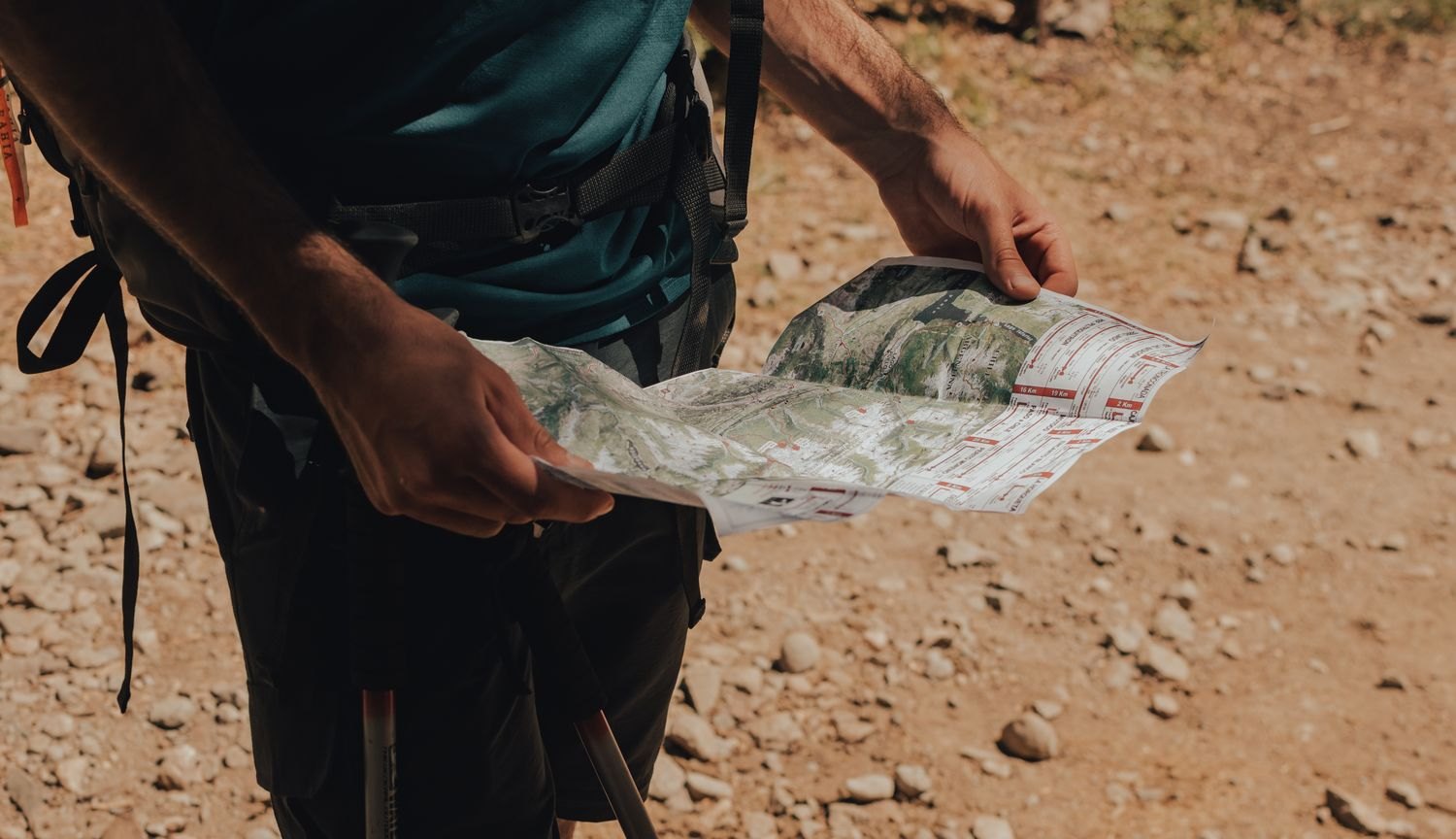
A paper map is not a decorative backup. If it stays folded at the bottom of the bag until your phone fails, it may be the first unfamiliar object you have to interpret at a stressful moment. Give it a role during an ordinary walk while the electronic map is still working.
Choose a map with enough detail for the route. A visitor brochure may show attractions clearly but leave out smaller junctions or the shape of the ground. Check the scale, legend, publication date, and coverage. Make sure both the intended route and the area around it fit on the sheet.
Connect the marks with the landscape
At the start, identify the trailhead on paper and on the phone. Look for a nearby feature you can recognize: a road crossing, visitor building, or distinct bend in the path. As you walk, compare junction names and route direction. This turns map reading into a repeated small check rather than one large puzzle later.
Contour lines show the land’s shape by linking points at the same elevation. USGS explains this convention in its topographic-map guidance. Knowing the contour interval helps you interpret whether the path crosses a slope or climbs it. It does not tell you whether the surface is muddy, a bridge is open, or a trail has been rerouted.
Protect the paper from rain and keep it reachable. Folding the relevant section outward can make it easier to consult without opening a large sheet in the wind. Do not cover important surrounding information so completely that you cannot see where an alternative path leads.
A compass can complement the map, but owning one is different from knowing how to navigate with it. Learn and practice the skills on easy ground, ideally with instruction, before relying on them in remote terrain. Neither the compass nor the phone should tempt you to leave a known route for an unplanned shortcut.
If the map and the ground disagree, stop in a safe place and work out why. Check the route name, the last confirmed junction, and current signs. Continuing while guessing makes the discrepancy harder to resolve. The value of two formats is not that one must always be correct; it is that each gives you another way to notice a problem early.