The first minute of a workout video rarely tells you everything about the next twenty. An easy introduction may lead into jumping, fast changes of position or equipment you do not own. Preview the session before arranging your room around it.
Look for a description of the intended audience and any prerequisites. A label such as beginner is not a precise measure of difficulty. Notice whether the instructor explains movements, offers alternatives and leaves time to get into position. The title can attract your attention; the actual teaching should determine whether you use it.
Check the instructor's relevant qualifications where available, especially if the video claims to address a medical condition or injury. General exercise content is not a substitute for individual rehabilitation advice. Be cautious about promises of a guaranteed result, a fixed calorie burn or a movement that supposedly suits everyone.
Preview the changes, not just the exercises
Fast transitions can be the hardest part of following along. Watch how the session moves between standing, kneeling and lying down. Check whether the instructor changes weights or band attachments during a short countdown. Those moments may require a pause in your own room.
List the equipment you actually need. Do not improvise a bench from a soft sofa or an anchor from a door handle because the video moves on before you are ready. If you lack a safe version of the required setup, select another session or substitute a familiar exercise that fits your space.
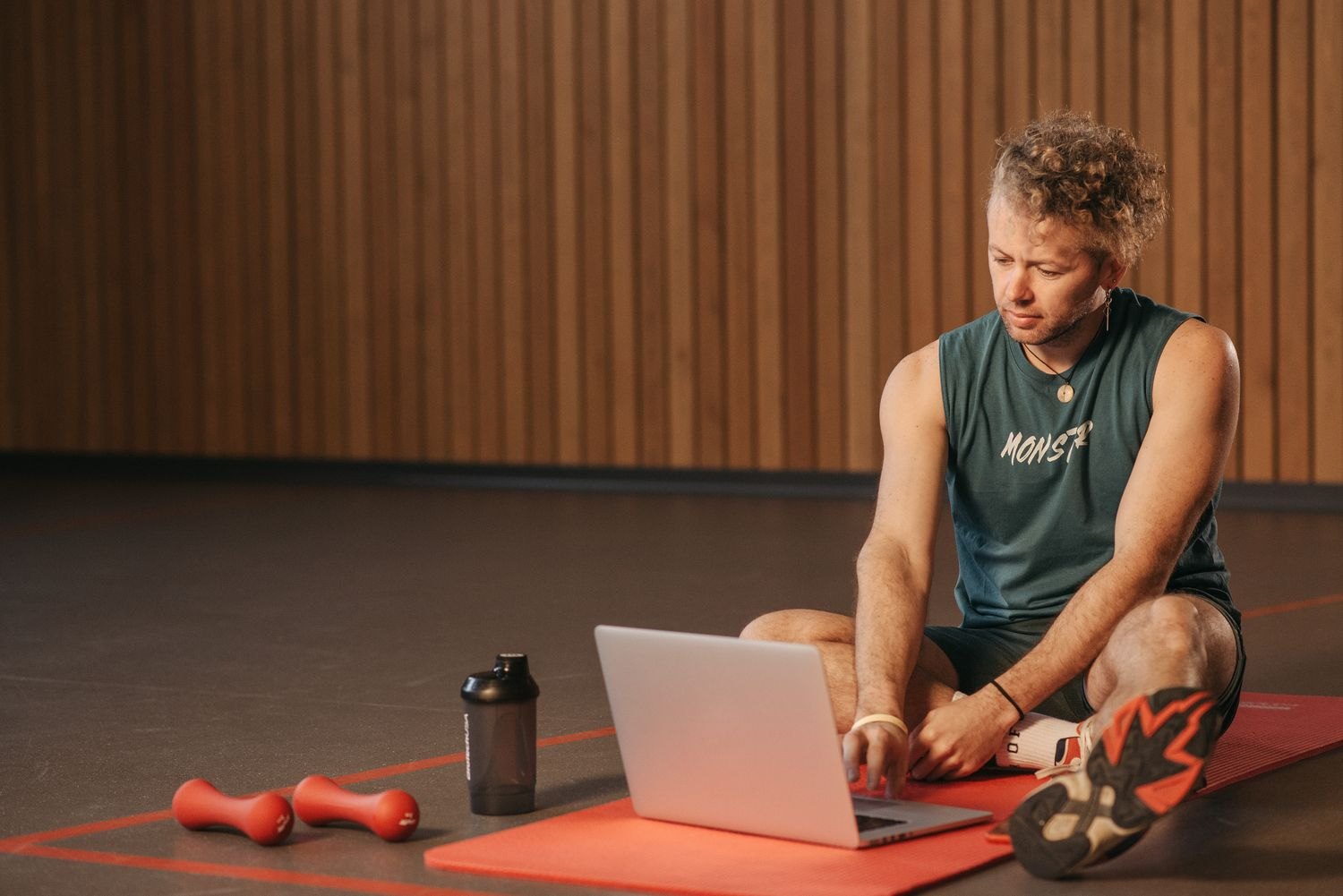
Position the screen so instructions are visible when you are resting. You should not need to crane your neck while supporting a load or holding a floor position. It can help to watch a demonstration, pause, and perform the movement from memory rather than trying to copy every frame.
Keep the pause control easy to reach. Check the volume before beginning, and decide whether notifications or automatic playback could interrupt the session. A short advertisement or the next recommended video should not dictate what you do with a weight in your hands.
Save the exact video you decided to use. Searching for the same broad phrase next time can return a different routine with a similar thumbnail. A bookmark, together with a brief note about the equipment and any substitutions, makes repeat sessions easier to compare. There is no need to keep browsing once you have found instruction that serves the task.
Some videos demonstrate a movement from only one angle. If an important detail is hidden, such as where a band is attached or how a foot is supported, do not fill in the gap by guessing. Find a clearer demonstration or get individual help. A polished camera setup and energetic music are not evidence that the teaching is complete.
You may also decide to use just a section. A clearly explained exercise demonstration can be valuable even when the rest of the class is too fast. In that case, arrange your own preparation and rest instead of dropping directly into the middle of a demanding sequence.
During the first attempt, treat the video as an introduction rather than a pace target. Use lighter resistance or an easier variation while learning the sequence. Stop a movement that causes pain or cannot be controlled, even if the instructor continues smiling through the countdown.
A useful video remains useful when you pause it, skip an unsuitable movement or finish early. You are borrowing its instruction, not surrendering the decisions about your own room and body.