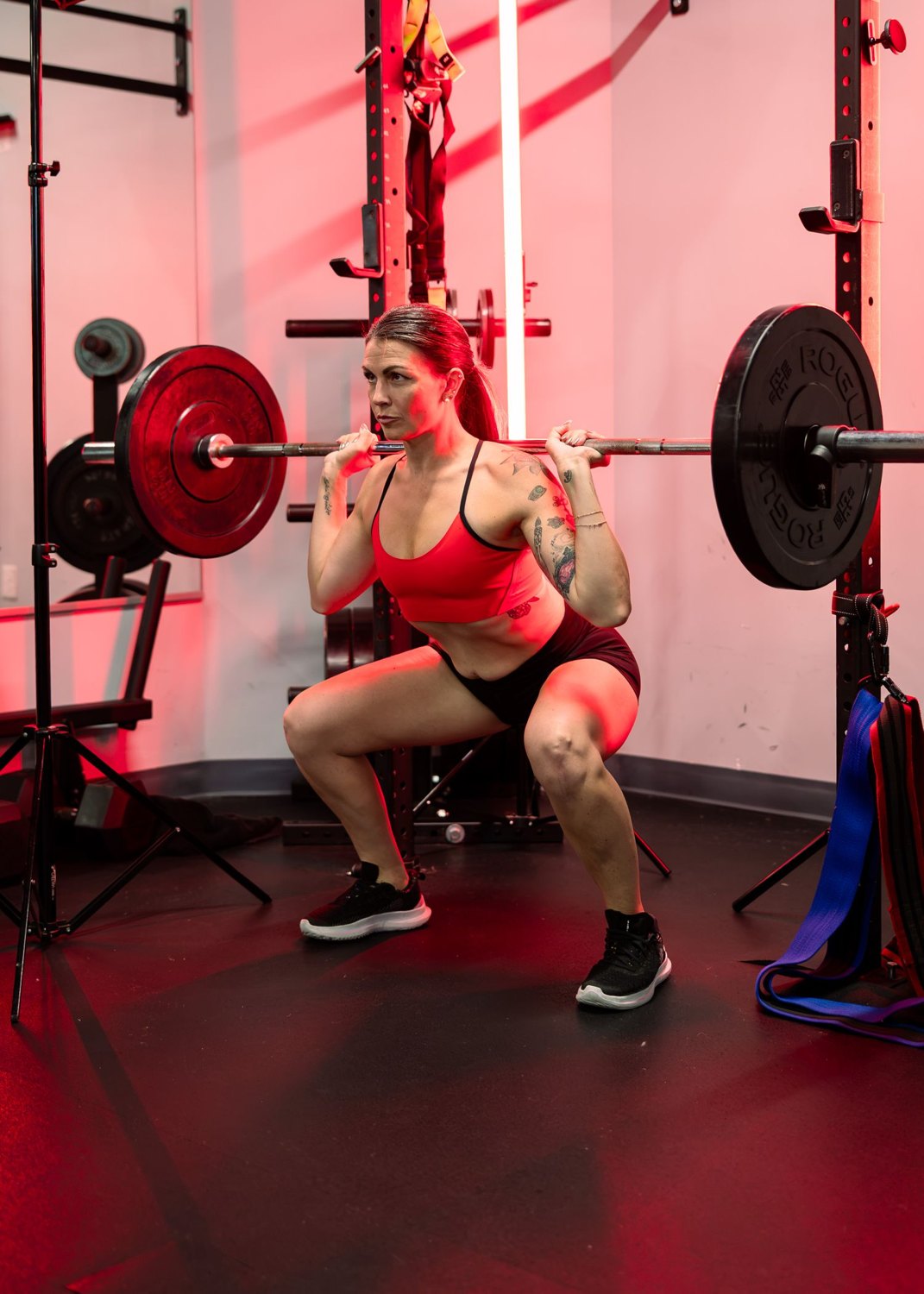
When a heel rises during a squat, the ankle may be part of the explanation, but it is not the only possibility. Stance, balance, footwear, the load's position and the depth you are attempting all influence what happens. One visible detail does not diagnose a tight muscle or a damaged joint.
Begin with an unloaded, comfortable squat near a stable support if needed. Try a modest depth and notice whether the feet stay secure. Do not push farther solely to recreate a photograph. A smaller movement can help you understand the setup without turning it into a flexibility test.
Explore a gentle ankle movement
With hands on a stable wall or rail, stand in a comfortable staggered stance and gently allow the front knee to travel forward over the foot while the heel remains supported. Keep the motion small and smooth. You are exploring available movement, not forcing the knee to reach a certain distance.
If the heel lifts immediately, reduce the range. If there is pain or a pinching sensation, stop that movement and seek advice if it persists. Do not press down harder or add a weight to force the ankle farther.
A calf stretch is a different option from a moving ankle rehearsal. The NHS demonstrates a supported calf stretch with the rear heel on the floor. It can be part of a general flexibility routine, but it should not be treated as a guaranteed fix for every squat difficulty.
Return to an easy squat and consider the overall arrangement. A small change in stance width or toe angle may feel more comfortable. Change one thing at a time so you can understand the effect. A trainer can help distinguish a useful adjustment from a position that simply hides an unresolved problem.
Do not improvise a heel lift
Some squat variations use purpose-designed heel elevation, but loose objects under the heels can shift or tip. If that approach is appropriate for you, use suitable equipment and instruction. It changes the setup and should be recorded, not added casually to make a deeper repetition possible.
Your goal may be a repeatable squat to a chosen height rather than the deepest squat available. The ankle does not need to meet an arbitrary measurement for you to perform every useful leg exercise. Keep the movement comfortable, choose an appropriate range and get help when symptoms or uncertainty make the next step unclear.