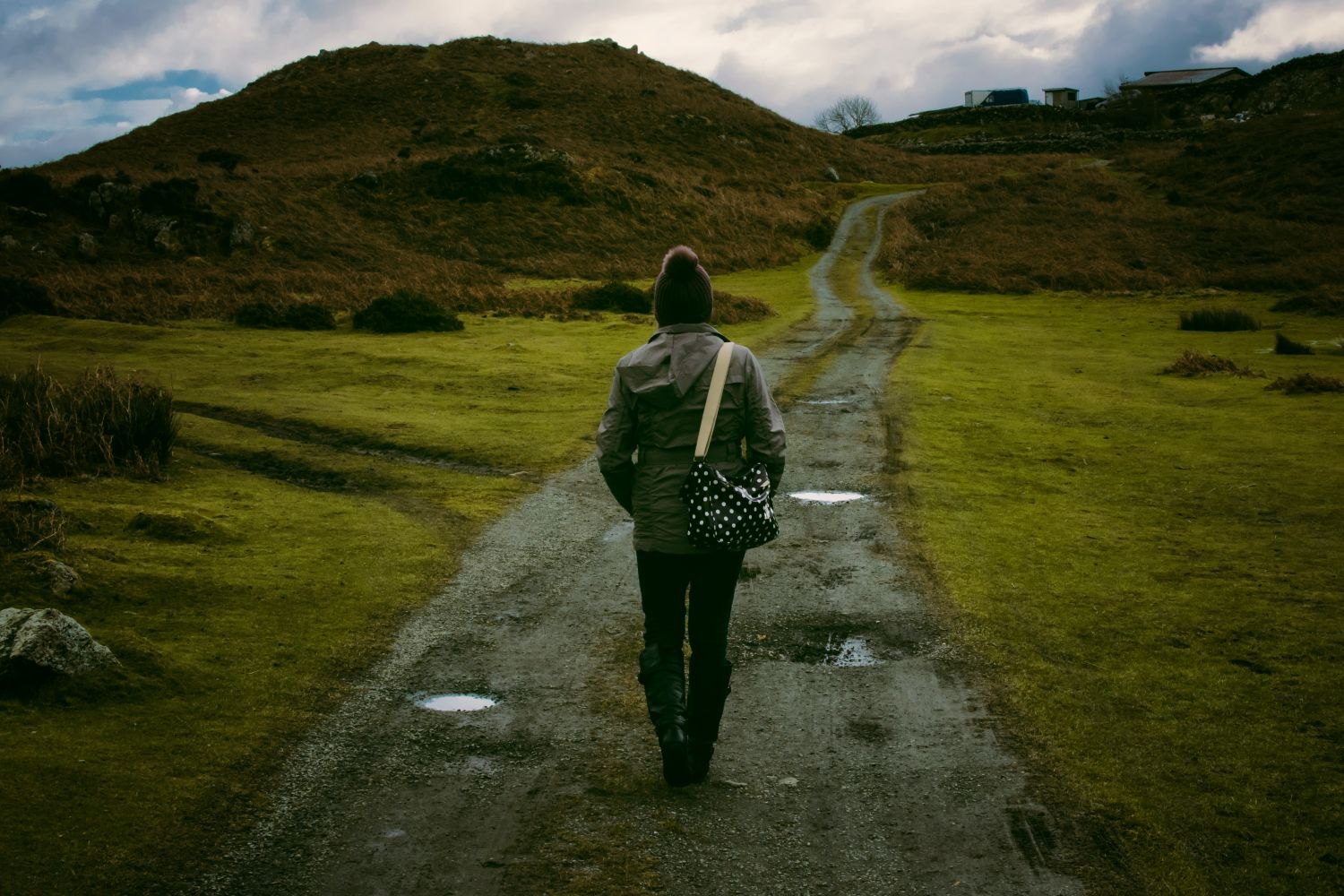
Suppose your usual walk follows a flat path to a bridge and back. To make it longer, you could continue to the next marked junction, add a nearby loop, or take a different route home. These choices are not equivalent. One adds only time; another may also introduce hills, traffic, or rough ground.
For the first extension, choose the option with the fewest new demands. Keep your usual shoes, comfortable pace, and familiar surface. You are trying to find out how a little more walking feels, and that question is easier to answer when the rest of the outing stays recognizable.
Add a section with a clear exit
An extra stretch near home is easier to shorten than a distant loop whose second half offers no exit. Check that the added path is public, open, and connected where you expect. Set a turnaround point that you can identify without relying on the battery percentage of your phone.
There is no single percentage increase that suits every walker. Someone who has recently been inactive may need a much smaller change than someone who already walks for transportation every day. Choose an addition that sounds comfortably manageable, then judge the experience during the walk and afterward. Repeating the same route is an option; progression does not have to appear on the calendar every week.
Pay attention to what limits the outing. If your feet start rubbing, a longer distance may be revealing a shoe or sock issue. If the final hill is the difficult part, your route choice may need changing. If you simply ran out of time, the problem is logistical. These are different observations and call for different adjustments.
You might make the extension optional: continue past the bridge only if there is enough daylight and the walk feels comfortable. Decide this before leaving so that turning back feels like following the plan, not abandoning it. Keep enough energy and time for the original return journey.
When the longer version feels routine, decide what matters next. You may prefer to repeat it, walk it with a friend, or explore another path of similar difficulty. Distance is only one way to develop a walking habit. A route you enjoy enough to use regularly can be more valuable than a constantly expanding line on a map.