A cable handle does not simply become heavier when you step farther away. Its resistance acts along the cable, toward the pulley. Where the pulley sits therefore matters as much as which attachment you clip on.
Before using an unfamiliar station, ask staff to show the height adjustment, locking pin and attachment connection. Inspect the visible cable and handle for obvious damage, and report a problem rather than working around it. Change attachments or pulley height only with the stack settled and the mechanism unloaded as instructed.
Follow the line with your eyes
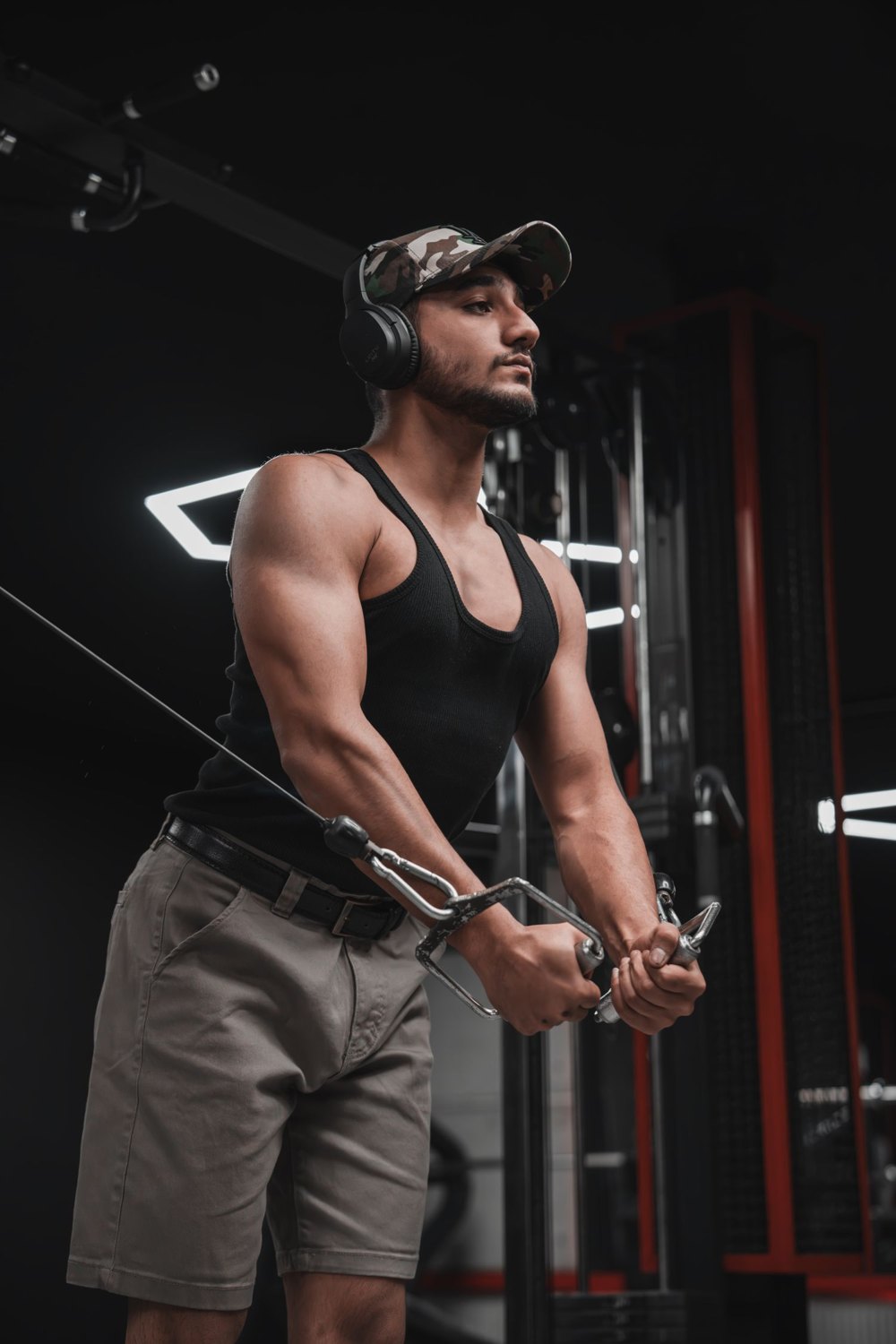
Imagine a straight line from the handle to the pulley. A low pulley pulls downward and toward the machine; a high pulley pulls upward and toward it. Your position determines how that direction relates to your arms and body. A demonstration filmed from the front can hide this relationship, so look at the whole setup.
For a standing row, begin with a light resistance and a stable stance. Choose a distance that allows the intended movement without the stack crashing down or running out of cable travel. You should not need to lean backward sharply merely to keep from being pulled toward the machine.
Changing the pulley height can change the feel substantially. If you are following an exercise plan, record the setting so you can repeat it. “Cable row, twenty pounds” leaves out information that might explain why the next visit feels different.
Keep the cable path clear of other people and your own belongings. A cable stretched across a walkway creates a hazard even if the exercise itself is controlled. Do not step over a taut cable while holding the handle, and return it deliberately before moving around the station.
Weight labels are also device-specific. Pulley systems can change the force felt at the handle, and machines differ in their internal design. Use the label as a record for that station rather than treating it as a direct measure of what you could lift with a free weight.
If an exercise requires an extreme lean, a very awkward reach or an improvised attachment, stop and get instruction. Cable stations are versatile, but that versatility does not make every possible arrangement useful. Once the direction, distance and finish are clear, the weight selection becomes a much simpler decision.