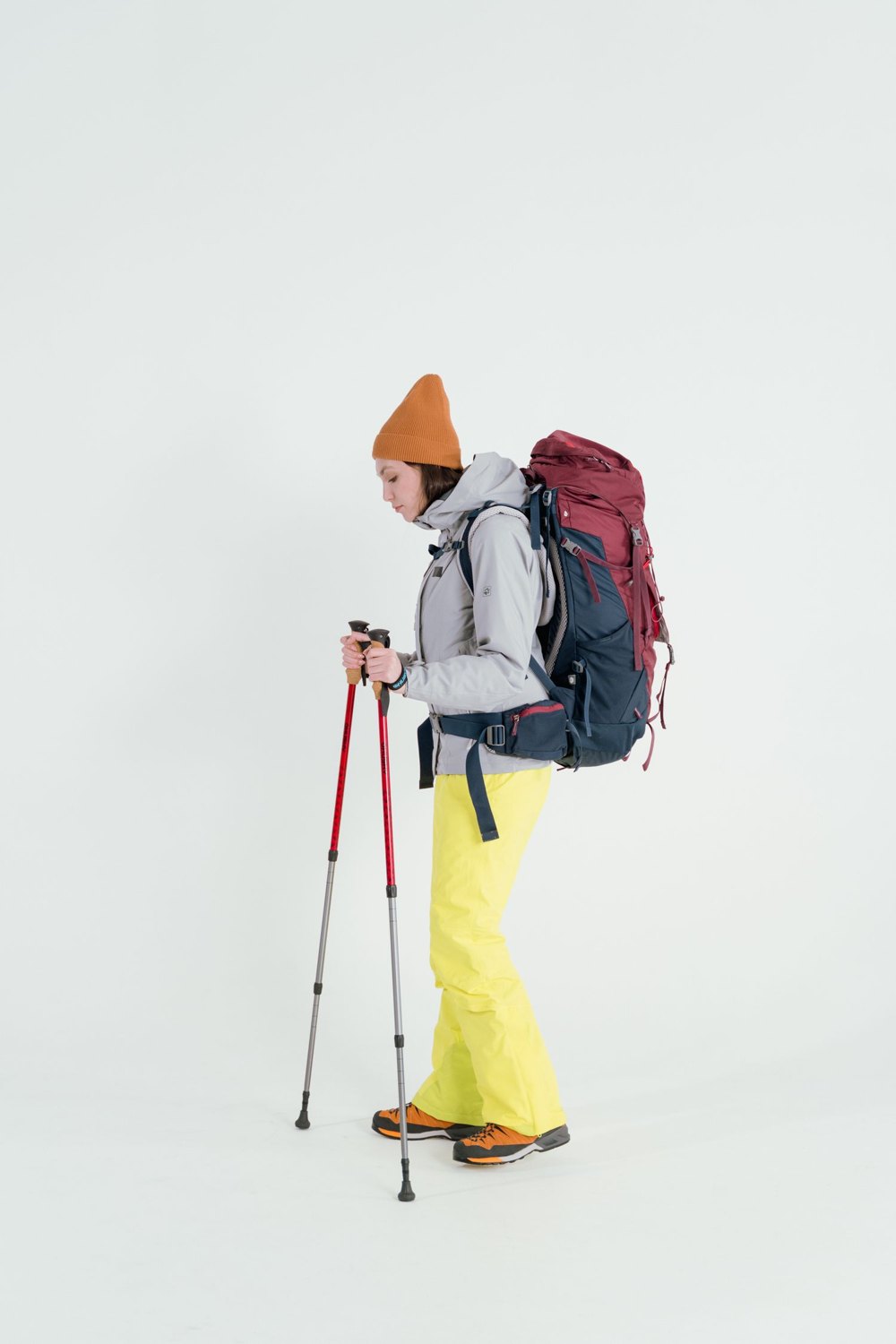
A daypack on a shop hook tells you its color and approximate shape. It does not tell you how the straps feel when there is water, food, and clothing inside. Test a prospective pack with a representative load, using the store’s fitting weights or your own permitted items.
Start with the correct size where the model offers one. Pack fit depends on more than overall height; torso length and the position of the straps matter. REI’s daypack guidance treats fit, intended activity, and carried contents as separate parts of the decision. A larger capacity is not automatically a better fit.
Adjust in the order the maker recommends
Loosen the straps before putting the loaded pack on, then follow the model’s fitting sequence. Some small packs have only a simple waist strap, while others have a hip belt intended to carry part of the load. Do not expect those designs to feel identical or tighten every strap as much as possible.
Walk around and make ordinary movements. Notice whether the pack swings, the shoulder straps rub the neck, or a hard object presses into the back. Bend carefully to retrieve something from a low shelf and turn your head. The pack should not make simple movements feel restricted.
Check usable access. Can you reach the water bottle pocket, or is it safer and easier to take the pack off? Does the sternum strap sit comfortably without interfering with breathing? Can you open the pocket you need while the pack is resting on the ground? Convenience is specific to your body and the loaded arrangement.
Leave room for the changing load
During a walk, a jacket may move from your body into the pack. Food gets eaten, while its packaging comes home. Try the bag with the largest likely load, not only the neat starting arrangement. A capacity that works only when every item is compressed precisely can become frustrating at stops.
Avoid hanging numerous objects outside to compensate for insufficient space. Loose items can swing, snag, or disappear. Use intended attachment points for suitable equipment and keep the total arrangement controlled.
If the pack feels uncomfortable, first check the contents and adjustment. Moving a hard bottle or changing how a layer is folded may help. If the fit remains wrong, try another design rather than assuming discomfort is normal because the pack is small.
The successful fitting is not the one with the most impressive features. It is the one in which your actual load stays comfortable and manageable, leaving you free to walk without repeatedly shrugging the straps back into place.