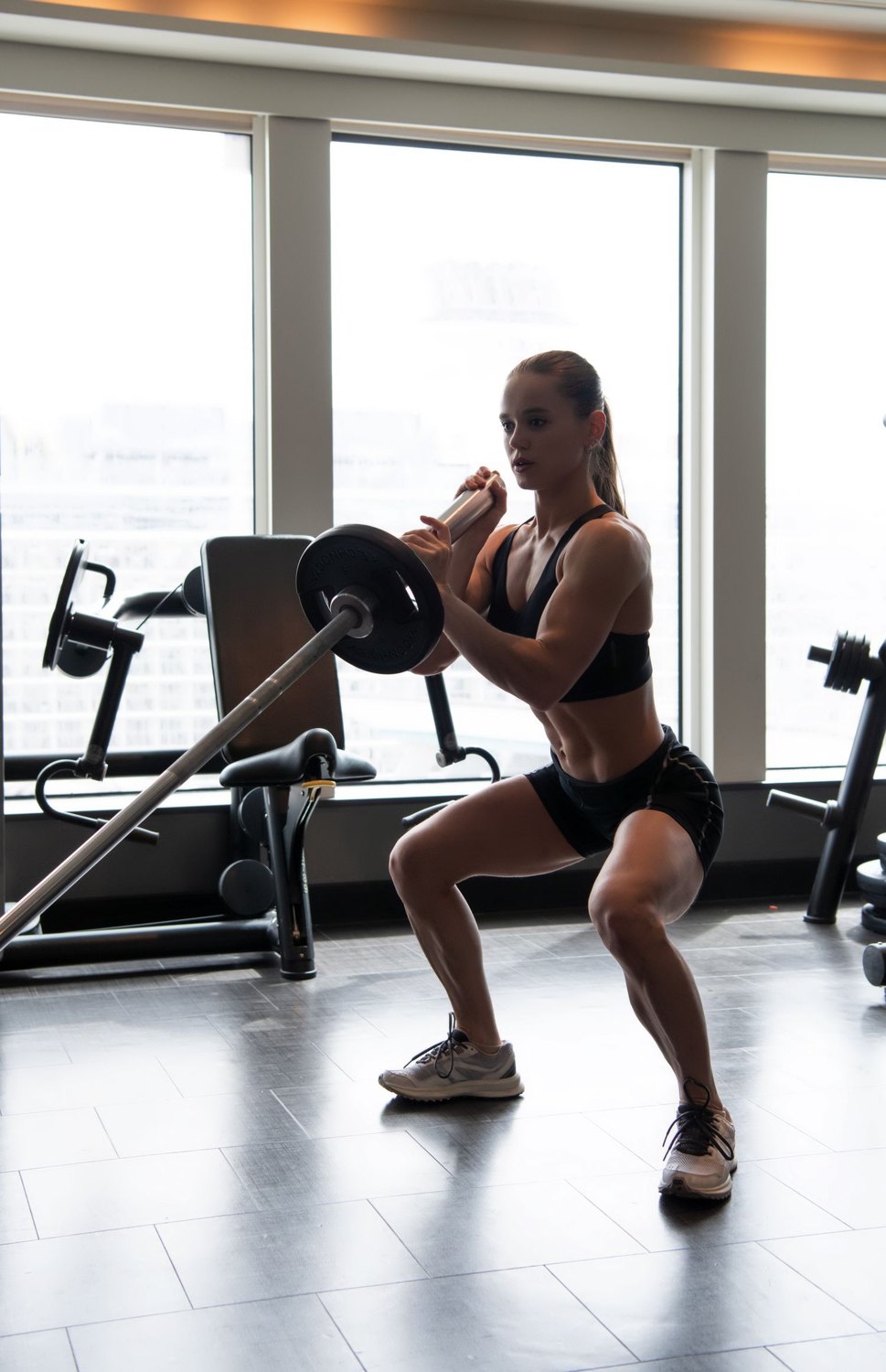
A goblet squat can look straightforward: hold a weight in front of the chest and squat. The overlooked part is often getting the weight there, keeping it close and putting it down again. Strong legs do not automatically make a particular dumbbell easy to hold.
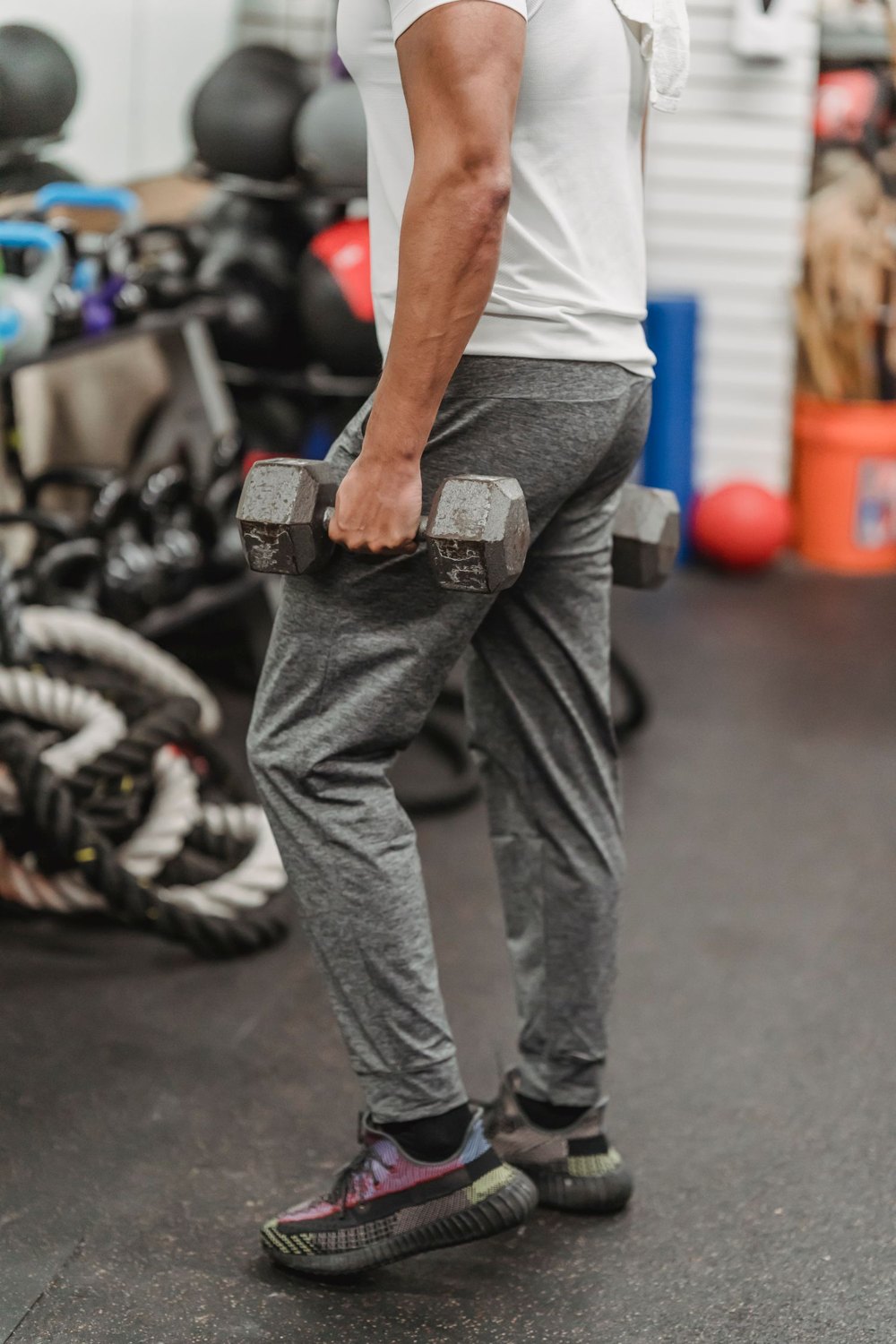
Practice the hold before adding a full set of squats. Use a light, securely assembled weight with a grip you understand. A kettlebell is usually held by its handle near the chest; a suitable fixed dumbbell can be held vertically with both hands supporting one end. Adjustable dumbbells have different locking systems and shapes, so follow their instructions rather than assuming every model is suitable for this position.
The arms can finish first
If your hands begin slipping or your arms cannot maintain the hold, the set is over even if your legs feel capable of more. Do not let the weight drift farther forward to prolong it. The extra reach changes the task and makes the eventual put-down harder to organize.
NASM's goblet-squat description emphasizes keeping the resistance at the chest during the movement. That is a useful feature of this variation, but it is not a reason to squeeze the weight painfully against your body. Find a secure position with enough room to breathe and move normally.
Rehearse a few unloaded squats first, then repeat with the light weight. Keep a comfortable stance and descend only as far as you can control. The front load may change your balance compared with the unloaded version, so treat the first repetitions as practice rather than expecting an identical depth immediately.
Plan where the weight will finish. A suitable storage surface can reduce an awkward pickup, but it must be stable and intended to carry the load. Do not improvise with a precarious stack of plates or a soft chair. If getting the weight into position is the hardest part of the exercise, ask a trainer about a different setup or variation.
Progress the movement you can actually perform
When the available weight becomes easy for the legs but awkward for the hold, adding more is not the only option. Another squat variation, a machine or a carefully planned change in repetitions may fit the goal better. The goblet position is one tool, not a permanent test you must keep making heavier.
Write down the implement as well as its weight. Two objects with the same number on them can feel quite different in the hands, and that difference matters when you compare sessions.