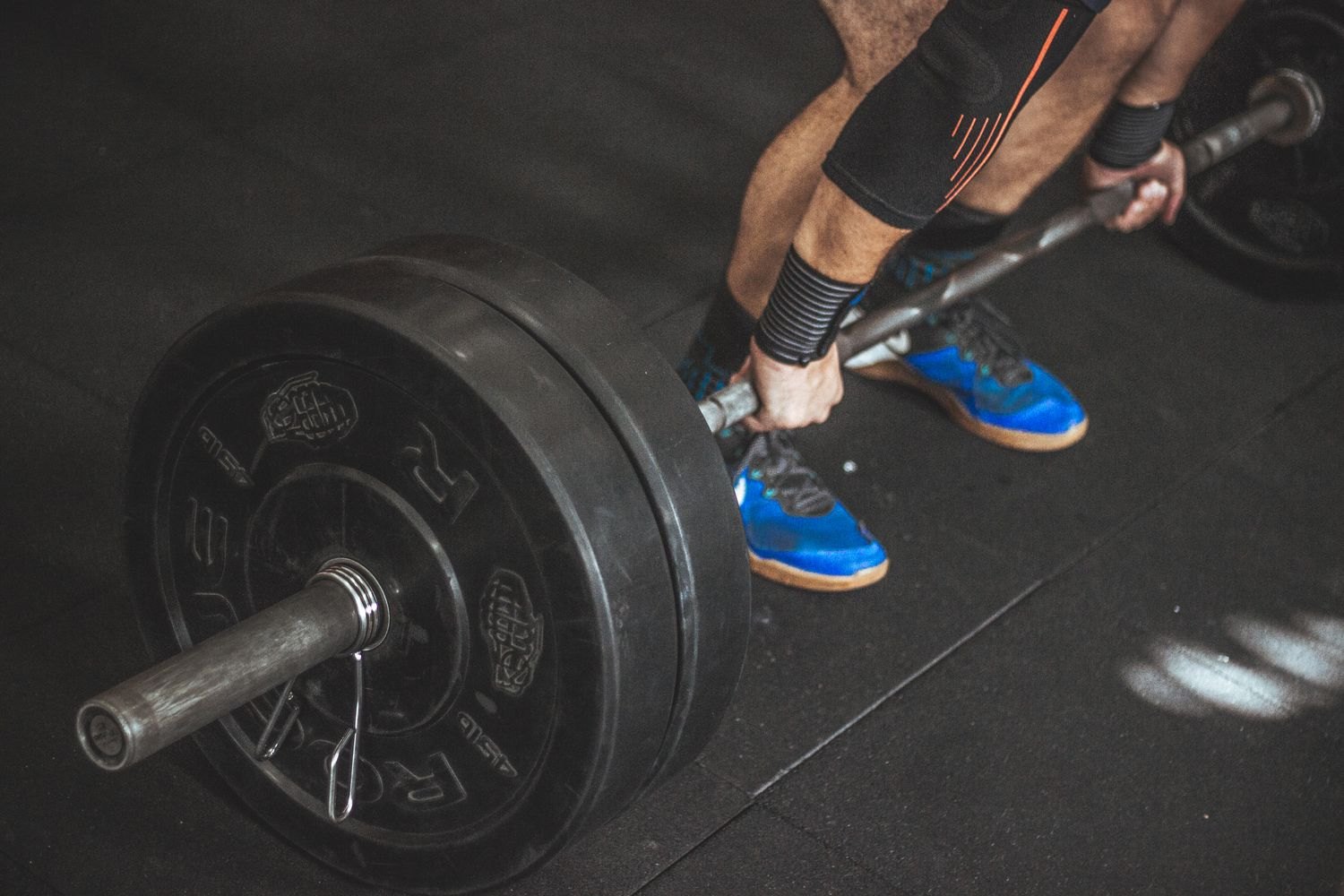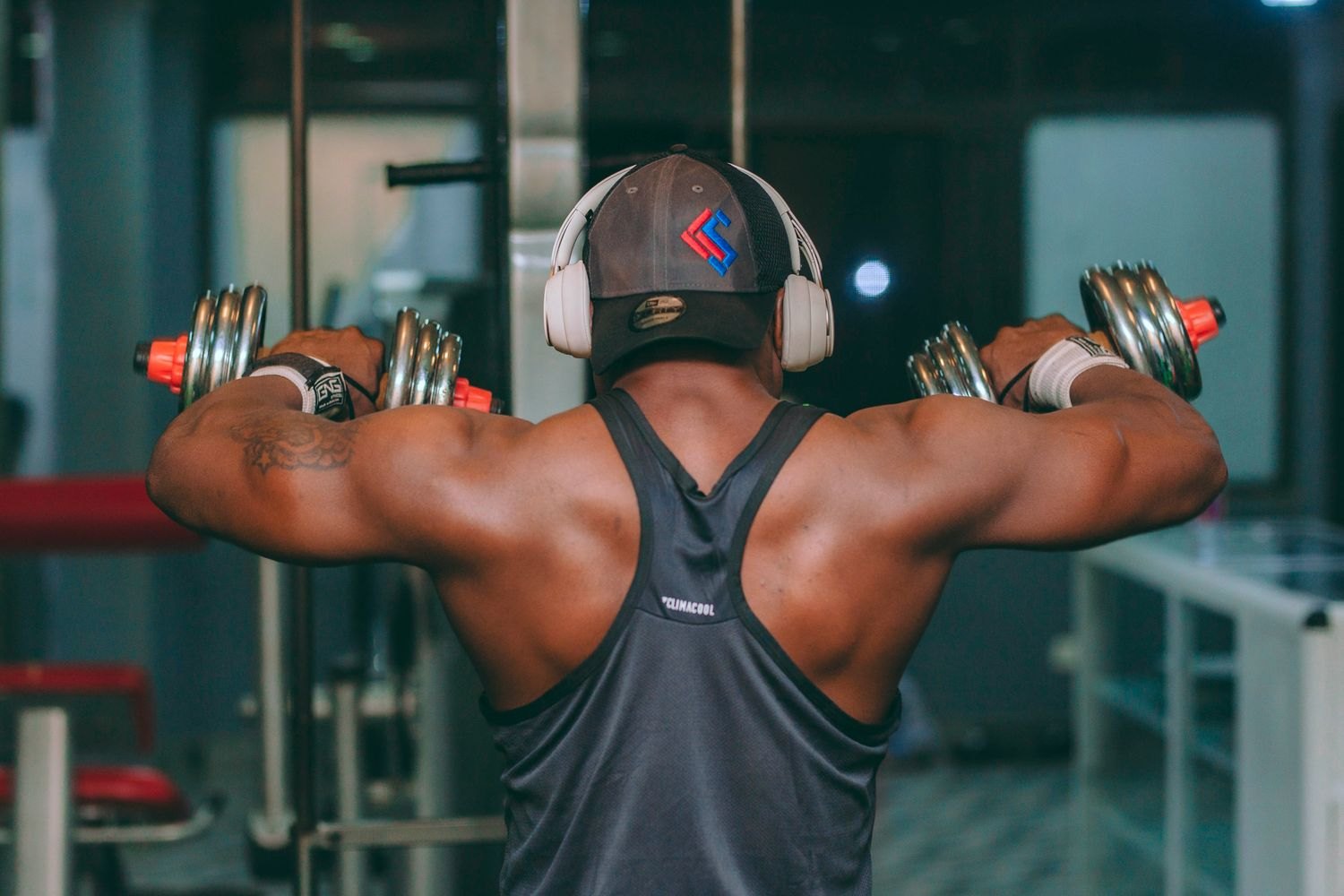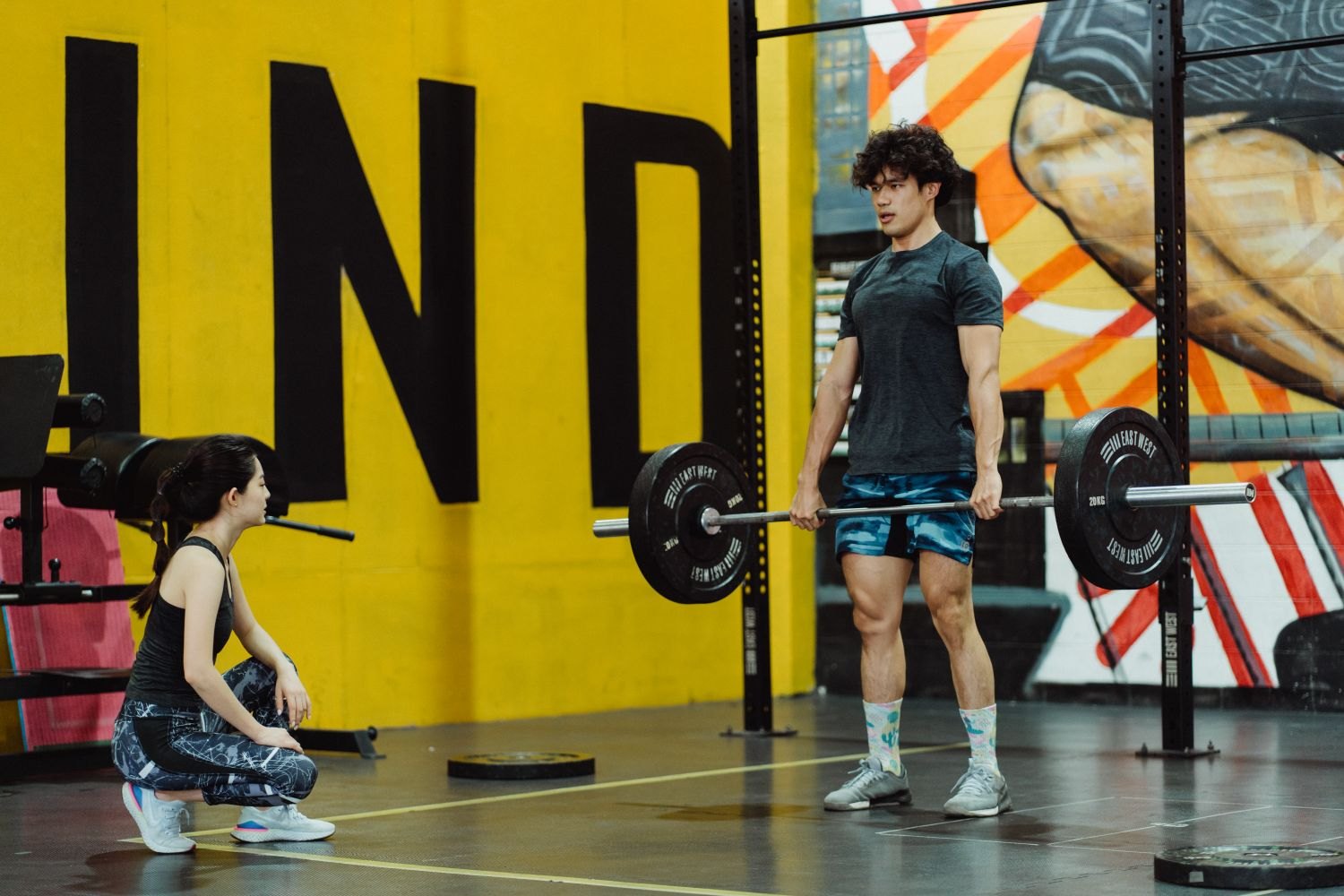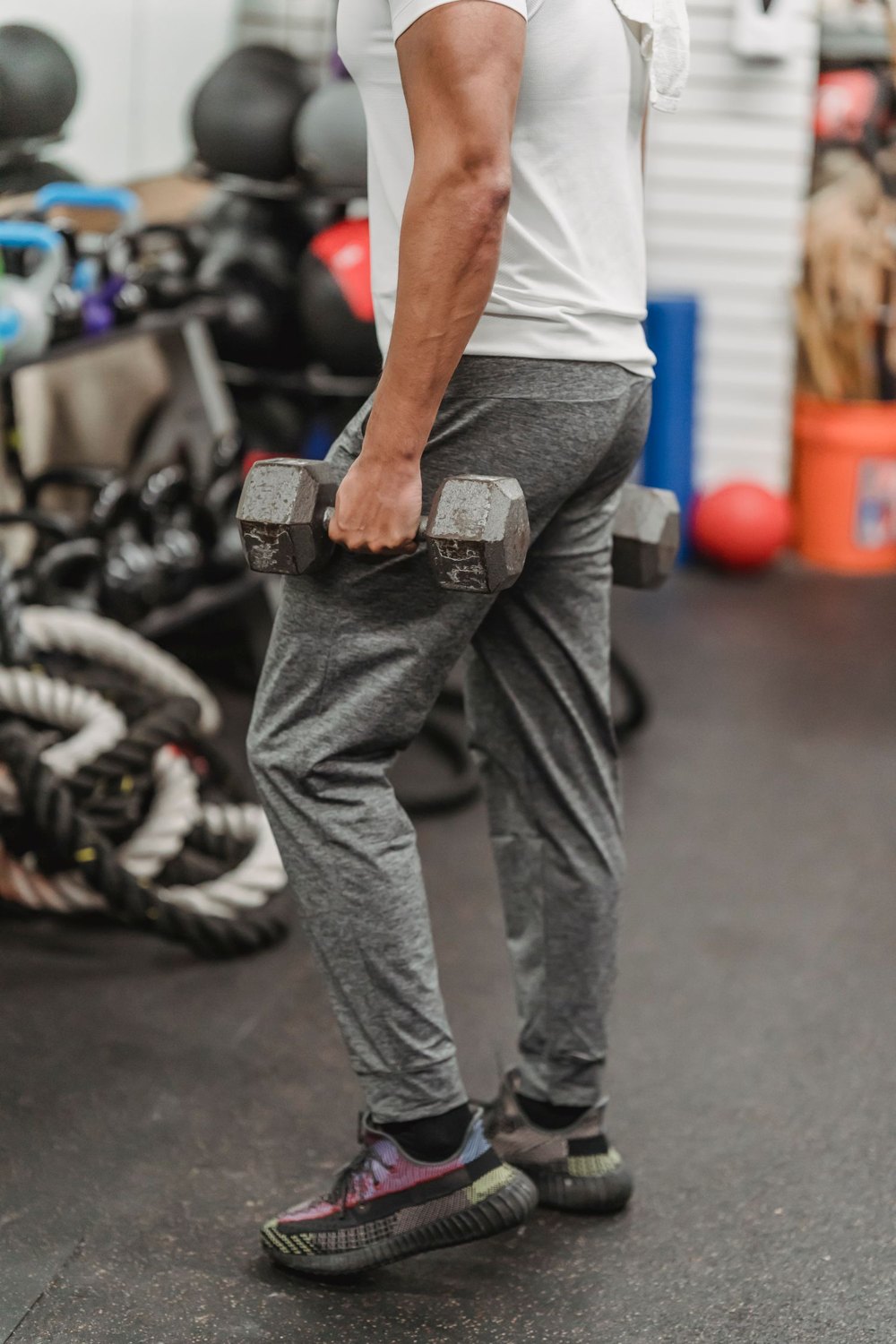
A loaded carry has an unusually visible finish: the weights need to reach the floor or another appropriate surface while you still control them. Planning that finish makes more sense than walking until your fingers can no longer hold on.
Start with a short, straight, clear route on level flooring. Check doorways, turns and the width of the weights beside your legs. A gym aisle used by other people is not yours to reserve by walking into it with dumbbells. At home, remove toys and loose rugs before beginning, and keep children and pets outside the route.
Choose light weights first and rehearse lifting them, standing comfortably and setting them down. If the pickup is awkward, have a trainer show an appropriate setup. The carrying portion is only part of the exercise; struggling to lift the weights into position does not become irrelevant once you start walking.
Walk normally enough to stay organized
Take controlled steps with the weights held securely at your sides. You do not need an exaggerated march, a sprint or an artificially rigid posture. Leave space between the weights and your legs, and avoid swinging them to help each step.
A carry challenges more than the legs. Your grip, the weight's handle shape and your ability to remain balanced can determine the useful distance. If your fingers start opening, your posture changes markedly or you need to rush, stop at the planned safe location. Do not turn the last few yards into a dash to avoid putting the weights down.
Using one weight, often called a suitcase carry, changes the balance demand. It is a separate variation, not an automatic next step. Begin lighter when learning it, and avoid leaning dramatically to one side to accommodate the load. There is no need to perform it near stairs or on an uneven surface to make it more functional.
For a short room, you can use separate straight passes with a controlled put-down between them. Turning tightly while tired is not a requirement. If the available space is unsuitable, choose another exercise instead of making the route increasingly complicated.
Record the weight, route length or time, and number of passes. Be consistent about whether the listed weight is per hand. “Two fifteen-pound dumbbells, one clear pass” describes an actual task you can repeat. A total-distance target has little value if its last section depends on slipping fingers and improvised turns.