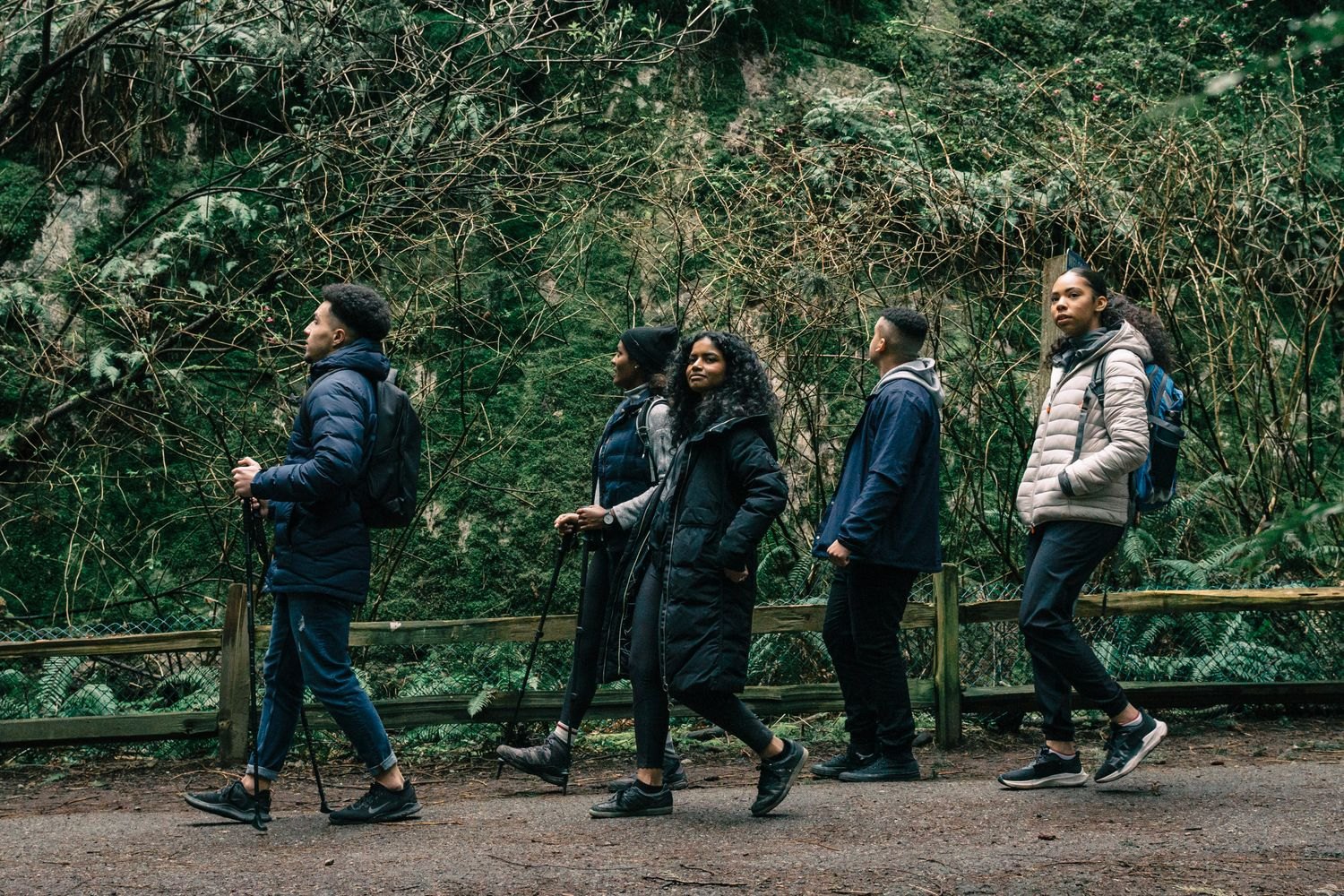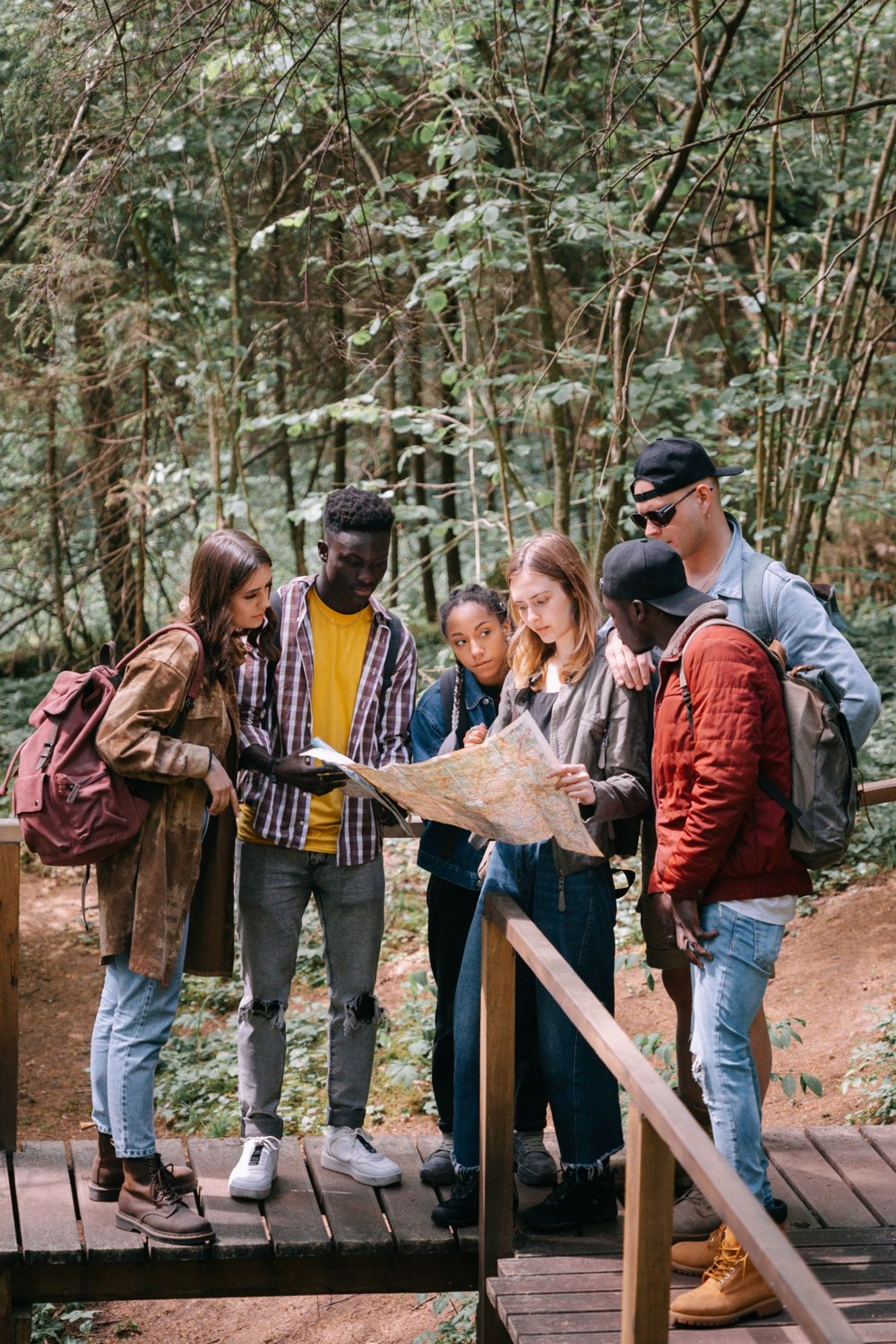
A busy park can have several entrances, two parking lots, and a visitor center that is not beside the trail. Telling a friend to meet at the start may sound precise until you discover that each of you has chosen a different start. Name the exact place before anyone leaves home.
Use an official landmark that is unlikely to move: the information board at a named trailhead, for example. Share the map location as well as the written name. A pin alone can land on the wrong side of a fence or lead a navigation app to an unsuitable access road.
Check whether the place has enough room to wait without blocking other visitors. A narrow bridge, gate, or staircase is a poor gathering point. Pick a nearby established space where the group can stand clear of the route while putting on bags or checking equipment.
Decide what a delay means
Set a meeting time and a simple late-arrival plan. Do not assume that everyone can call from the trailhead. If reception is uncertain, agree in advance how long you will wait and what happens next. Avoid a plan in which late arrivals are expected to follow alone and catch up on an unfamiliar route.
If the group starts together, remain together rather than using the meeting point as a substitute for group management. At junctions, wait where the next direction is clear and where you are not obstructing the path. A person who falls behind should not have to guess which branch the group took.
For a large recreational group, divide into manageable groups only when each has a clear leader, route, and communication plan. Do not let an informal split happen simply because some people walk faster. Each group still needs appropriate equipment and a known finish arrangement.
At the end, choose an equally specific reunion spot if people need to retrieve cars or use facilities. Confirm that everyone has returned before leaving. A final count is easy when the group has a definite gathering place and much harder when people drift toward several parking areas.
These details may sound fussy while you are planning from a quiet room. At a crowded trailhead, they save repeated calls, unnecessary walking, and the temptation to rush the start because the group has already lost time.