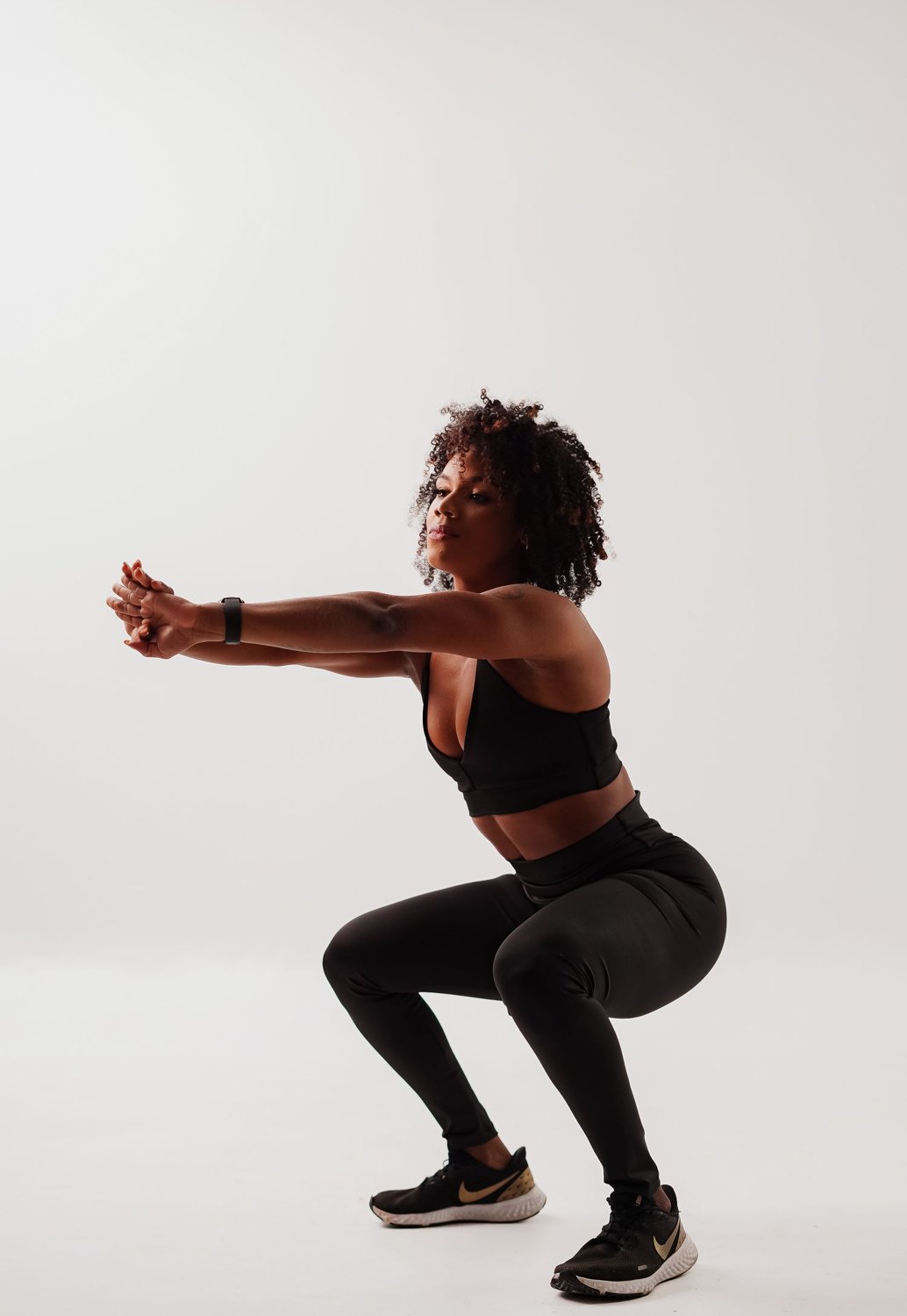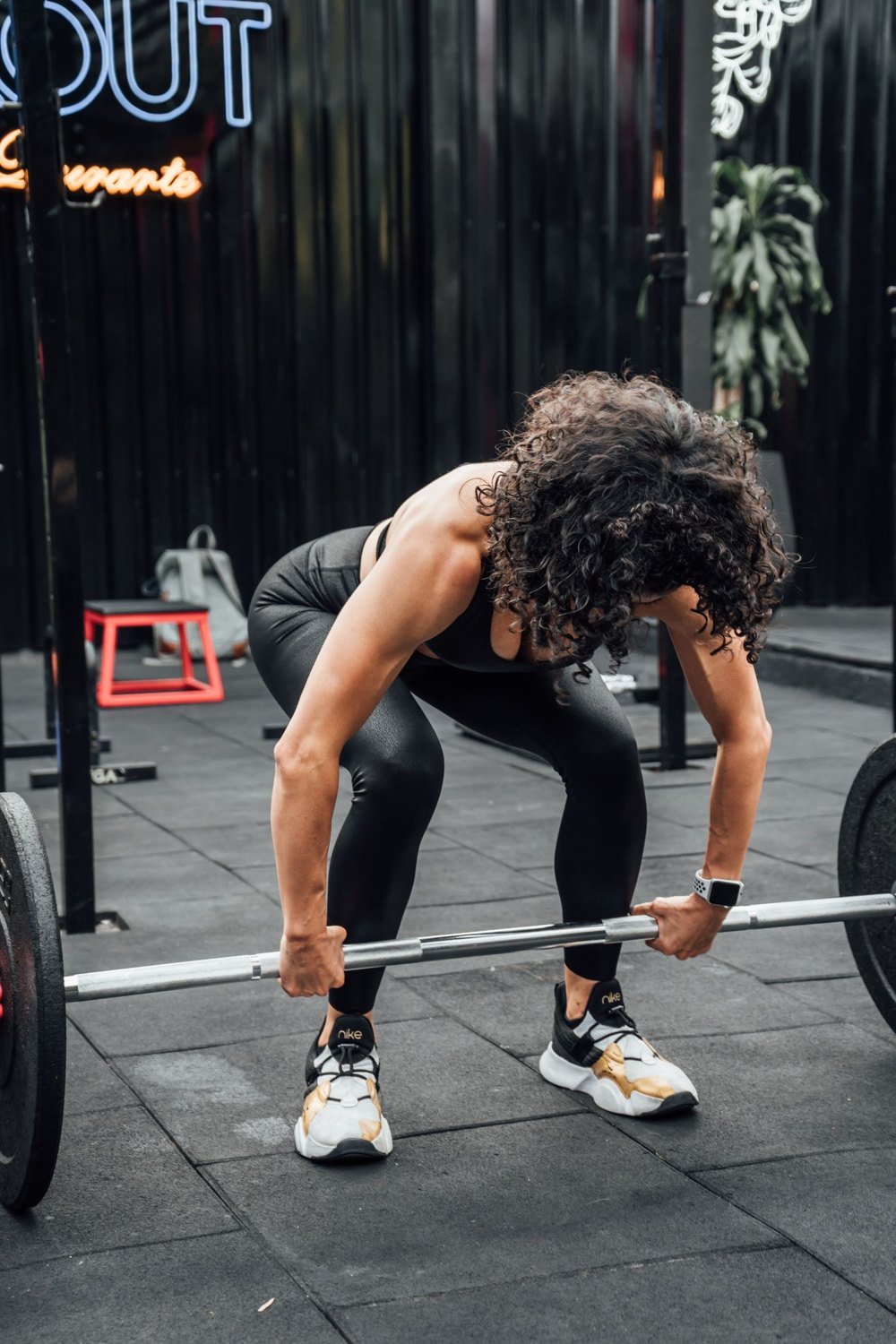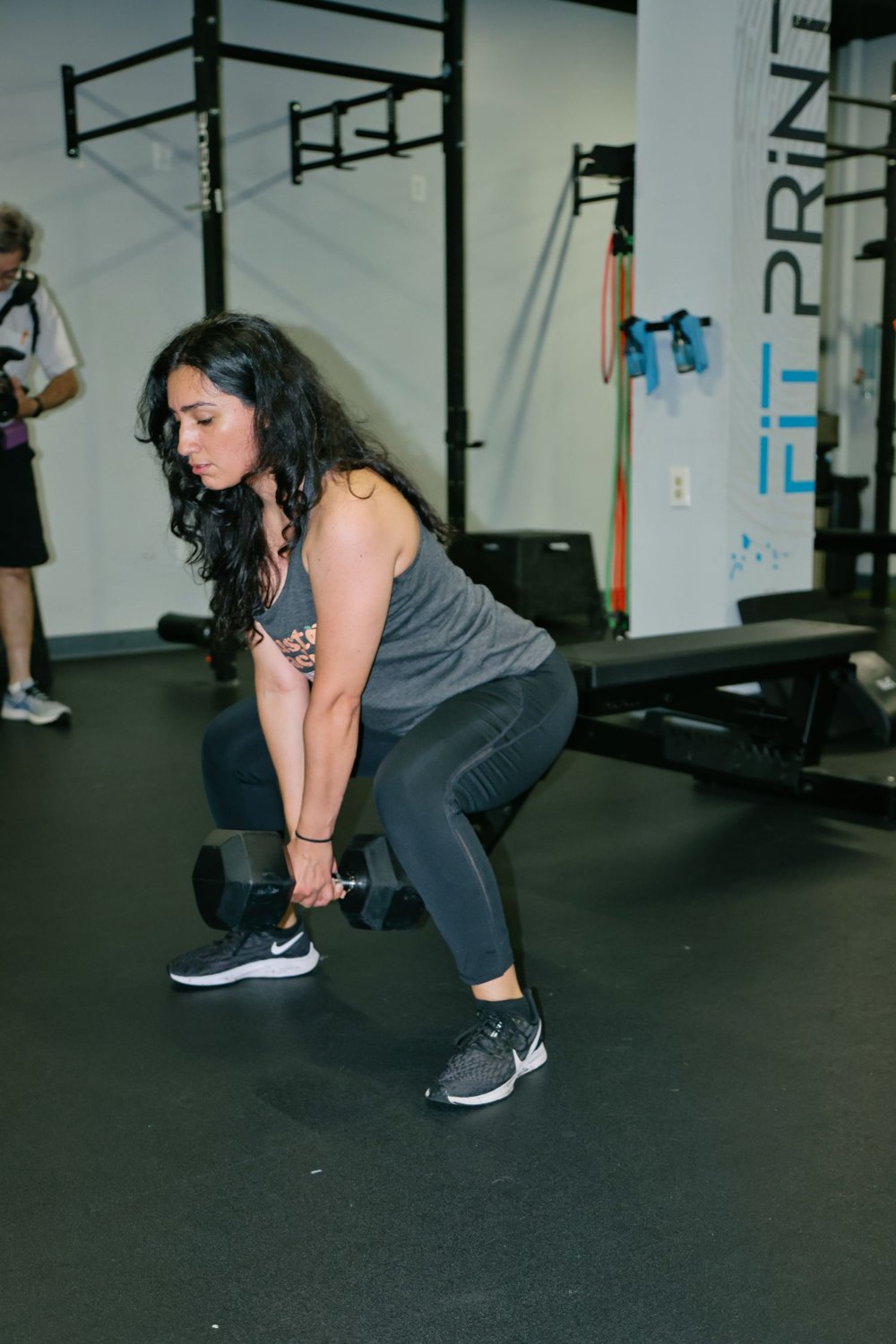
A hip hinge is easiest to understand as a change in where your hips go. They move backward while your torso inclines forward. Your knees can soften, but the action is different from sitting straight down into a squat. Learning that distinction without a weight gives you one less thing to manage.
Stand on a clear, nonslip surface with your feet in a comfortable stance. Let your hands rest lightly along the front of your thighs. Begin a small backward movement of the hips, allowing your upper body to tip as a unit. Return to standing before you feel compelled to reach farther with your back or lock your knees straight. The first attempt can be quite shallow.
Use a nearby reference
A wall behind you can make the direction less abstract. Stand a short distance away and gently move your hips toward it. Choose a distance you can reach comfortably; do not keep stepping farther forward as though touching the wall were a flexibility challenge. The wall is a reference, not something to fall against or push hard into.
Notice the pressure under your feet. You should remain balanced rather than rocking so far backward that your toes lift. Your hands can slide a little down your thighs as the torso tips. They do not have to reach your knees, and the floor is irrelevant at this stage.
ACE's hip-hinge teaching exercise uses a light stick behind the body as feedback for the head, upper back and pelvis. That can be helpful with instruction, but it is optional. If holding a stick behind you is uncomfortable or confusing, a coach can use another cue. Adding an awkward shoulder position does not improve the lesson.
Add resistance after the movement makes sense
When you can repeat the bend and return comfortably, a light weight held close to the body may be an appropriate next step. Have someone qualified demonstrate the pickup and finish. A kettlebell on a suitable raised surface can present a different starting challenge from a weight sitting on the floor; the object does not decide how low you must go.
Do a handful of unhurried practice repetitions, pause and check whether you can explain what moved. “My hips went backward, and I stayed balanced” is enough. You are learning a movement you may later use in several exercises, not proving that every deadlift variation will suit you. Pain, a sudden pulling sensation or uncertainty about an existing condition calls for stopping and getting individual guidance.