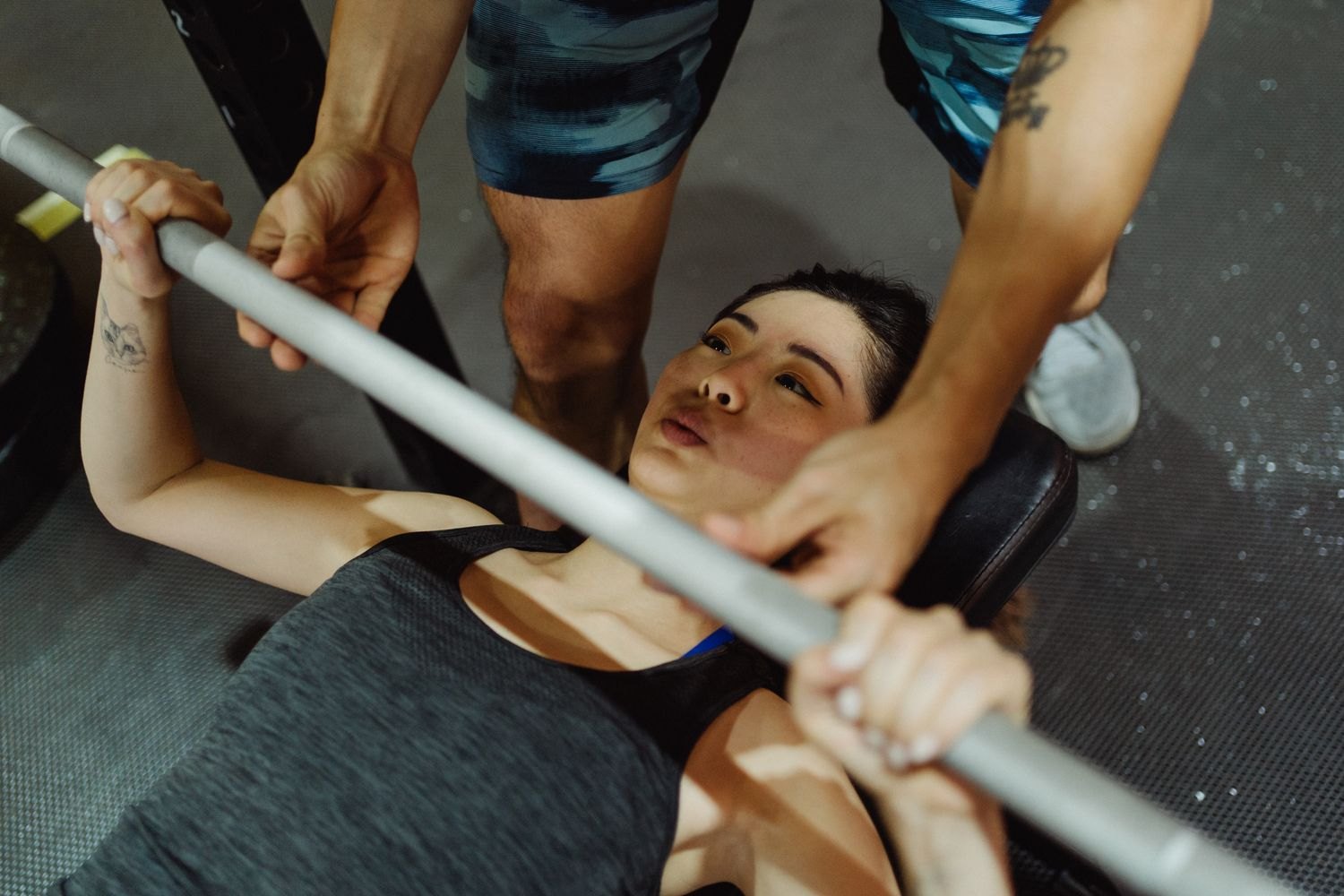
Before a demanding lift, it is tempting to ask the nearest person to “give me a spot” and consider the problem solved. But spotting is an exercise-specific skill, and the person needs to understand what help you want, when to provide it and how the equipment works.
Safety bars, straps or stops serve another role: they can limit where a load travels when they are correctly selected and positioned for the exercise. They do not coach the movement or automatically fit every body position. Both kinds of protection require preparation.
Discuss the unfinished repetition
Ask a qualified instructor to demonstrate the appropriate safety setup for the lift. Practice with an unloaded or light implement before relying on it with a demanding weight. The safety position must allow the intended movement while providing the necessary clearance if the repetition cannot be completed.
Do not copy a rack setting simply because someone else used it. Different body dimensions, bench heights and exercise ranges change the relevant position. Check that pins or attachments are fully engaged and that the equipment is rated for the intended use.
With a spotter, agree on a start signal, whether assistance with the initial lift is wanted and the word you will use if help is needed. The helper should pay attention throughout the set, not look at a phone or assume the final repetition is obvious. If either person is uncertain about the technique, choose a simpler exercise and get instruction.
Some lifts are not conventionally spotted in the same way as a bench press. Improvised attempts to catch a moving bar can create another hazard. Learn the specific exercise's procedures rather than transferring one spotting method to every situation.
Make the independent option appropriate
When you train alone, choose equipment, loads and variations that allow a controlled finish within your ability. Leaving repetitions in reserve is useful, but it does not eliminate the need for a suitable safety arrangement. An unexpected problem can occur before a planned stopping point.
A machine or a lighter alternative may fit the day better than a heavy lift requiring assistance that is not available. That choice preserves the purpose of training without pretending the circumstances are the same.
Finally, keep the area around the setup clear. A well-positioned safety stop cannot help someone who trips over a plate while getting into place. The entire sequence—entry, repetitions, unfinished repetition and exit—deserves a plan before the load becomes demanding.