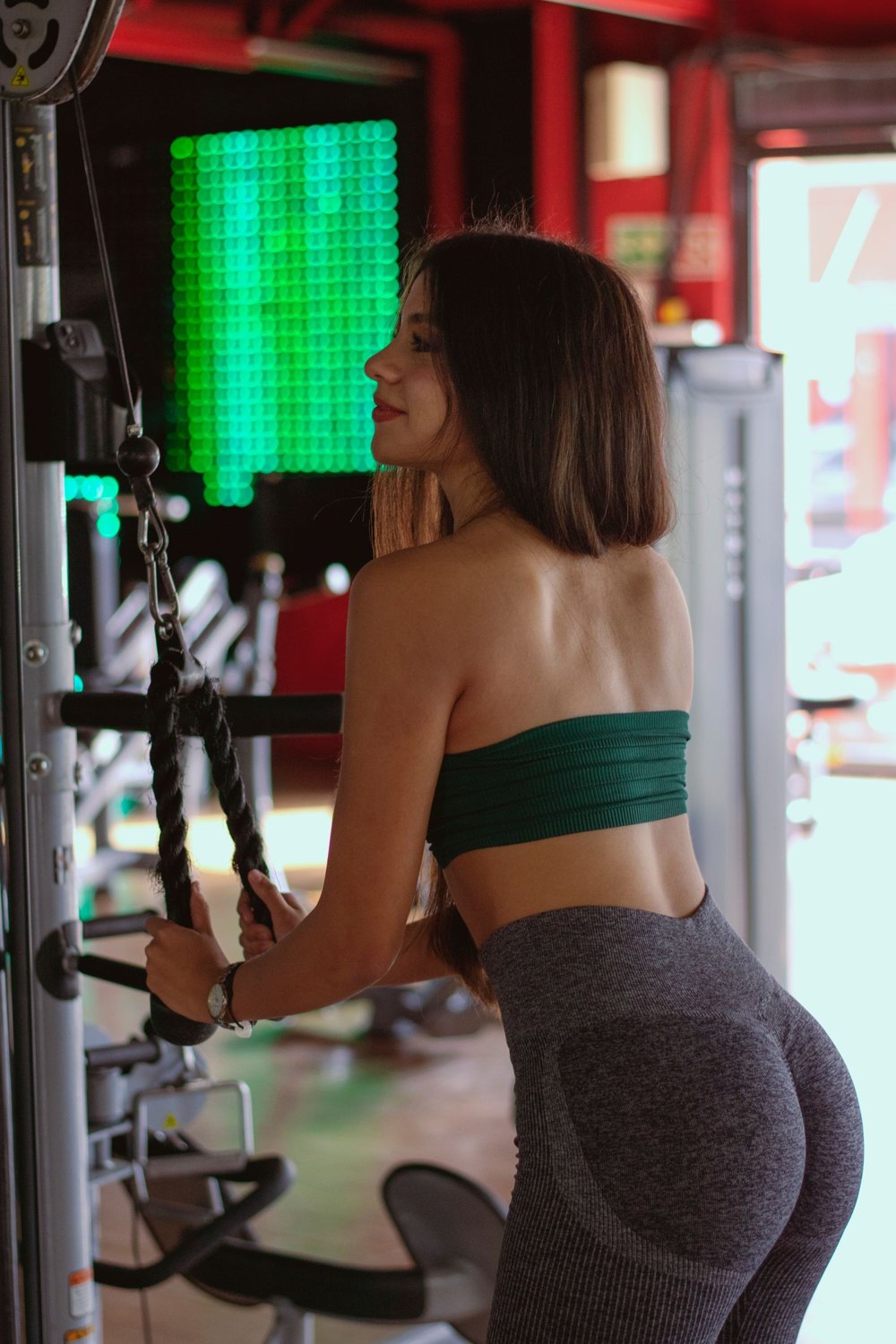
Two machines can carry the same exercise name and feel completely different. One moves through a fixed arc, another uses a cable, and a third begins with resistance before you add any plates. Familiarity with the name is not familiarity with the equipment.
Read the machine's instructions and ask staff for an orientation. Identify the seat, backrest, pads, handles and range adjustments. Learn how to enter and leave the machine and how to stop if the movement does not feel right. Those questions matter before selecting a training load.
Adjust while unloaded
Most settings should be changed with the weight stack resting and the machine unoccupied or positioned as its instructions require. Do not pull a pin from a moving or loaded mechanism. Make sure each adjustment locks securely rather than relying on the pad to stay where you placed it.
Try the lightest useful resistance first. Check whether your feet can find the intended support, the handles are within comfortable reach and any pads contact the appropriate area. If the machine forces an uncomfortable position even after adjustment, choose a different exercise instead of assuming you must adapt yourself to it.
A smooth first repetition is informative, but complete several easy movements before deciding the setup fits. Watch how the return feels as well as the push or pull. A handle may be accessible at the start but difficult to control at the end of its travel.
Do not compare the stack label with a free weight or another machine. Cable ratios, lever lengths and starting resistance affect the experience. Begin a new record for the device, including identifying details if your gym has several models.
Leave yourself a usable note
“Chest press, window-side machine, seat four” is more helpful than “chest machine.” Add the weight and repetitions once you have completed a manageable set. If an adjustment did not work, record that too so the next visit does not begin with the same experiment.
Stop and report obvious damage, frayed cables, loose pads or a locking mechanism that will not engage. Do not continue because the machine still moves. A staff member needs to assess the problem.
Learning a machine may occupy much of its first use. That is acceptable. Once the controls and fit are clear, future sessions become simpler, and the resistance you choose can be based on the exercise rather than on uncertainty about what the equipment is doing.