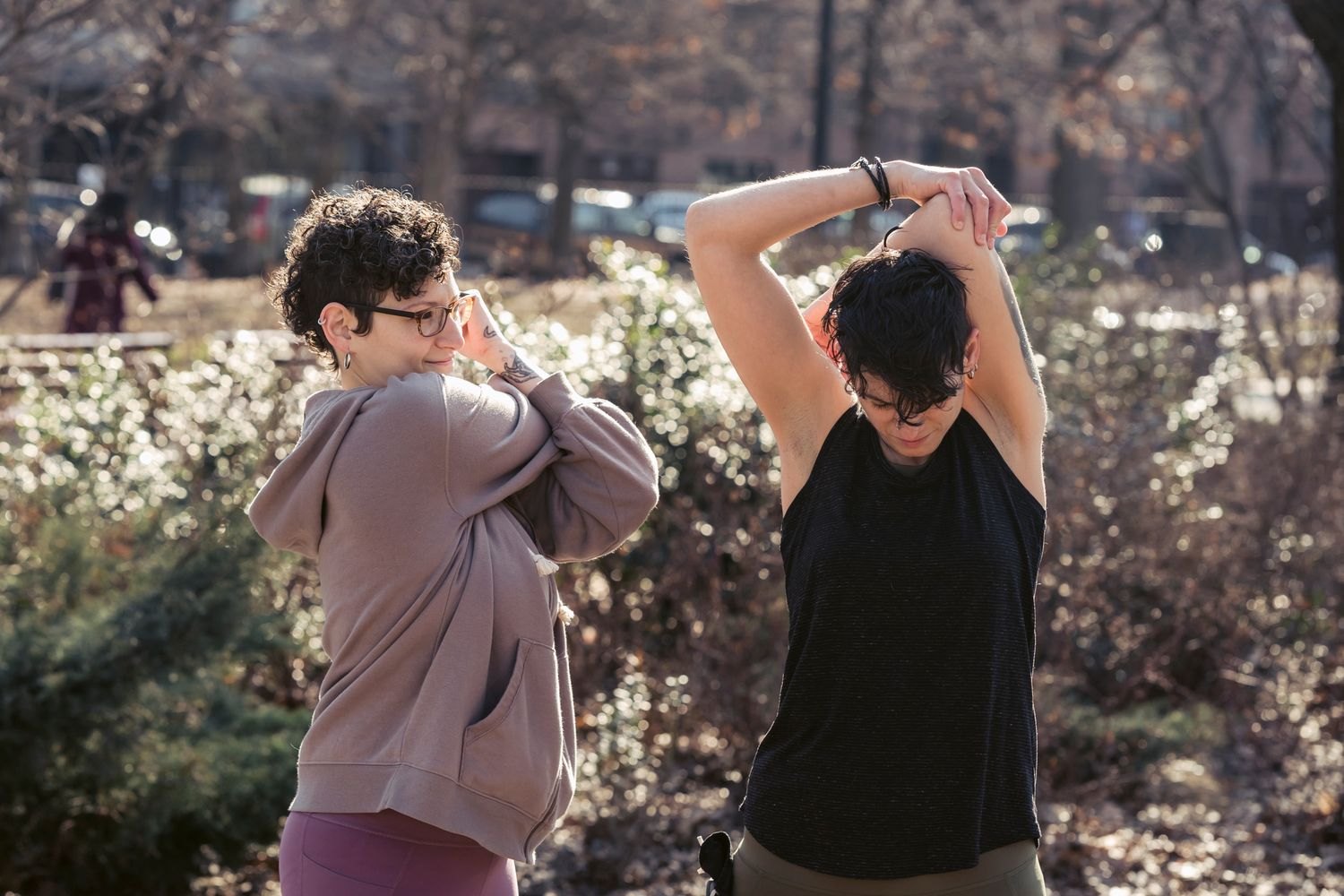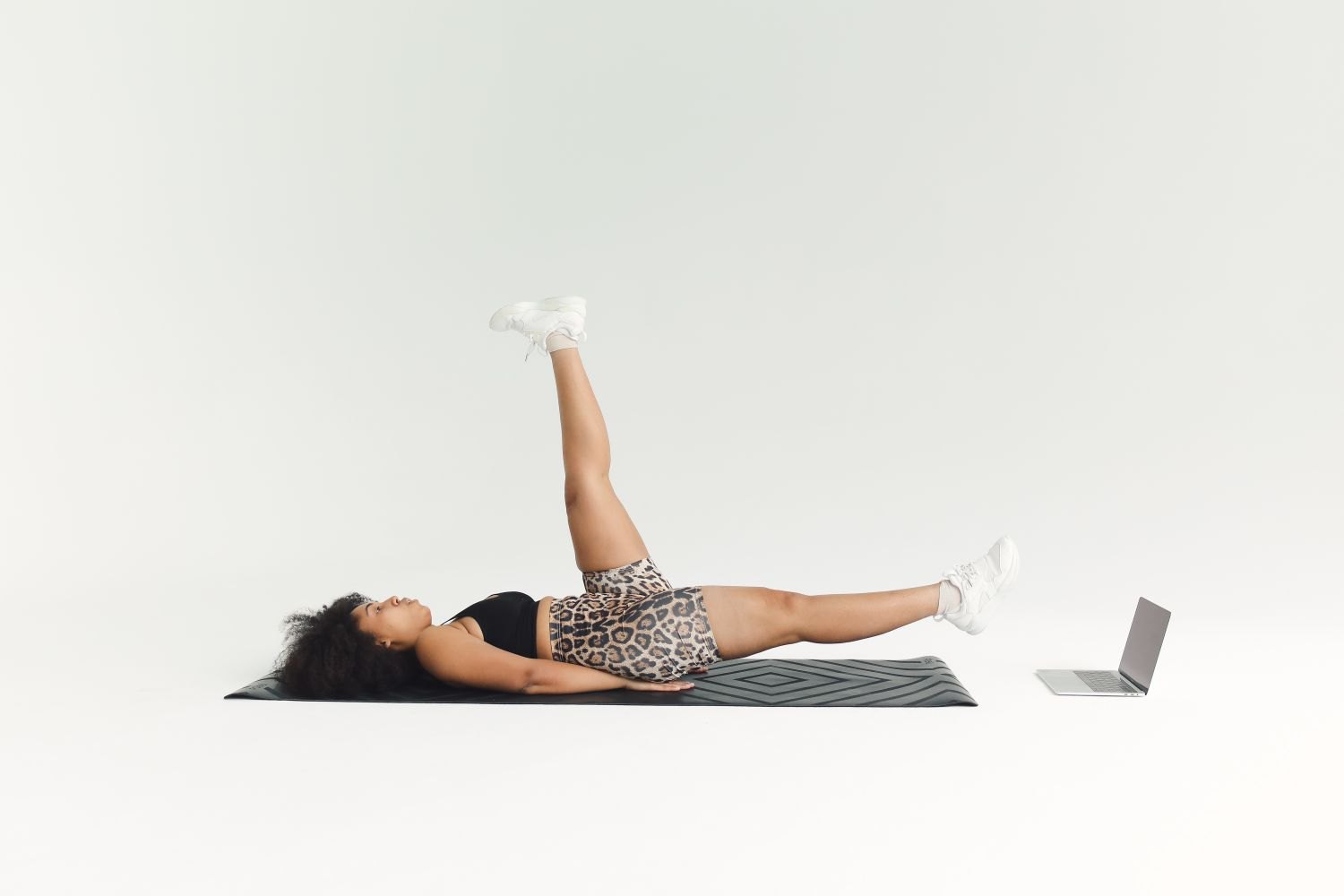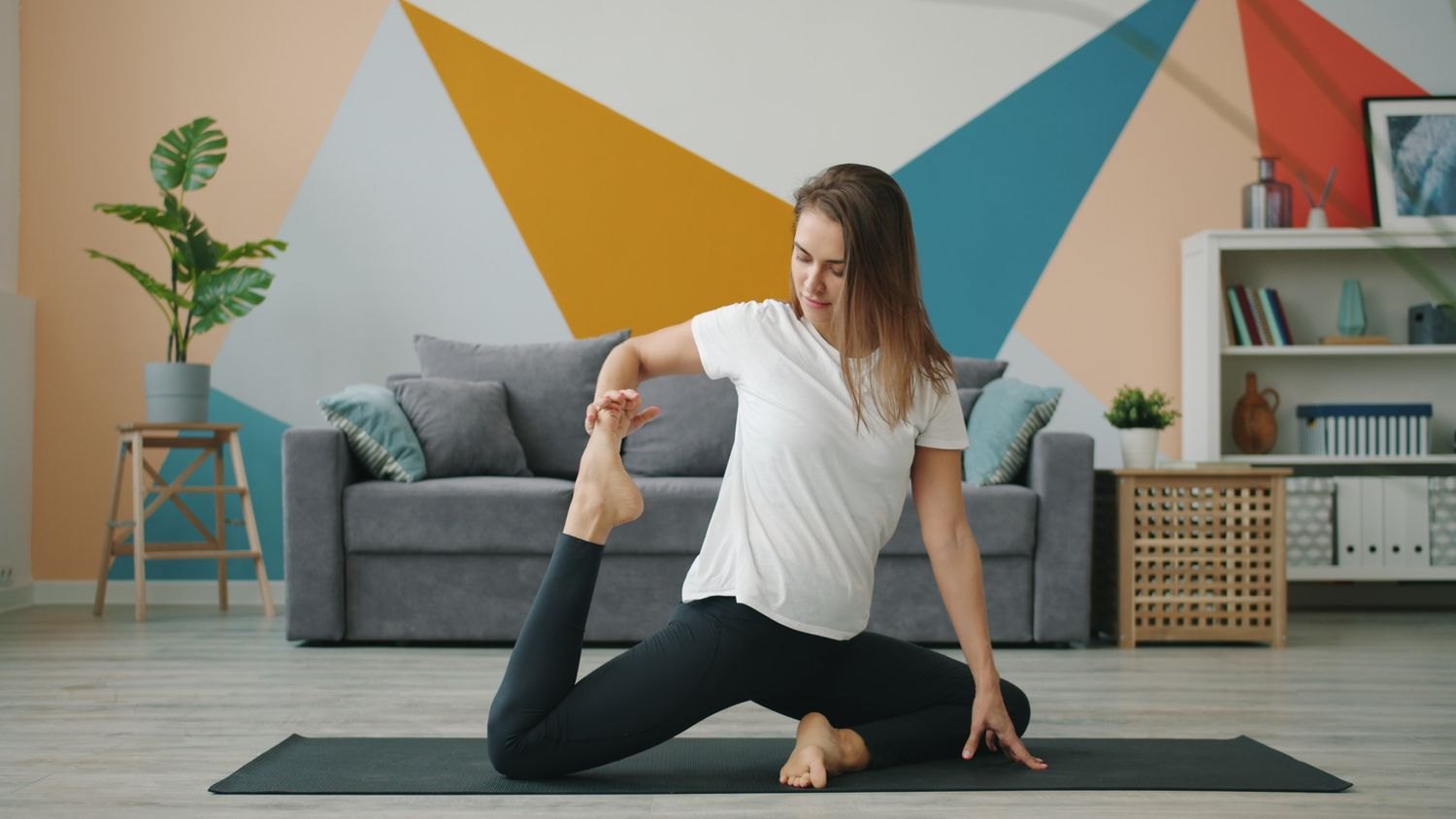
“Do some mobility” is a broad instruction. It can lead to twenty minutes of random stretches with little sense of what changed. A clearer question gives a short session a purpose: can you reach comfortably toward a shelf, turn without forcing the movement or settle into a familiar exercise position?
Choose an ordinary task or a specific part of your training. Describe it without diagnosing yourself. “My squat setup feels crowded” is an observation. “My hip is misaligned” is a medical-sounding conclusion you cannot establish from that feeling alone.
Make the question small enough to answer
Try the movement gently in a safe position. Notice what feels unfamiliar, where you lose balance or whether the setup itself is awkward. A different chair height, stance or support may change the experience before any stretching is involved.
Then choose one or two comfortable movements that relate to the task. If turning is the question, a small seated turn may be easier to explore than a complicated floor sequence. If getting down to a mat is the difficult part, standing or seated options may be more useful than insisting that mobility work belongs on the floor.
Move within a range you can control, without trying to create a dramatic before-and-after result. A sensation of stretch is not a requirement for every movement, and more intensity does not necessarily provide more useful information.
After a brief practice, revisit the original task once. Does the setup make more sense? Is the movement comfortable? If there is no obvious change, that does not prove you failed. One session is a small observation, not a test that identifies the cause of every limitation.
Know when the question needs help
Pain, a new restriction, persistent asymmetry that concerns you or difficulty with an everyday activity may deserve assessment by a qualified health professional. Repeatedly trying new stretches is not a substitute for understanding a symptom.
For general exercise, a useful note could be “turning felt easier with feet supported” or “wall reference helped me find the hinge.” That describes an actionable setup. It is more informative than labeling the whole body tight.
Keep the question for several sessions if it remains relevant, rather than collecting a new routine each day. When you understand the movement or no longer need the extra practice, simplify. Mobility work can be a small part of activity, directed by what you want to do, rather than an endless list of positions to acquire.