A door clicking shut is only one part of setting up a doorway anchor. The door must also be suitable for the particular product, the anchor must be installed correctly, and nobody should be able to open the door into the exercise unexpectedly. None of those checks can be replaced by pulling harder to see what happens.
Find the instructions for the exact anchor and equipment combination. Resistance-band anchors and suspension-training anchors can carry very different loads. Do not assume that a loop supplied with one product is compatible with another simply because a clip fits through it.
Start with the door
Check the door type, frame, hinges and closure against the manufacturer's requirements. For example, TRX's doorway guidance specifies a suitable solid door opening away from the exercise area and excludes several unsuitable door types. Those instructions illustrate why a generic instruction to use any closed door is inadequate. Your own product's requirements take precedence over a video using a different anchor.
Damage, looseness, sharp edges or uncertainty about construction are reasons to choose another setup. A lock can help prevent accidental opening, but it does not strengthen a weak door or repair a loose frame. Keep the doorway available for safe exit and do not interfere with required access.
Tell everyone who might use the door that the anchor is in place. A sign can be a reminder, but it is not a structural safeguard or a substitute for supervision around children. If you cannot control access during the session, choose an exercise that does not depend on that door.
Check the exercise position too
Pay attention to which side of the door you are using. A demonstration filmed from the opposite side may make the setup look familiar while reversing the direction of force on the closure. Do not infer the correct side from where the camera happens to stand. Compare the manufacturer's diagram with your own hinges, frame and exercise position before attaching anything.
A rented room can introduce another uncertainty: you may not know how the door or frame was constructed or repaired. Permission to exercise there does not establish its load-bearing suitability. If the information needed by the product instructions is unavailable, use an activity that keeps its resistance independent of that doorway. Buying a heavier-duty strap would not answer the question about the building.
Check what happens on the other side as well. A shared hallway, a door used for deliveries, or an adjoining room occupied by someone else may make access difficult to control. Scheduling a quiet moment can reduce interruption, but it cannot make a structurally unsuitable installation acceptable.
Once the permitted installation is complete, inspect the attachment and apply load progressively as directed by the manufacturer. Stop if the door, anchor or fittings shift, or if anything gives you reason to doubt the setup. Keep the band or strap away from edges that could damage it.
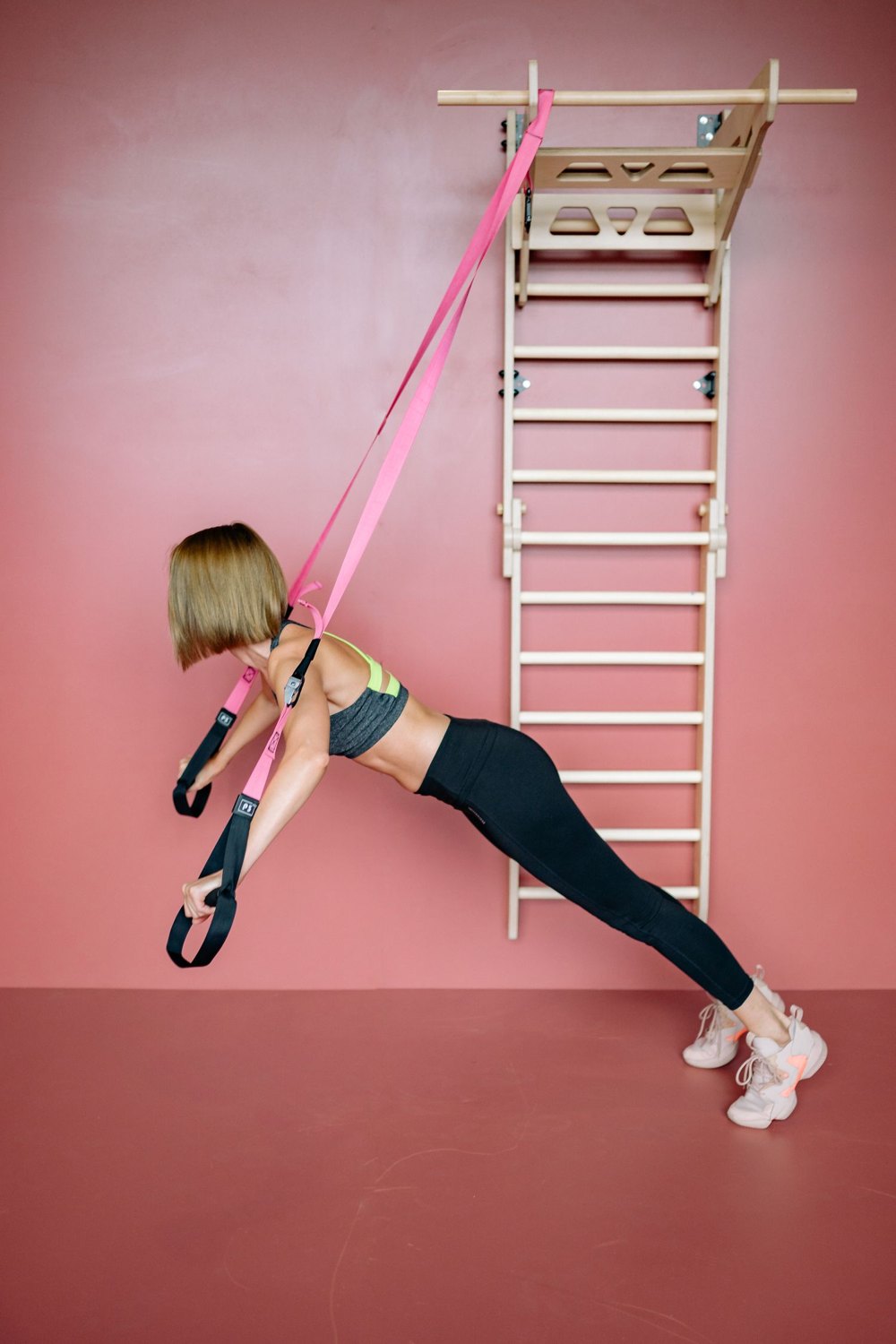
Rehearse where your body and equipment will move. The anchor may be secure while the exercise area is too short, or while a stretched band points toward your face. A different exercise is a better answer than crowding yourself against furniture.
Unload the equipment before making adjustments and remove the anchor after use according to its instructions. Leaving it on the door can make an ordinary doorway less predictable for the next person. A temporary home setup still needs the same deliberate installation each time.