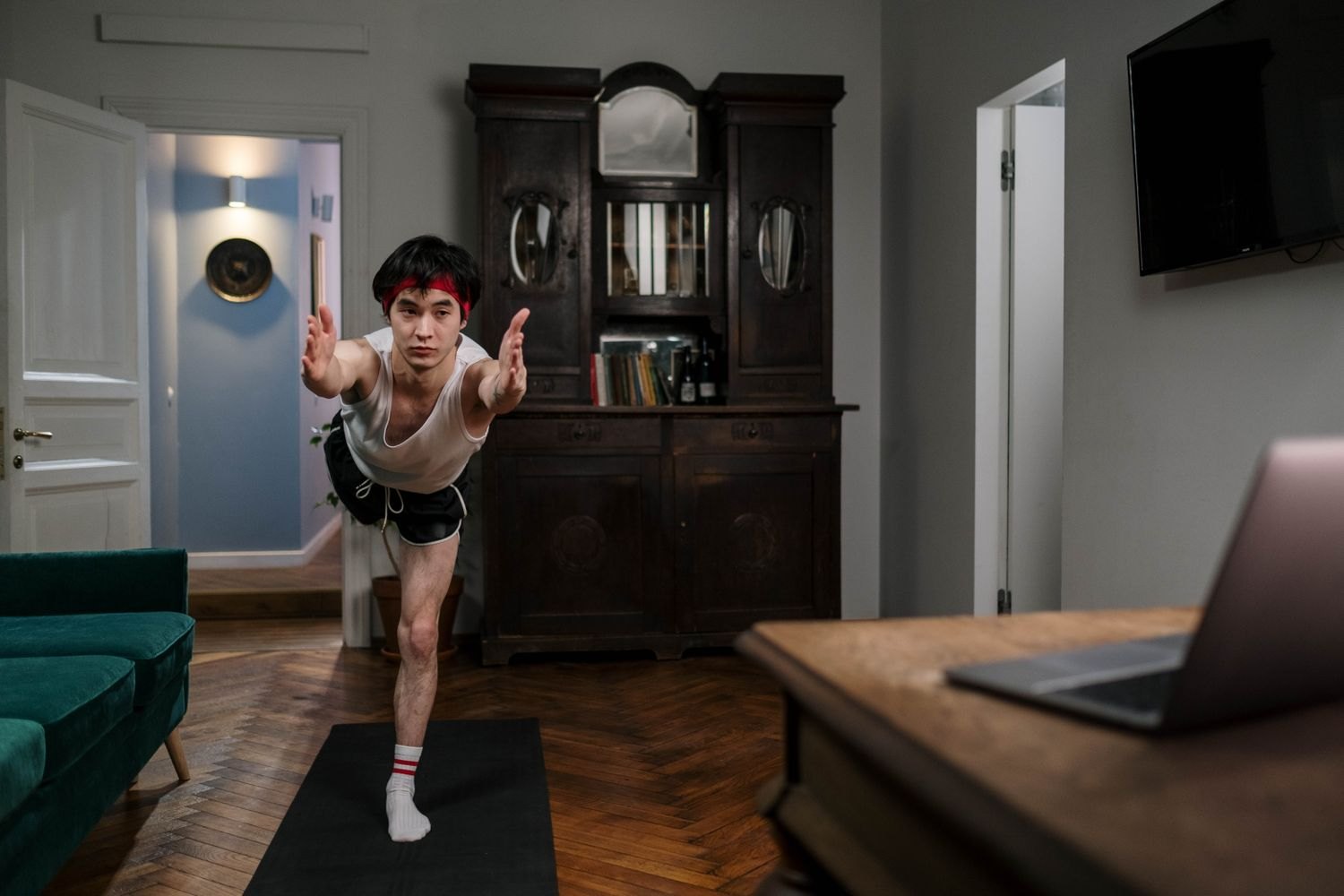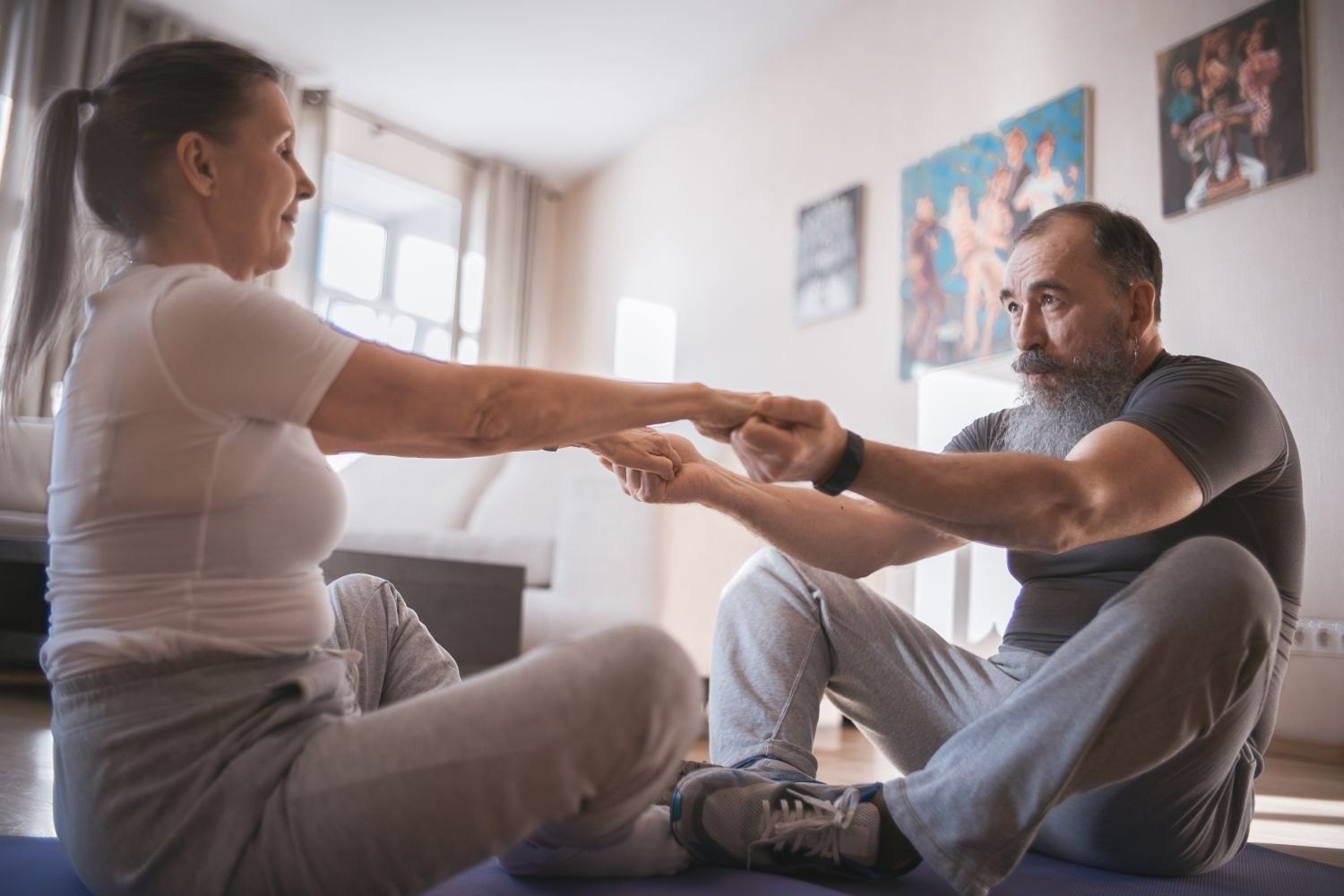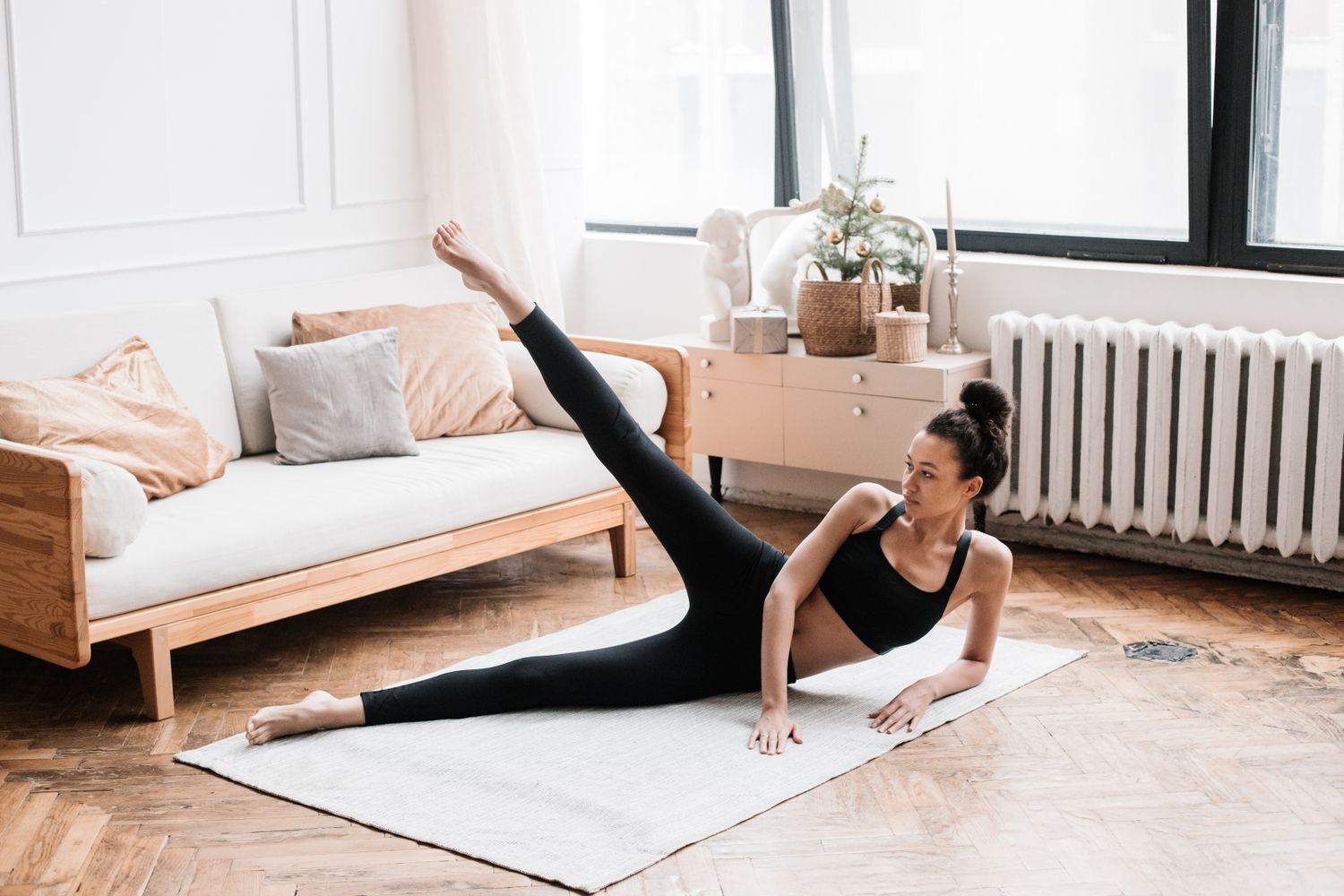
The middle of the living room may be the largest clear patch in the home, but it is also a route to the sofa, door, television and kitchen. A mat placed there changes how everyone else moves through the room. Agree on a short period of use rather than expecting people to navigate around you indefinitely.
Check the floor before unrolling the mat. Small toys, crumbs, pet hair and damp patches can affect comfort or grip. Move loose rugs if they slide, and avoid placing the mat across a change in floor level. Its edges should lie flat rather than curl into the path beside you.
Choose an orientation that leaves a route around the working area. Remember that arms and legs may extend beyond the mat. A narrow walkway between your moving foot and a coffee table is not a clear route just because another person can squeeze through it.
Keep the session simple to enter and leave
Put the device where you can see a demonstration while resting. Avoid twisting your head toward a television throughout a floor exercise. If the screen is in the wrong place, preview the movement and pause it rather than arranging your body around the furniture.
Use a small number of familiar movements so you do not need to rearrange the room repeatedly. If weights are involved, give them a stable resting place outside the route others use. Do not put them underneath a chair where they may be hidden when the session finishes.
A shared space also means interruptions. When someone needs to pass, stop in a safe resting position and let them through. Do not ask them to step over a stretched band or moving limb. If interruptions are constant, choose another time or a standing routine that needs less room.
Restore the room fully
Wipe and dry equipment as its care instructions require, then put it away. A damp mat rolled immediately into a cupboard is not an ideal reset. Avoid leaving a towel on a slippery floor or weights beside the sofa with the intention of returning later.
The useful measure is how easily the arrangement can be repeated. If every session begins with moving several heavy pieces of furniture, simplify the exercise selection or reduce the equipment. A shared living room can support floor work without becoming a permanent obstacle course.