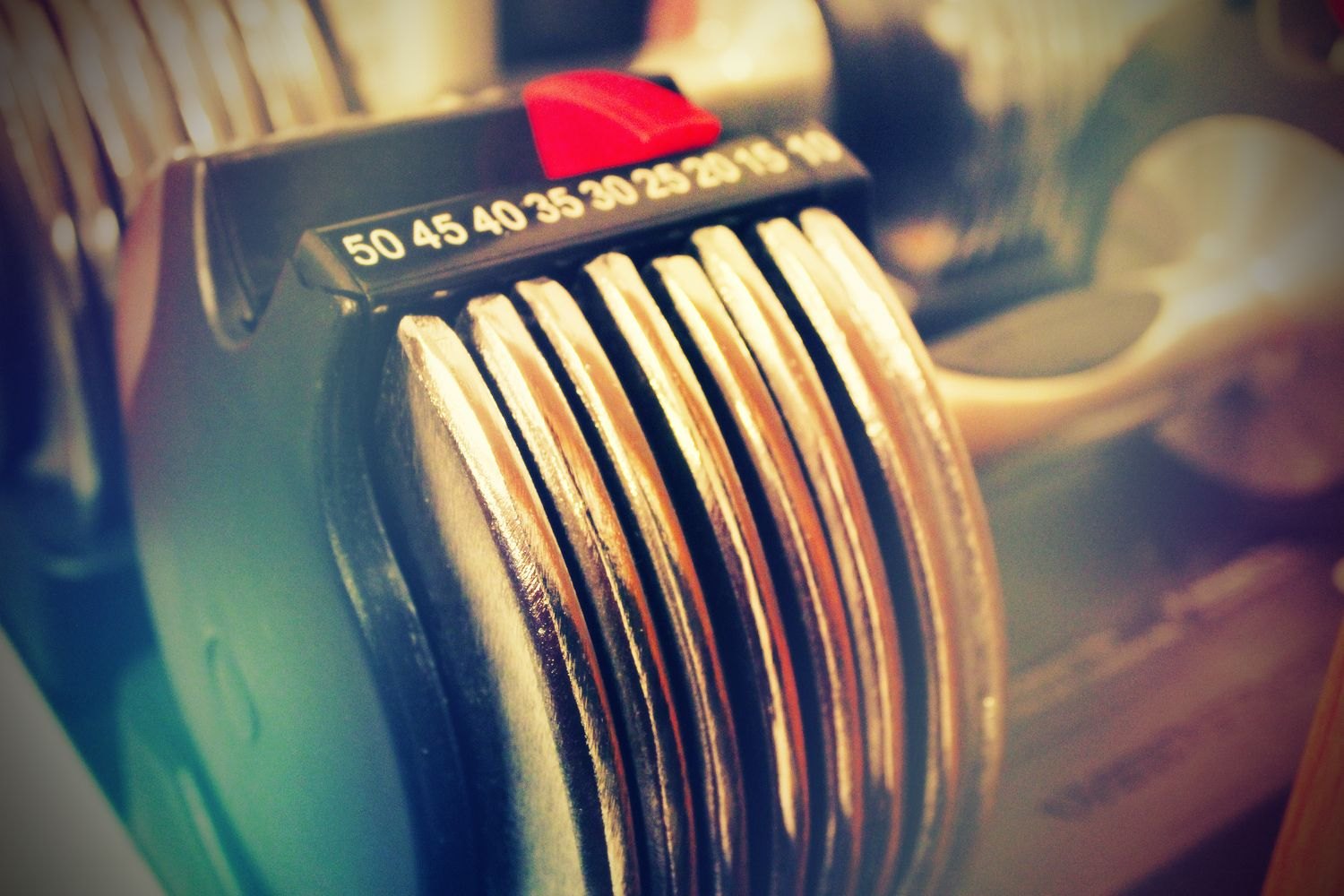
One adjustable dumbbell can provide several loads without occupying the space of a full rack. It also creates a step between exercises: returning the weight to its base, changing the setting and checking that the selection is secure. Plan for that step instead of treating it as an interruption.
Read the manual for the exact model before building a routine around it. Selector dials, pins, threaded collars and plate-loading systems work differently. Some require the handle to be seated in a base before adjustment; others have separate fasteners. A method demonstrated for a similar-looking product may be wrong for yours.
Before using secondhand equipment, identify the model rather than relying on the seller's description. Locate its labeling and find the matching instructions and current recall information. Missing plates, an unfamiliar replacement part or a base that seems almost the right size are reasons to stop and establish what you have. Parts that physically fit together are not necessarily an approved combination.
This is more than an administrative detail. A 2025 US recall covered BowFlex 552 and 1090 adjustable dumbbells because plates could detach during use. Owners of affected equipment were instructed to stop using it and follow the recall process. Check the current notice for identification and remedy details; an old manual or an apparently successful test lift does not override a recall.
Arrange exercises by useful loads
If two familiar exercises use the same setting, placing them near each other can reduce adjustments. Do not force them to use the same load merely to save time. A weight suitable for a squat may be unsuitable for a one-arm press, even though the handle is the same.
For one-sided exercises, complete both sides before changing the setting unless your plan has a specific reason to do otherwise. Put the weight down to switch hands if that offers better control. Keep track of the load and repetitions for each side rather than relying on memory during a busy session.
Place the base on the surface specified by the manufacturer, where it cannot slide or obstruct movement. Leave room to lower the dumbbell straight into it. A base squeezed beneath a table may save floor space while making every adjustment awkward.
Check after each change
Confirm the selected weight and engagement using the manufacturer's procedure. Do not assume a dial that appears aligned means the plates are correctly secured. If a plate hangs unevenly, a selector resists movement or the mechanism behaves differently, stop using the equipment until the issue is resolved.
Avoid dropping adjustable dumbbells or using them in ways the manual excludes, such as supporting bodyweight through the handles when that is not permitted. An object that can be lifted is not automatically suitable as a push-up stand. Keep the mechanism and base clean according to the care instructions, and check current manufacturer safety notices for your model.
The routine can acknowledge the mechanism without revolving around it. For example, keep a lighter-load exercise and an unloaded movement together, then pause to prepare the heavier exercise. Have the written plan beside the base so you can check the next setting while the weight is safely parked. If the routine keeps sending you back and forth through several settings, simplify the order before making the next session faster.
A short routine may work best with only one or two load changes. Write those changes into the plan and give yourself a proper pause for each. The benefit of adjustable equipment is a choice of suitable resistance, not the ability to hurry through every available setting.