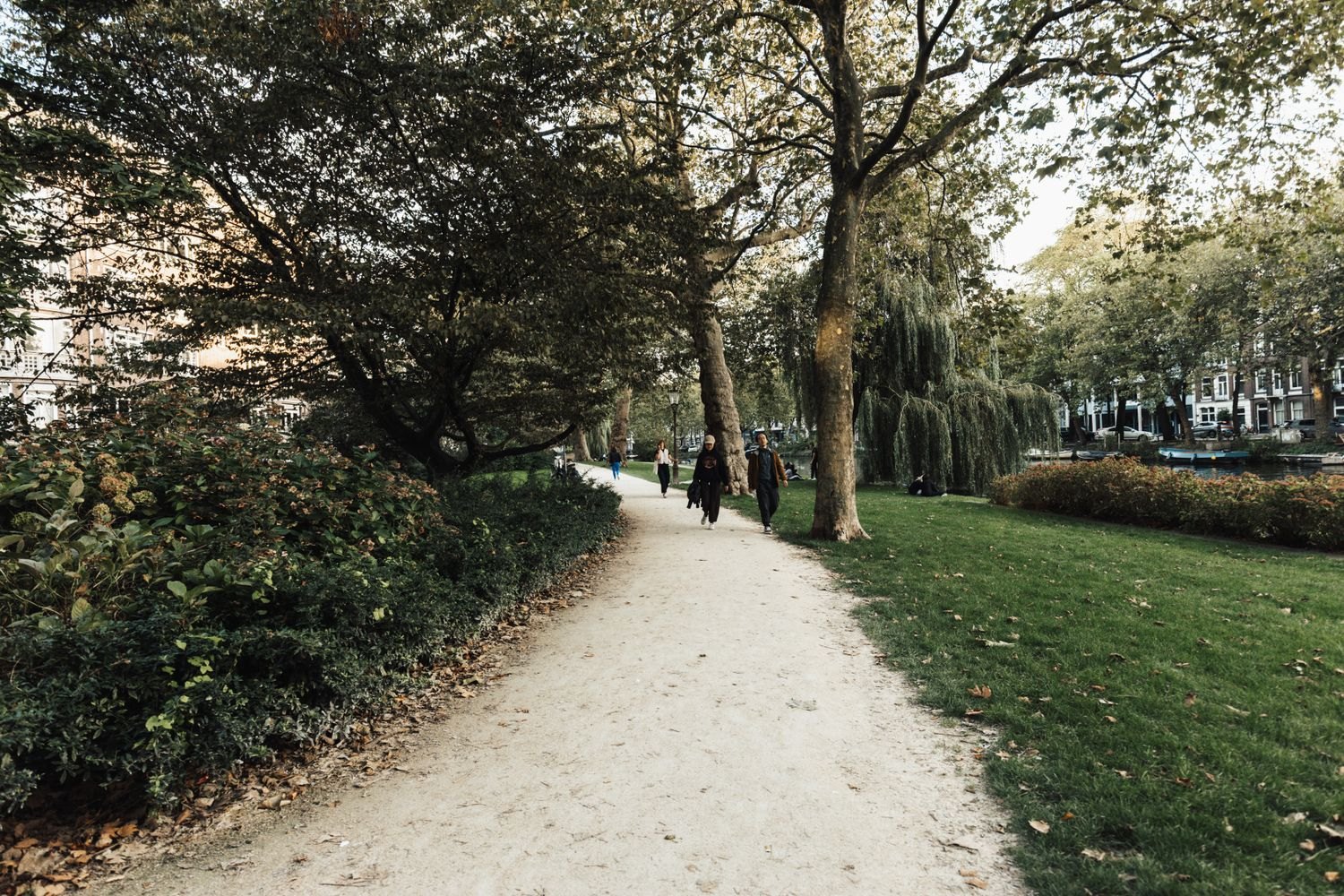
A useful short loop has more than a start and a finish. It has a few natural places where you can decide whether to continue. A park with connected paths, for example, may offer a direct return after one circuit and a longer route around the playing fields. That flexibility is particularly helpful when you are getting back into regular walking.
Choose a route whose exits actually take you somewhere useful. A side path that reaches a locked gate is not an exit. Check opening times, crossings, and the route back to your home or transportation. If the loop goes through a park, remember that the shortest line on the map may cross a field rather than a maintained path.
Plan the small version first
Write down the route you would be happy to complete on a busy day. It might be one circuit between two entrances or a walk to the end of a quiet block. This is the main plan. Additional circuits can remain optional, rather than becoming a promise you feel obliged to keep.
At the decision point, ask a concrete question: do I have time for another circuit and a relaxed return? Consider the weather and how you feel as well. If the answer is no, take the planned exit. Avoid turning the decision into a comparison with somebody else’s distance or yesterday’s outing.
A repeated loop does not have to become monotonous. You can walk it in the other permitted direction, notice seasonal changes, or use it as a conversation route. Keep your awareness of other users, particularly when a path is shared with bicycles. Familiarity is helpful, but it is not a reason to stop watching crossings and uneven surfaces.
For an evening route, inspect the lighting and access during the hours you intend to use it. A pleasant midday circuit may be isolated or locked after dark. Choose another route when the conditions no longer match the plan rather than treating flexibility as a reason to keep going anywhere.
The real advantage of a short loop is that finishing early is built into its design. You can make a sensible decision halfway through and still end where you intended. That makes it easier to start on days when the available time is clear but the available energy is not.