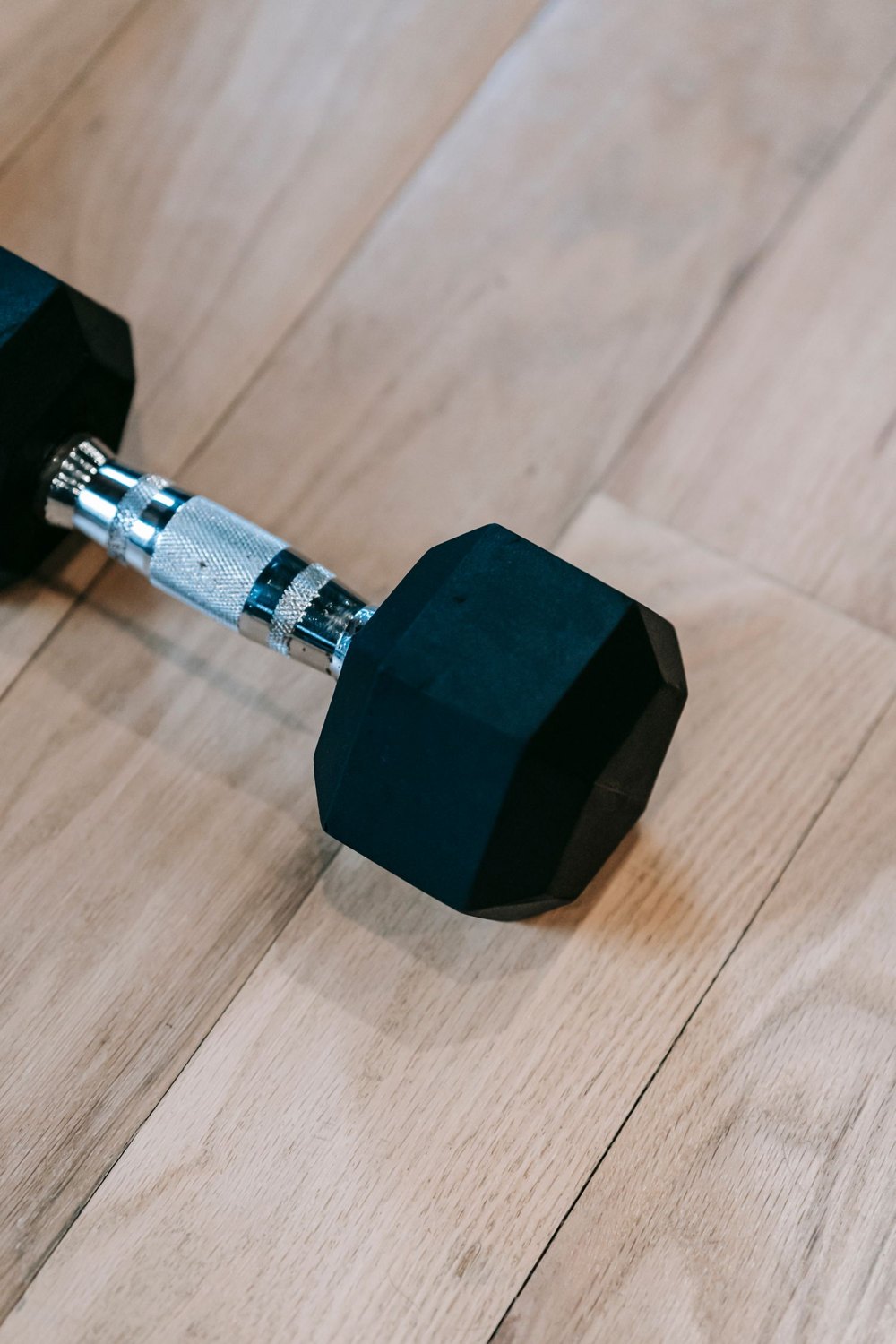
One dumbbell does not require a complicated workout. It requires a clear decision about which movements the weight suits. If it is comfortable for a two-handed squat but too heavy for an overhead press, the session should reflect that difference.
Choose two or three familiar movements before starting. A lower-body exercise and an upper-body exercise may be enough for the time available. You can include an unloaded movement as well. There is no obligation to hold the dumbbell during every minute simply because it is the only piece of equipment in the room.
Place it in a stable resting spot that you can reach without stepping over it. Check the area for the full movement, including any backward step and the route you will use to get down to the floor. The working space extends beyond the length of a mat.
Use separate sets when they make the session easier
A continuous sequence can look efficient on a screen, but changing from a two-handed hold to a one-handed exercise takes attention. It may be simpler to complete one exercise, put the weight down, rest and then prepare the next. You lose little by having a deliberate pause between different setups.
For a one-sided exercise, decide how you will work both sides. Begin with the side that needs more concentration, use a manageable amount of work, and give the other side the same opportunity. Place the weight down before changing hands if that is easier to control. Passing it behind your back or tossing it across your body adds nothing useful to an ordinary home session.
Consider how a two-handed squat and a one-arm row would use the room differently. The squat may need a clear vertical path in front of your chest; the row may need a supported position and space beside you. If the support is uncertain, the row is not ready to include. Having the dumbbell available does not resolve that missing part of the setup.
You can make a simple note with three columns: movement, load, and where the weight rests afterward. The last column sounds mundane until you find yourself finishing a set on the opposite side of the room from the storage spot. A predictable landing place saves you from carrying a tired grip across a cluttered route.
On another day, the same weight might serve a different exercise rather than a longer version of this session. This lets a small collection of equipment cover several needs over time without forcing every possibility into one circuit.
Keep the effort modest while learning the arrangement. A small routine becomes more informative when you repeat it: you can notice whether the grip feels secure, whether one transition needs more space, or whether the load is suitable throughout a set. Constantly changing the exercise list makes those observations harder.
Finish while you can still put everything away carefully. A short session has succeeded if you completed the intended work with room to breathe and move. It does not need an improvised final challenge to make the time count.
If a movement remains awkward with this particular weight, leave it out. The limitation may be the equipment choice rather than your effort. An unloaded version, another familiar exercise, or a different session on another day can be the more sensible use of what you have.