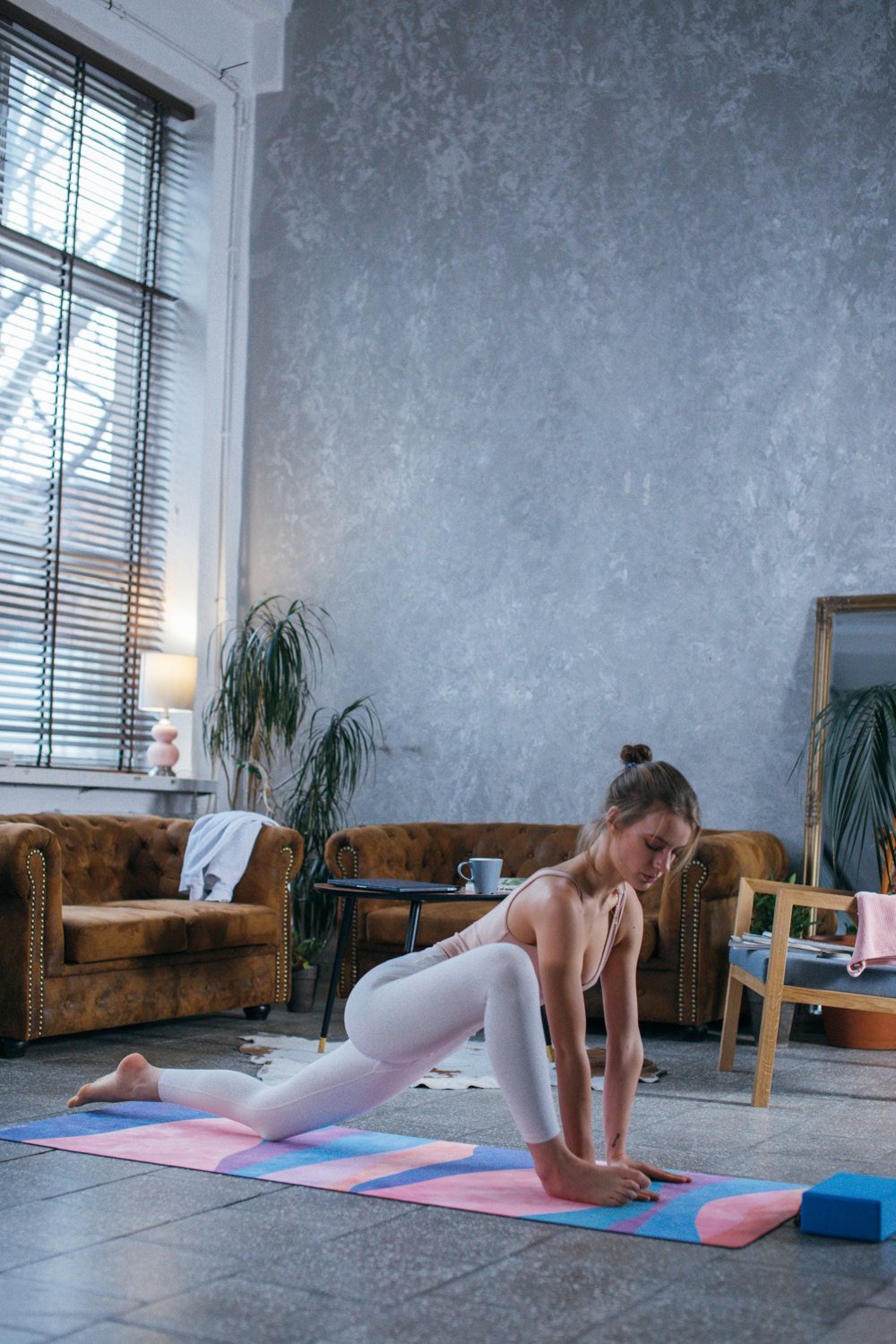
Kneeling on a hard floor can become the main event in an exercise that was intended to work something else. If you spend the set thinking about pressure on a knee or wrist, pause and reconsider the setup. Discomfort is not proof that the movement is effective.
First distinguish contact pressure from pain during the movement itself. A suitable mat or small, stable pad may make a hard surface more comfortable. It will not necessarily solve pain caused by the movement, and it should not be used to push through sharp, increasing or unexplained symptoms.
Test any padding with a light rehearsal. It needs to stay in place and provide a dependable base. A pile of cushions can sink or slide; a folded towel may shift on a polished floor. More softness is not always more useful, especially when your hands or feet must press into the surface.
The floor is optional for many sessions
A wall push-up can offer a pushing movement without placing your hands on the floor. Standing calf raises near a stable support avoid kneeling. A controlled sit-to-stand from a suitable chair can replace some lower-body work that otherwise requires getting down. These are different exercises, so choose them for what they allow rather than calling them identical substitutes.
Do not improvise an elevated floor with a bed or sofa simply to follow a video exactly. Those surfaces compress and can change the balance demands. A dining chair is also not automatically a platform for a plank or a step-up. Use equipment in ways its design and stability permit.
Consider the transition as part of your decision. An exercise may feel comfortable once you are lying down yet be difficult to enter or leave. If getting to the floor is uncertain, choose a standing or seated option, or get individual help with the transition before building a session around it.
You can keep a small menu for different days: perhaps standing movements for a room without padding, and floor work when a suitable surface is available. This is particularly helpful while traveling, when the floor and space may be unfamiliar.
There is no need to prove that you can tolerate the room. Change the arrangement so attention returns to the exercise. If discomfort persists despite an easier setup, stop that movement and seek advice rather than buying progressively thicker mats and hoping one will conceal the problem.