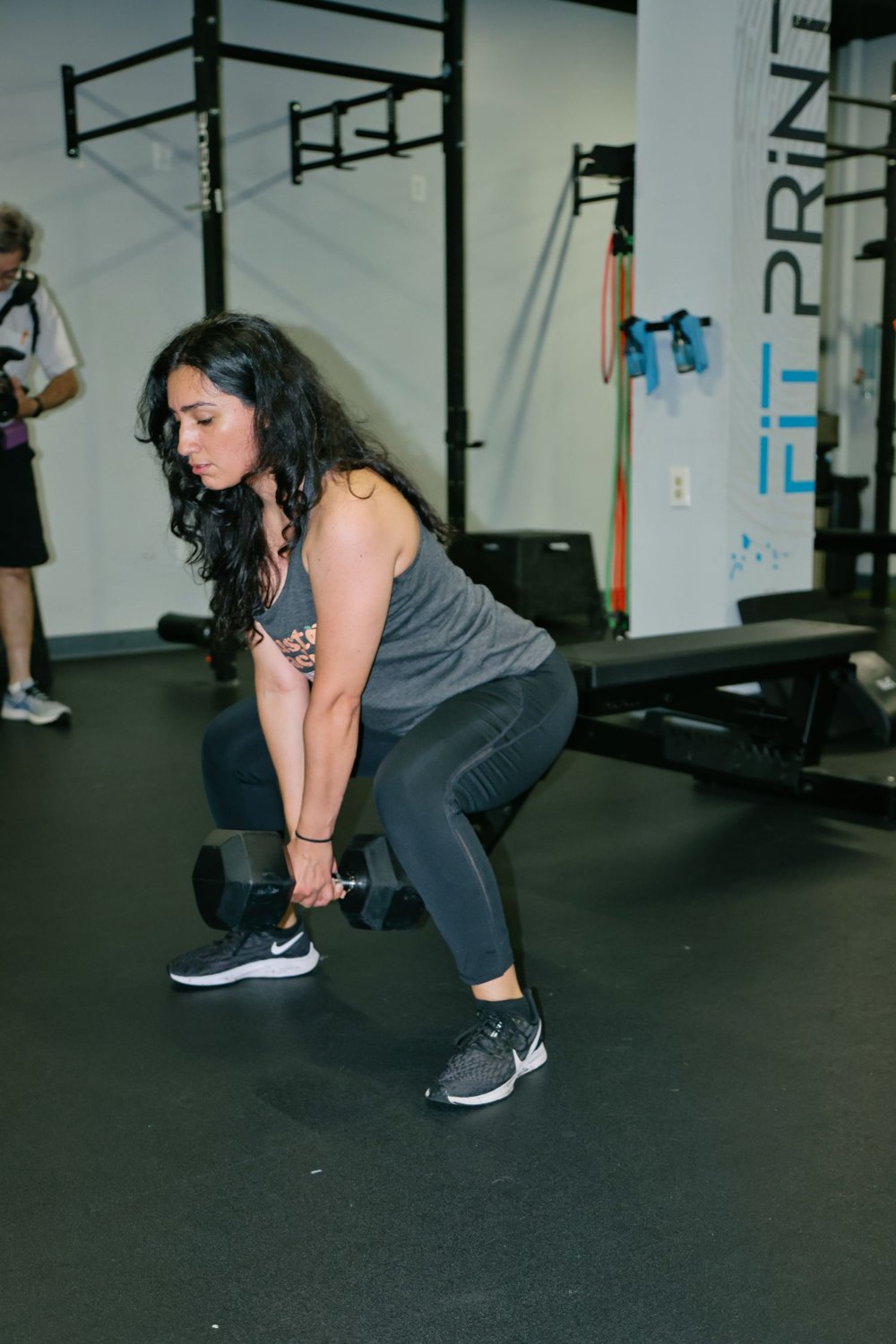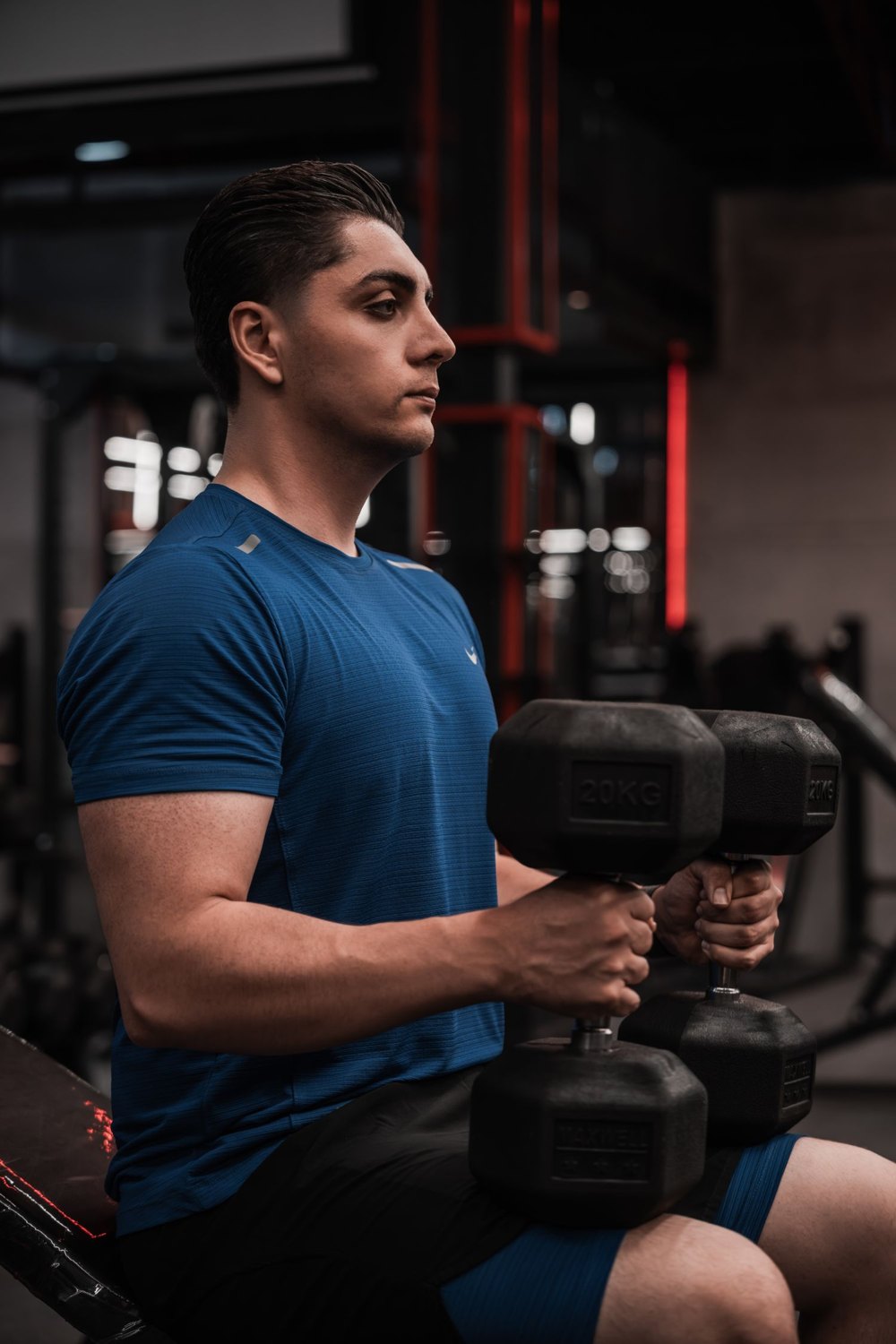
The dumbbell leaves the rack easily. That tells you very little about whether you can press it several times, lower it deliberately and put it away without a struggle. Choosing a training weight is a decision about the whole task, including its ending.
Take an exercise you already understand and begin with a deliberately light rehearsal. Establish the movement range and body position before judging effort. A seated press with the backrest upright is a different task from an incline press, even when the same dumbbells are involved. Keep the setup consistent while you decide whether the resistance fits.
Judge the middle as well as the finish
The early repetitions should give you room to settle into the movement. Later repetitions may require more concentration and move somewhat slower. What should not happen is a complete reinvention of the exercise: swinging the torso to start a curl, bouncing a weight off a surface or shortening every repetition simply to reach a written number.
Suppose a plan calls for a modest set of eight to twelve repetitions. If you reach eight with control and believe a few more would be possible, that can be a sensible starting load. This is an example of choosing effort, not a universal prescription. If the second repetition is already a fight, set the weight down safely and try less resistance. If twelve feels almost effortless, you can consider a small increase after resting, rather than performing dozens of extra repetitions to make the set feel important.
Some equipment jumps are surprisingly large. Moving from a ten-pound dumbbell to a fifteen-pound one adds half again as much weight. There is no requirement to make that jump today. Repeating the lighter weight, gradually adding a repetition within your plan or finding equipment with smaller increments may be more workable.
Keep the test fair
A weight that felt manageable last week can feel different after a poor night of sleep, a long carry from the parking lot or a demanding earlier exercise. Use the warm-up to check today's capacity. Adjusting down is information about the session, not a permanent verdict on your strength.
Record the load alongside repetitions and any important setup detail. “Twenty pounds, ten controlled repetitions, seat position three” is more useful than just “twenty.” Over several visits, that small record shows whether the weight is becoming easier under comparable conditions. Increase when the work supports it, and leave enough control to finish and return the equipment properly.