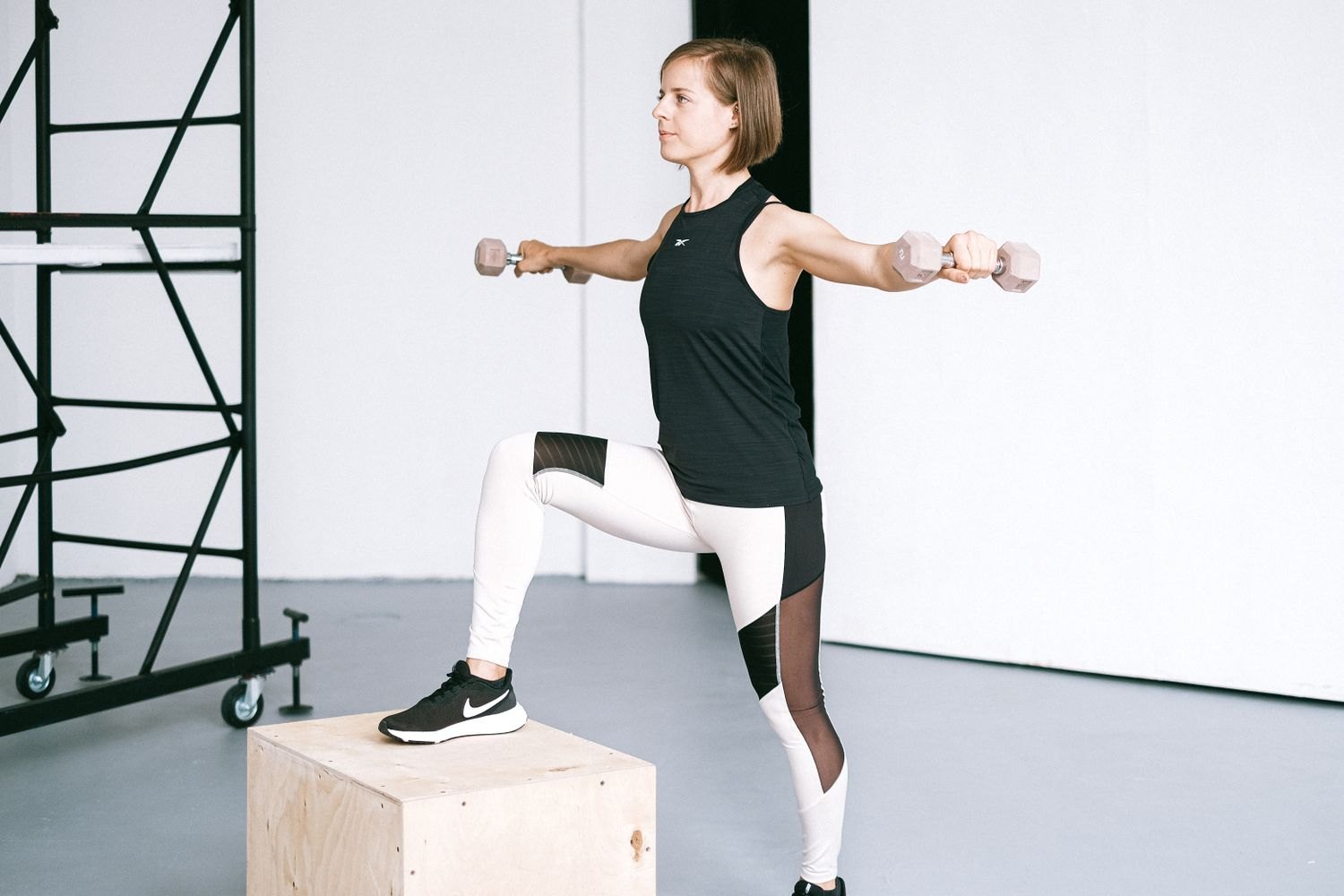
Warm-up weights are not miniature achievements to log as personal records. They are a way to check the movement, prepare for resistance and find out how the exercise feels today. The useful amount depends on the working set that follows.
If you are learning a light dumbbell exercise, a few repetitions with an even lighter pair may be enough to rehearse the path. If the exercise begins with body weight, an easier variation can serve the same purpose: a higher push-up surface before a lower one, for instance.
For heavier familiar lifts, several gradual steps may be more sensible than jumping from an empty bar to the working weight. A qualified coach can help plan those steps. You do not need to test your one-repetition maximum to create a useful warm-up, and a percentage chart is not a substitute for understanding the exercise.
Reduce repetitions as the weight rises
The closer a rehearsal comes to the demanding working load, the less reason there is to perform a long fatiguing set. The purpose is to experience the resistance and confirm the setup while keeping capacity for the planned work. Exact numbers depend on the session; the principle is preparation without unnecessary fatigue.
Allow enough rest between rehearsal sets to judge the next step clearly. If you rush through them, breathlessness may make a familiar weight feel unusually difficult. If a light set already feels poorly controlled, do not automatically continue up the planned ladder. Check the equipment and consider changing the day's workload.
A warm-up can reveal a simple problem. Perhaps the bench is one setting lower than usual, the handle is unfamiliar or your shoes feel unstable on the platform. Correcting that issue before the working set is time well spent.
The load can also reveal something less easily solved: pain, unusual weakness or a feeling of being unwell. Stop the affected exercise and seek appropriate advice rather than treating the warm-up as a hurdle you must clear to reach the real session.
Keep warm-up notes only when they will be useful. A complicated record of every light repetition may distract from the work; a short sequence that helps you reproduce a safe setup can save time. On a day when you use less resistance than planned, update the rehearsal accordingly. It does not make sense to perform a heavier warm-up than the exercise you have sensibly decided to do.