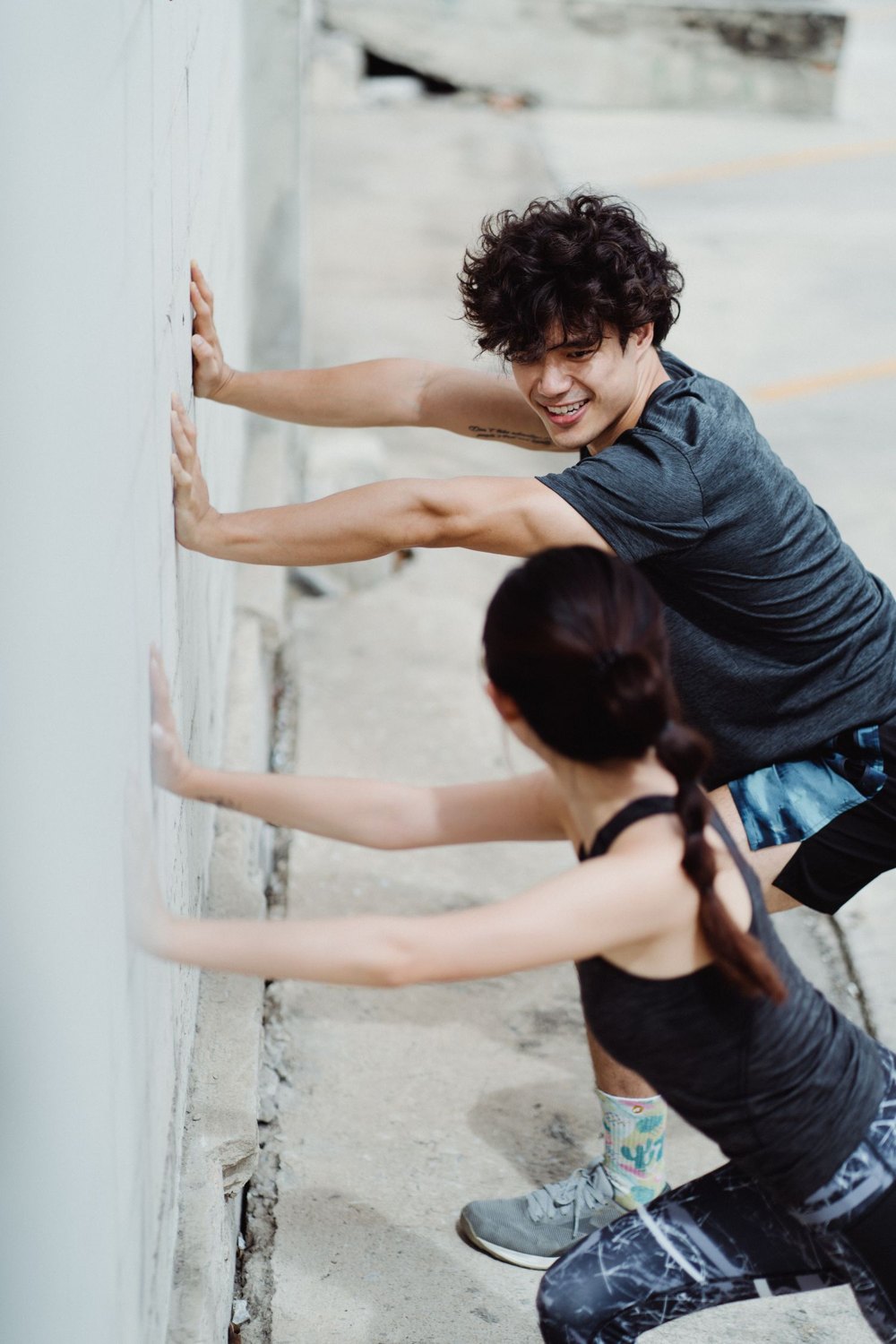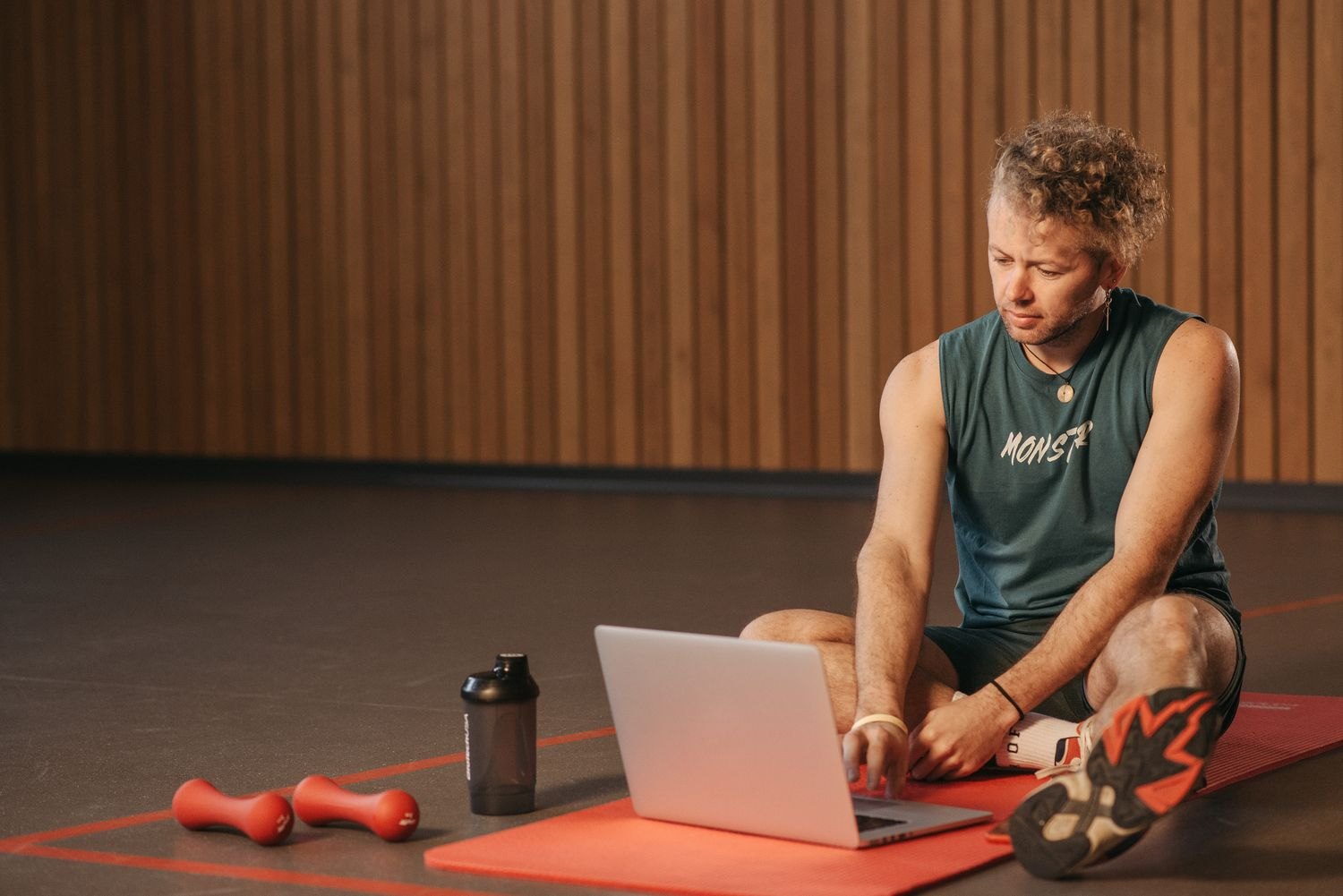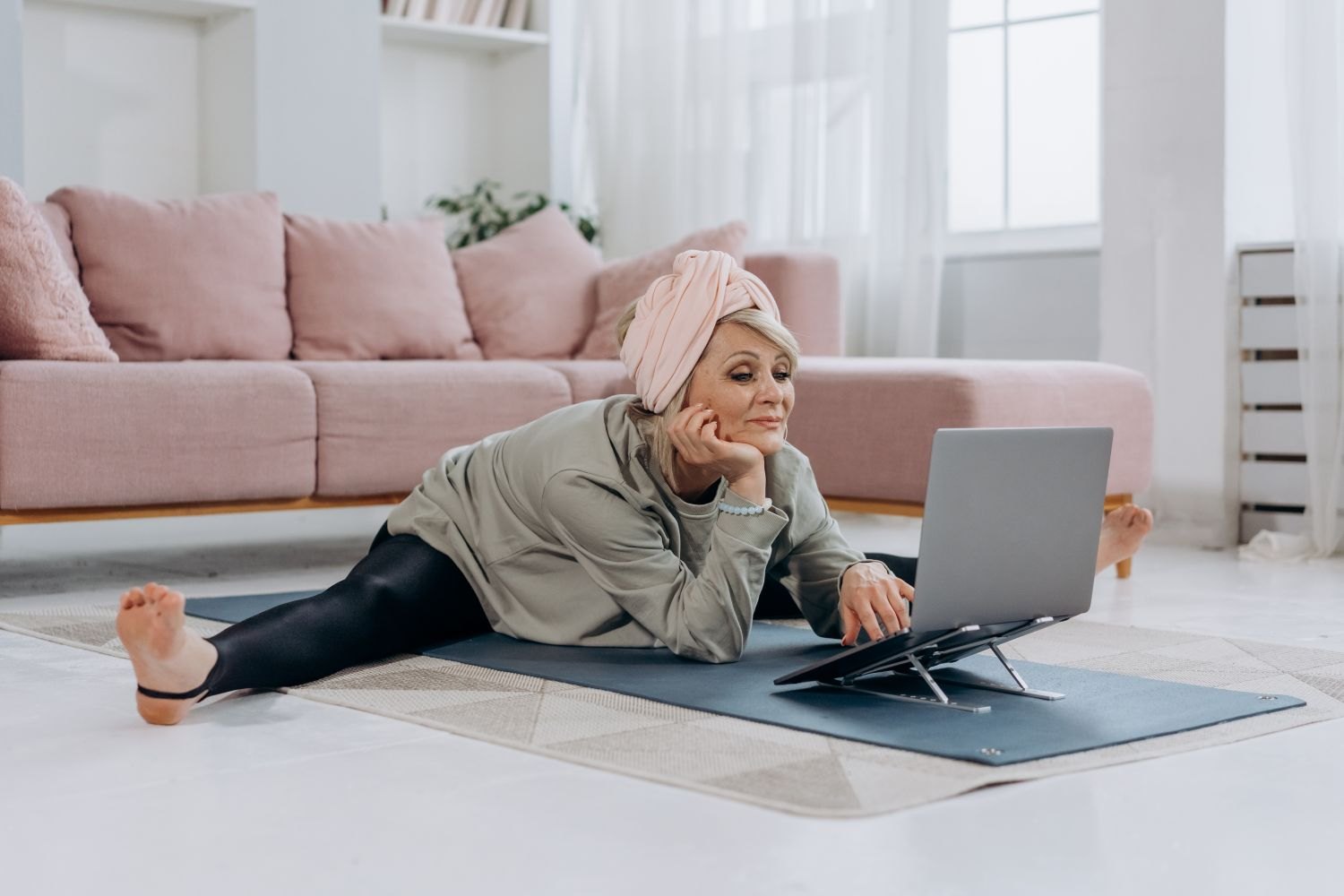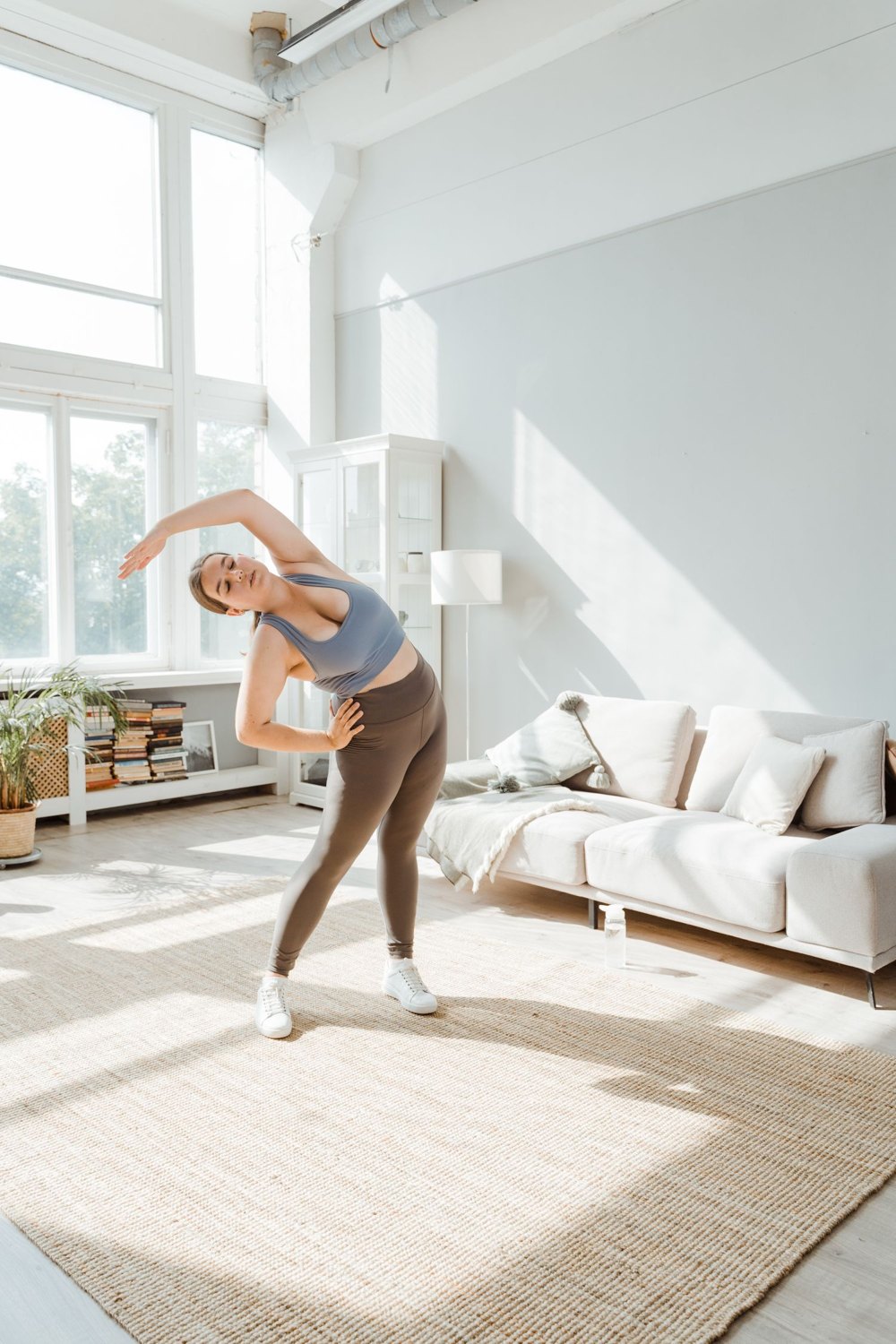
An empty rectangle on the floor can be misleading. It may hold a mat while leaving a hand close to a lampshade, a backward step close to a coffee table, and a weight close to a door that someone else might open. Before exercising, check the room in three dimensions.
Begin without equipment. Rehearse an easy bend at the hips, a comfortable reach and a step in each direction you intend to use. Move slowly enough to notice the edges of the space. This is a layout check, not a flexibility test; do not reach farther than your planned exercise requires.
Look behind you as well as ahead. A backward movement can bring a heel toward a rug edge or a low stool that was easy to overlook while standing. Make sure you can return from the step without squeezing between objects. If the session includes a weight, allow additional room for its ends and for setting it down.
Doors, drawers and overhead objects
Check what can enter the area while you are moving. A cupboard door, desk drawer or room door may swing into an otherwise clear space. Choose a position that avoids those paths, and let others know when the area is in use. Do not block the room's exit in order to create a workout corner.
Overhead clearance is equally specific. A ceiling fan that is switched off still occupies space. A low beam may be outside your standing position but above the place where you step. Avoid exercises whose equipment path comes close to fixtures rather than trying to remember to duck during a repetition.
Remove cables and loose items from the floor before bringing in weights. Moving them mid-session invites the temptation to step over them repeatedly. Put a phone or water bottle somewhere that can be reached during a pause without crossing the working area.
Once the arrangement works, use a simple reference such as the edge of a rug outside the exercise zone to remember where to start. Do not add tape or markers that create a slippery patch or damage the floor. The aim is an easy-to-repeat position, not a precisely measured studio.
If one movement needs more room than the others, give it another place or another day. A small room can support a useful session when the exercise choices fit its real boundaries.