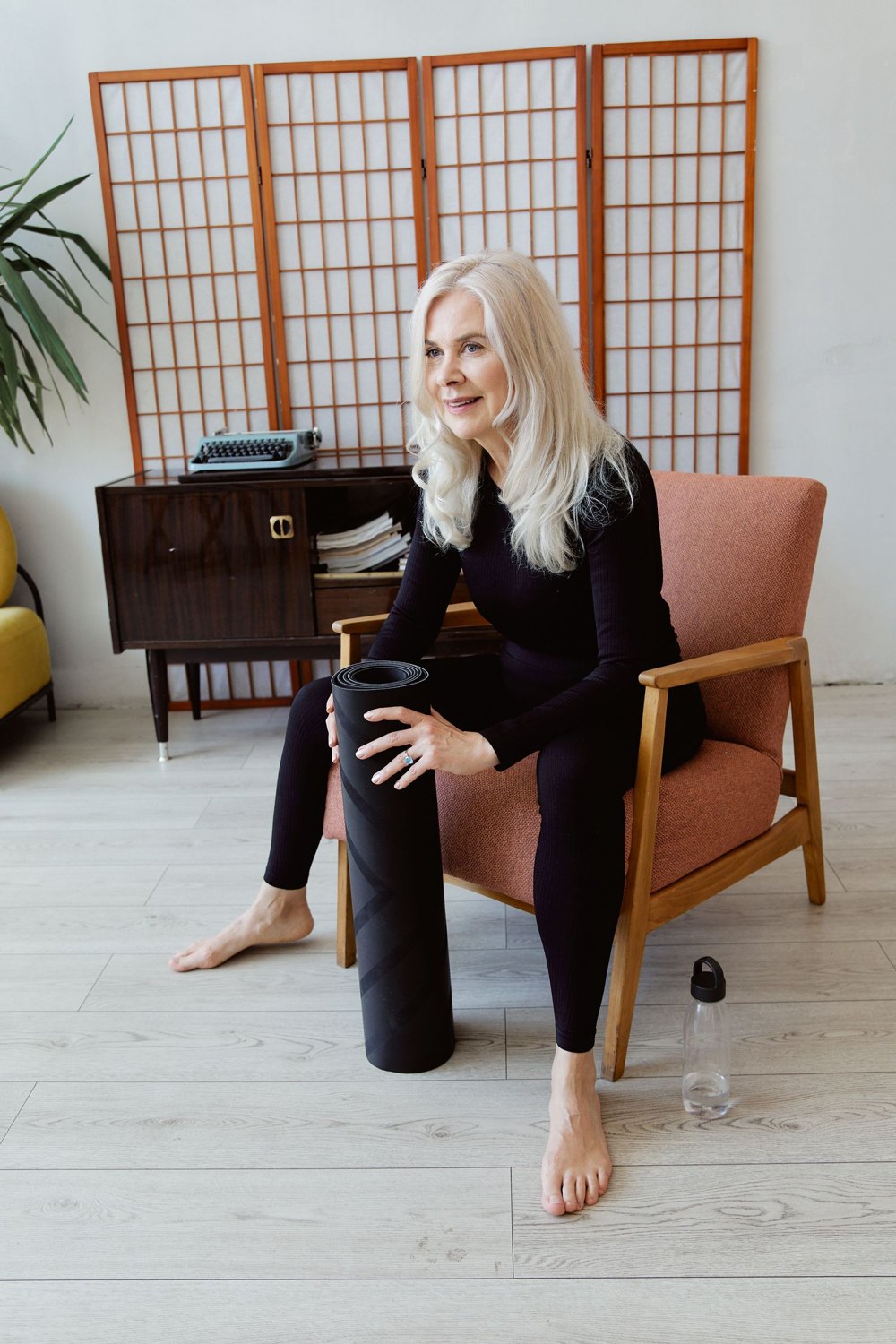
A chair that rolls away is useful at a desk and unhelpful for a sit-to-stand exercise. Choose a solid seat without wheels, place it on a nonslip surface and check that it cannot tip or slide as you move. Stability comes before repetition count.
Select a height that lets your feet rest securely on the floor and makes standing manageable. A very low, soft sofa changes the task substantially. If an appropriate seat is not available, do not improvise a stack of loose cushions to reach a height; use a different setup or get guidance.
Rehearse one stand
Sit near the front of the seat without perching precariously on its edge. Arrange the feet comfortably beneath you, lean forward enough to bring your weight over them and stand in a controlled way. Pause until balanced, then lower deliberately back to the seat.
The NHS uses sit-to-stand as an accessible strength exercise. Its basic pattern is familiar, but an individual's ability to perform it varies. If you need your hands for support, use a stable arrangement and seek advice about a suitable version rather than forcing an unsupported attempt.
Avoid dropping onto the chair at the end. The lowering part is part of the practice, not a gap between repetitions. If it becomes a collapse, stop the set or use an easier arrangement. Likewise, a large rocking motion may indicate that the chosen height or amount of work is not manageable today.
Keep the area in front of the feet clear so you have room to regain balance. Do not place a mat edge, bag or loose weight in the first step you would take after standing.
Use a modest amount of practice
A few deliberate repetitions can provide useful information about the setup. You do not need to continue until standing becomes difficult. Rest before another attempt if needed, and avoid rushing because the movement seems ordinary.
Pain, dizziness, a recent fall or difficulty with everyday transfers may require individual professional guidance. General instructions cannot account for those circumstances.
If you repeat the exercise, use the same chair or record the seat height. A lower chair makes the task different even if the repetition count stays the same. Once you have a stable, comfortable setup, it becomes easier to notice the movement itself and to choose any later progression deliberately.