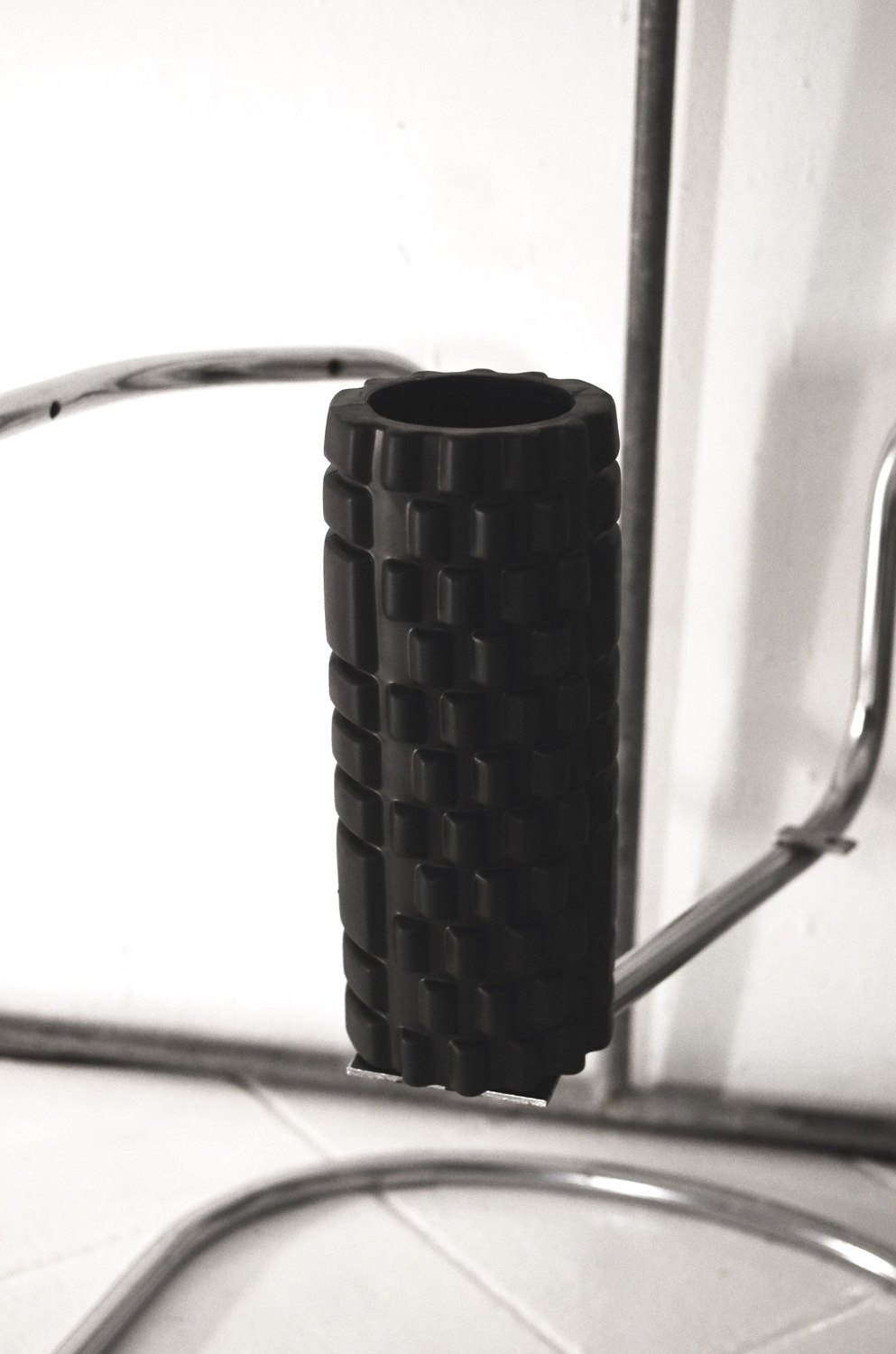
The harder roller is not automatically the better roller. Nor does pressing more body weight into a small ball prove that tissue is being improved. A mobility tool is useful only if it suits the task and can be used comfortably and appropriately.
Start by deciding what you expect the tool to do. It might provide a support, offer a reference for movement or create gentle pressure on a muscle. Claims about breaking up scar tissue, putting joints back in place or permanently releasing fascia should not be treated as obvious results of a household exercise session.
Keep the setup easy to leave
If using a roller or ball, choose a position in which you can control the pressure and move away without a struggle. Do not trap yourself between a hard object and the floor. A softer tool or a standing arrangement against a suitable surface may be easier to control, but the appropriate option depends on the body area and your circumstances.
Avoid rolling directly over joints, bony points, the front of the neck, an acute injury or an area with unexplained pain or swelling. People with relevant health conditions, altered sensation, circulatory problems or recent surgery should ask a treating professional before using pressure-based tools. More pressure is not a substitute for that advice.
A tool should not produce sharp pain, numbness, tingling or bruising that you interpret as a necessary stage of progress. Stop when a sensation is concerning. The ability to tolerate discomfort is not the outcome you are trying to train.
Compare with the simple option
Before buying another device, try an ordinary comfortable movement or a brief walk. If that serves the purpose, a tool may add little. Some people enjoy a gentle roller routine, but enjoyment and temporary comfort do not require grand claims about what is happening inside the tissue.
Keep any session brief enough to remain deliberate, and follow the product's instructions. Clean shared equipment and inspect it for damage. A cracked support or a ball that rolls unpredictably can turn an easy task into a balance problem.
If you repeatedly need a tool to make a painful movement tolerable, seek an assessment instead of adding more pressure or more devices. For general activity, mobility tools are optional aids. They should make the routine more accessible or comfortable, not create another uncomfortable hurdle before you feel entitled to move.