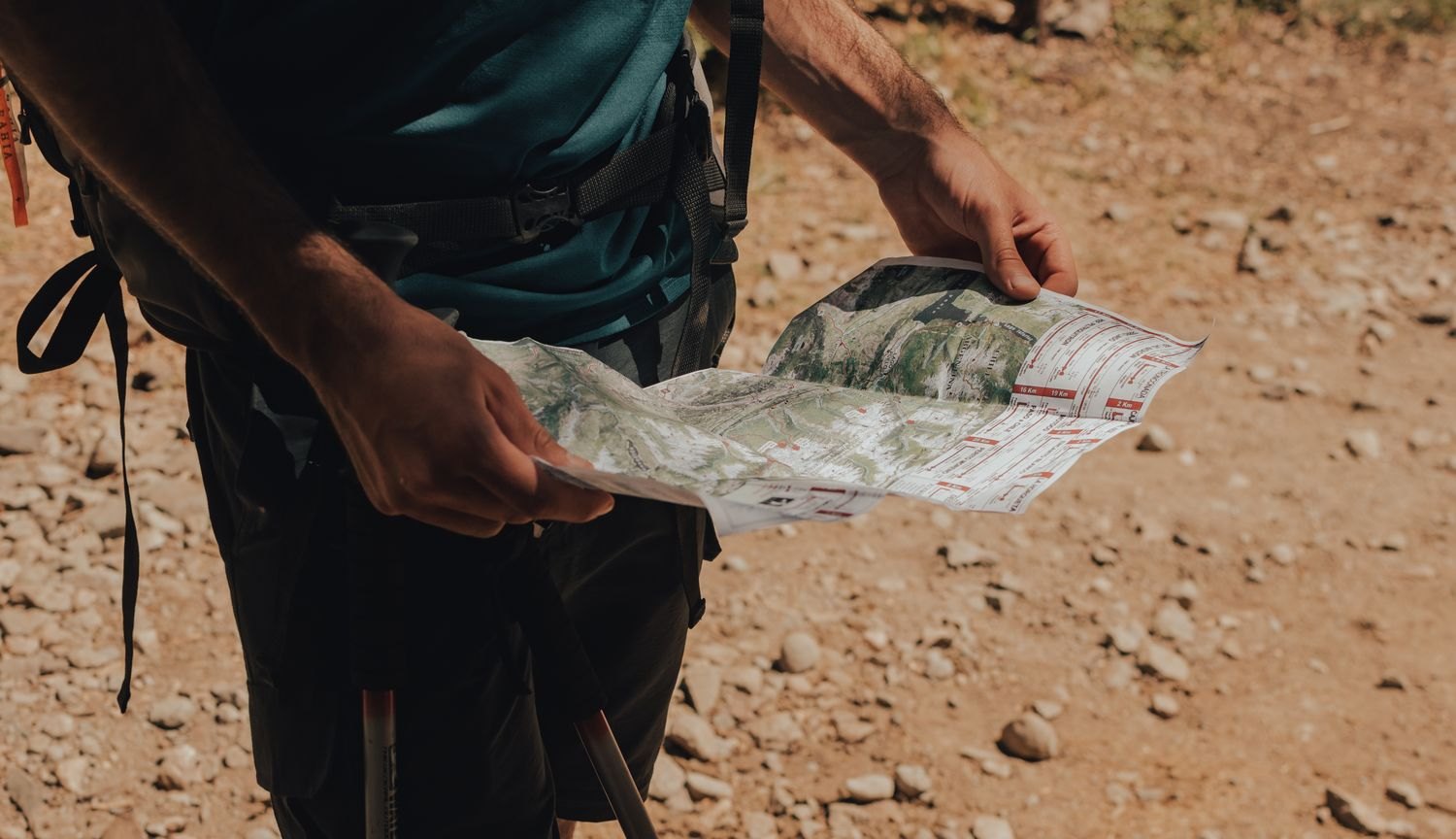
The first number in a trail description is usually distance. Read it, then keep going. A route can be short and steep, short and confusing, or short with one difficult crossing. The details after the mileage often explain more about the day you are planning.
First establish whether the distance is one-way, round-trip, or a loop. Then check the start location. Some trails have several access points, and a description may begin at a different parking area from the one your navigation app selects. Match the trailhead name, map, and road access before calculating the outing.
Translate descriptive words into questions
Terms such as moderate, rugged, and family-friendly are not consistent measurements. Look for more concrete information: steps, steep grades, rock scrambling, narrow sections, or an unbridged stream. If the listing is unclear, contact the land manager with those questions. A route intended for experienced hikers can sound deceptively casual in a short caption.
Check the description’s date and the source of updates. An old personal report may be interesting, but current official closure information should determine whether you use a trail. Seasonal access, storm damage, and maintenance can change the route. A path being visible on a map does not prove that it is open today.
Facilities matter when they affect your plan. If you are relying on drinking water, a restroom, or a shuttle, verify availability and hours. Treat a seasonal facility as uncertain until confirmed. A photo of a drinking fountain is not evidence that it currently works.
Read the elevation profile alongside the map if one is supplied. Note where the climb occurs and whether the return includes a long descent or an uphill finish. Look for possible shorter options, but confirm that they are legitimate routes. Do not assume that an unmarked connecting line is a maintained shortcut.
Finally, write your own short version of the description: where you start, the main demands, the expected finish, and the reason you would turn back. If you cannot explain those pieces without rereading the advertisement, you may need more information. The goal is not to memorize every detail. It is to understand the parts that could change your decision once you arrive.