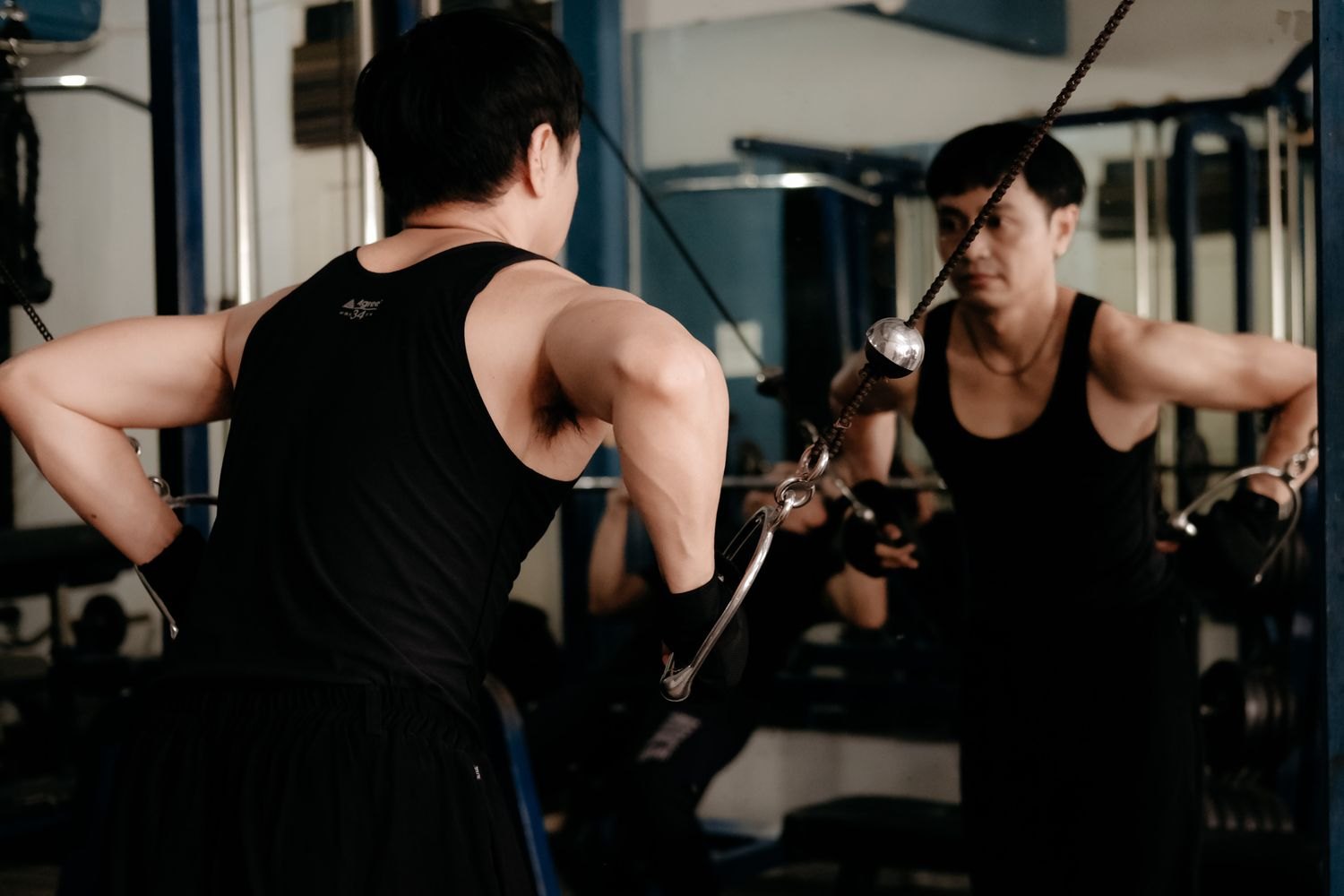
The mirror is beside the bench, so you turn your head to check the row. Now your neck and torso are doing something different from the movement you intended to observe. Visual feedback has become another task to manage under load.
Use the mirror before the set where possible. Check your general stance, the position of a support and whether the equipment is arranged as intended. Then face a direction that lets you perform the exercise comfortably. You do not have to keep watching your reflection throughout every repetition.
Choose the view that answers the question
A front view may show uneven hand placement but reveal little about the depth of a squat. A side view may clarify the weight's path while hiding the far foot. No single reflection supplies a complete assessment, and small visual differences are not automatically problems.
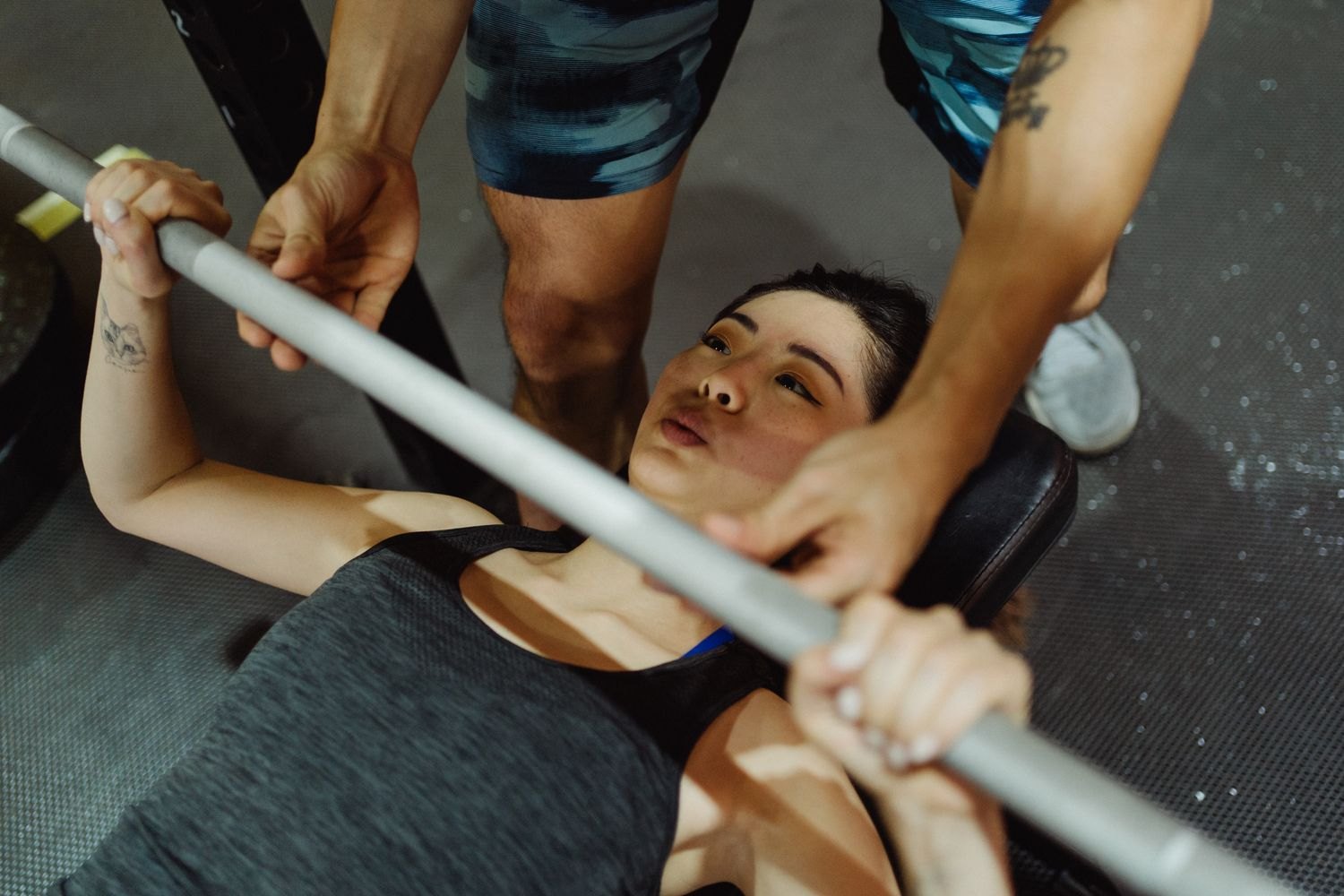
If you need feedback during movement, use an unloaded rehearsal or a light set under appropriate instruction. A trainer can observe from a useful angle without asking you to turn your head to find them. Agree on one feature to review rather than trying to inspect everything at once.
Video can be useful after the weight is down, provided the facility allows it and other people's privacy is respected. Place the phone where it will not become a trip hazard or obstruct equipment. A low camera at a strange angle can distort proportions, so avoid making confident conclusions from one clip.
The mirror also cannot tell you whether a movement hurts, how secure your grip feels or whether a machine pad presses uncomfortably. Combine what you see with what you experience, and ask for help when the information conflicts.
Try an occasional light rehearsal without visual feedback once you understand the exercise. Can you recognize the intended stance and movement? That is useful because not every gym, room or training position offers a mirror. You should not feel unable to move simply because the reflection is absent.
If checking the mirror repeatedly makes you lose concentration or encourages comparison with other people, use it less. Its role is limited: provide information that helps the exercise. A clear setup note or a brief observation from a qualified instructor may solve the issue more directly than watching yourself from an awkward angle throughout the set.