New walking poles add two more points of contact, but also two more objects to coordinate. The first outing should be a chance to learn their rhythm. A familiar, spacious path is a better classroom than a steep, crowded descent.
Set the poles according to their instructions. A common starting point on level ground is an elbow bend near a right angle when the tip is beside your foot. Check the locking mechanism and stay within the marked adjustment range. If a section slips, stop using the pole until the fault is resolved; do not compensate by gripping harder.
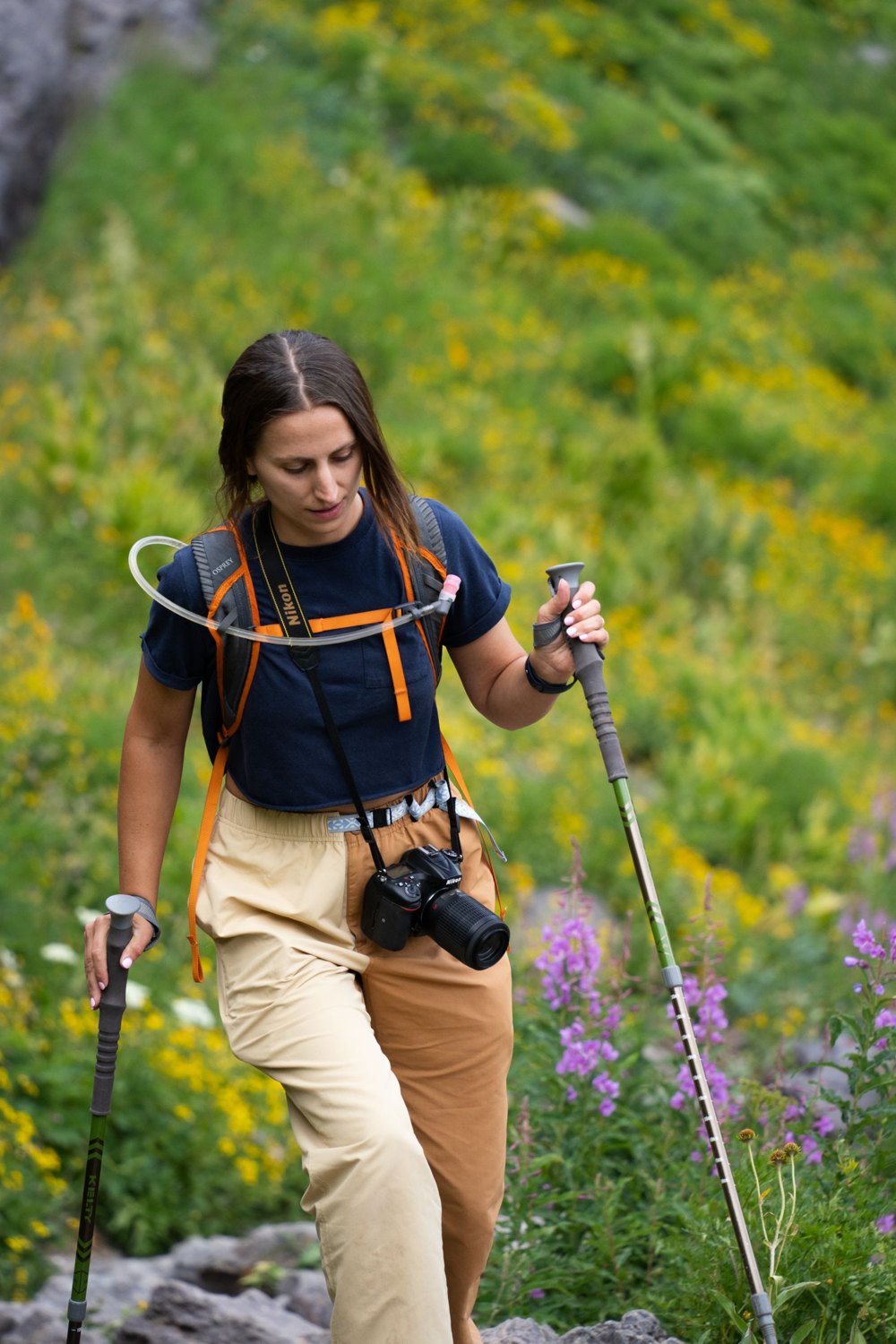
Begin with ordinary walking and let the arms move naturally. Keep the tips where you can place them deliberately, away from your feet and other walkers. Avoid reaching far ahead and leaning your weight onto a pole that has not found secure ground. Poles assist movement; they are not a guarantee against falling.
The ground determines the next plant
Look for a stable place for the tip. Smooth wet rock, gaps between stones, and loose edges can cause it to slip or catch. If a tip becomes trapped, stop rather than twisting through the step. Follow the manufacturer’s guidance for straps and release arrangements, especially where a fall or snag is possible.
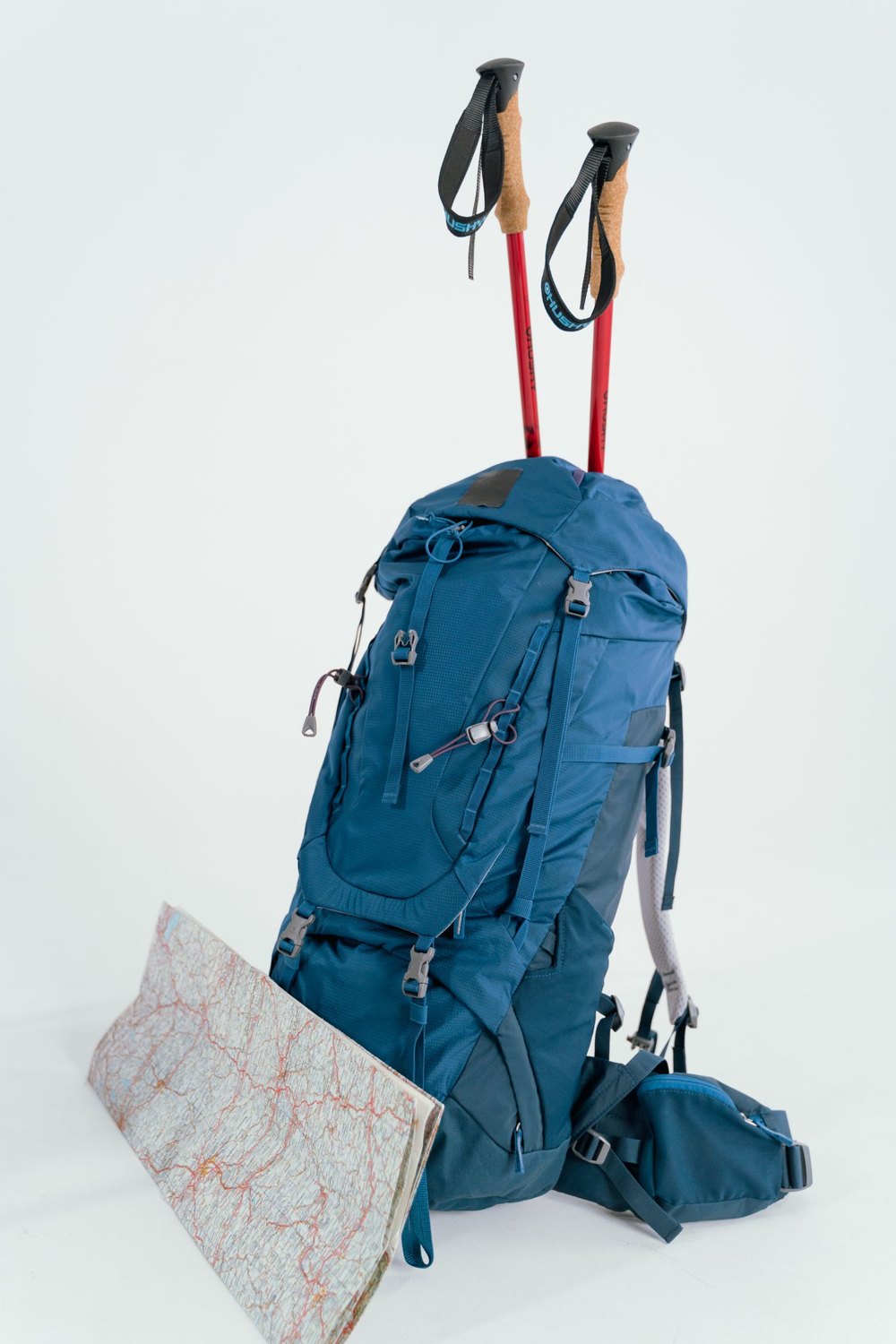
Practice stopping and turning as well as walking straight. Keep the points down and under control when someone passes. When carrying unused poles, avoid swinging exposed tips behind you. Collapse and secure them to the pack when they are more awkward than helpful, using the pack’s intended attachments.
On a descent, slow down enough to choose both foot and pole placement. Any length adjustment should be made while stationary in a suitable place, then checked before continuing. REI’s pole guidance discusses adapting length to terrain, but the appropriate setting also depends on the pole and your comfortable position.
Do not buy trekking poles as a substitute for a prescribed walking aid. If balance problems affect everyday walking, seek individualized advice about suitable support. For recreational trail use, the useful first milestone is modest: you can place, stop, turn, and stow the poles without them taking all your attention. Difficult terrain can wait until that coordination feels familiar.