A luggage scale is designed to measure a suspended load within its specified use. It is not designed to prove that exercise equipment can safely support a person or withstand repeated movement. A number appearing on the display does not establish the strength of the whole setup.
Exercise can involve changing forces, direction, movement, wear, and connections that are not represented by one static pull. The scale itself may also be used outside its intended orientation or range. Combining a measured number with a guess about a doorway or strap does not create a reliable safety margin.
Use the equipment’s documented limits
For a bench, rack, anchor, or suspension product, consult the exact manufacturer’s instructions and rated uses. Check what the load rating includes and what installation conditions apply. The strongest component does not determine the strength of every connected part. A suitable strap attached to an unsuitable structure is still an unsuitable setup.
Do not perform a home proof test by hanging, bouncing, or pulling harder until something seems convincing. Failure during the test can cause injury, and surviving it does not demonstrate long-term suitability. Avoid using a person as the test load or standing where a failed component could recoil.
If the instructions require a particular installation or professional assessment, follow that requirement. If the underlying structure is uncertain, choose an exercise that does not depend on it. A clear floor-based movement can be a better session choice than spending the afternoon improvising ways to qualify an unknown anchor.
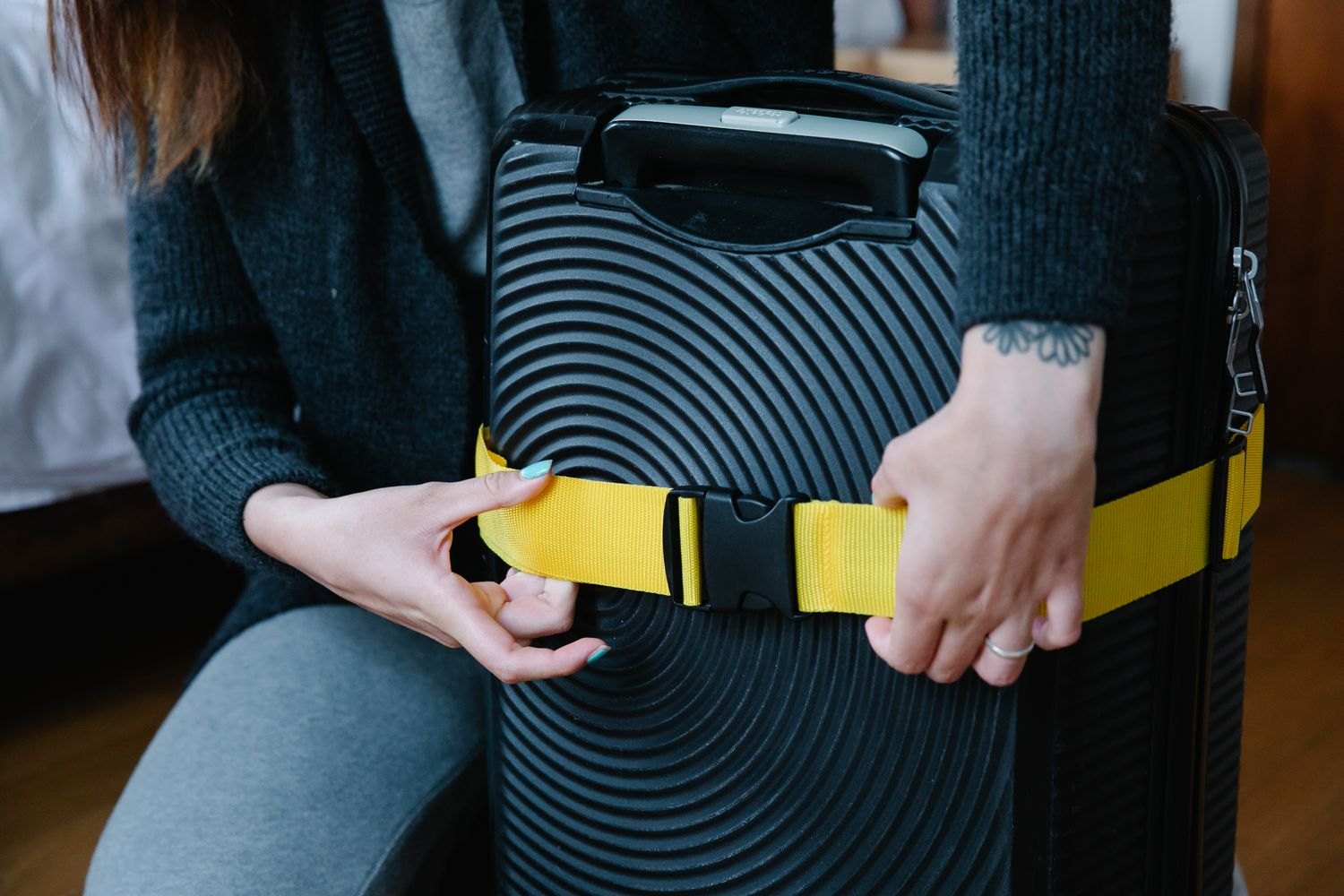
A scale can still have ordinary uses within its design, such as checking the weight of luggage or a packed bag. Keep that measurement separate from any judgment about exercise equipment. Knowing what something weighs is not the same as knowing what can safely hold it.
When buying equipment, look for an identifiable manufacturer, complete instructions, compatible parts, and a clear intended use. If those are absent, a personal load experiment cannot replace them. Ask the supplier for the missing information or select another product.
The useful boundary is simple: household measurement can inform packing, but safety-critical capacity comes from appropriate design, installation, inspection, and documented use. A convenient number on a small screen should not persuade you to trust a structure that remains unknown.