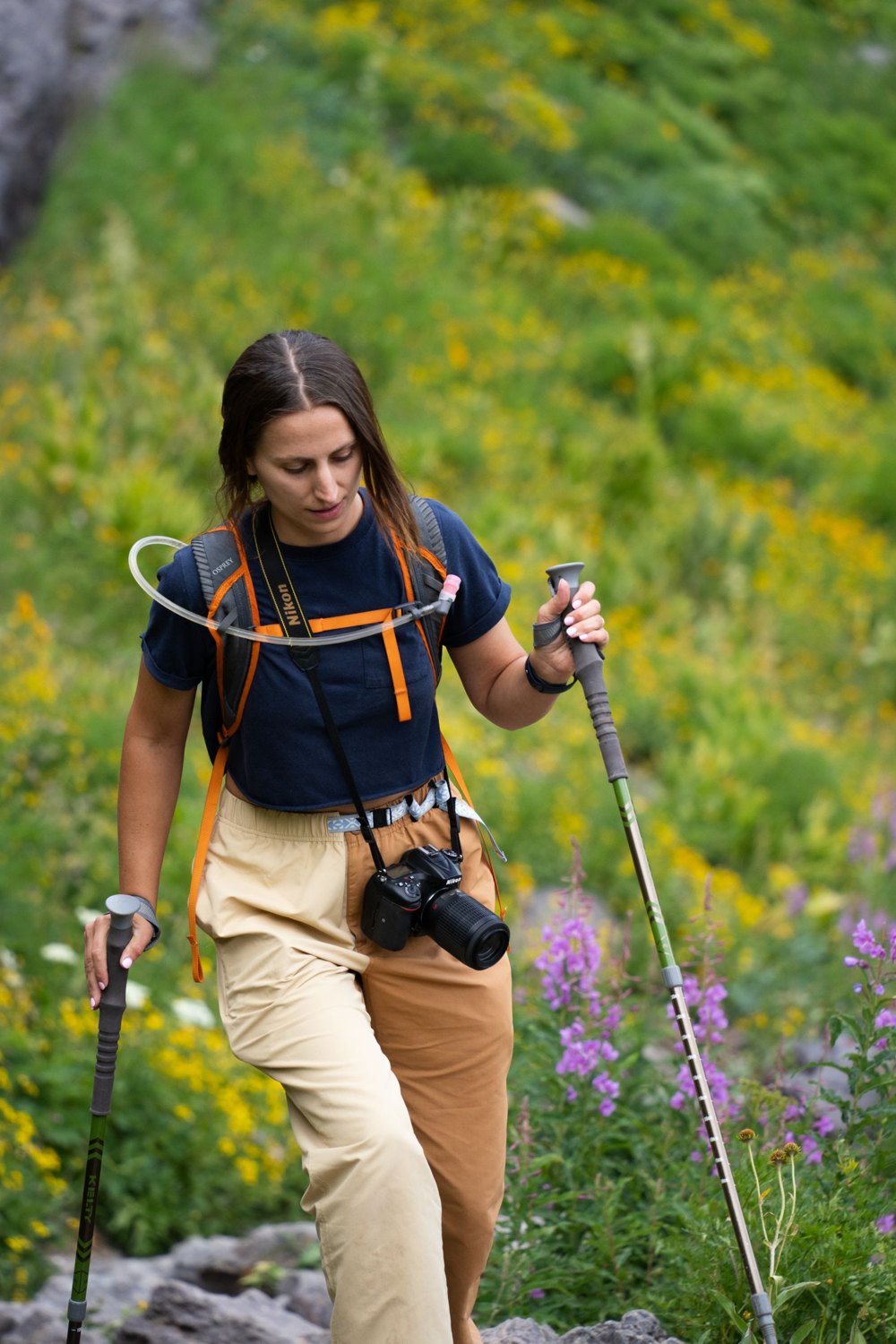
A full bottle at the bottom of a pack is easy to forget until you are ready for a long break. Moving it to a usable place can make an ordinary walk less awkward. Accessibility does not mean drinking while negotiating uneven ground; it means making a safe stop simple enough that you do not keep postponing it.
Try the arrangement with the bag loaded. Some side pockets look convenient but sit too far behind your shoulder to reach comfortably. If retrieving the bottle makes you twist or lose balance, take the pack off. There is no benefit in performing a flexibility test on a narrow path.
Bottles and reservoirs solve different problems
A bottle lets you see what remains and is usually straightforward to refill. Check whether the lid stays secure and whether the pocket holds it when you lean forward. A loose container can fall out at the moment you step over an obstacle. A pocket should retain the bottle without making it impossible to remove.
A hydration reservoir can put a drinking tube near your shoulder. Before leaving, confirm the connection, valve, and closure are secure. Route the hose so it does not drag or catch. Because the reservoir is hidden, check the remaining supply deliberately rather than assuming a working tube means there is plenty left.
Neither design decides how much water you need. Duration, temperature, effort, and individual circumstances affect planning. Check reliable local guidance for the route and carry enough for the conditions and foreseeable delay. Do not reduce the supply simply to fit a favorite pocket. Where a personal medical condition affects fluid intake, follow individualized advice rather than a general hiking rule.
Keep a backup plan for a leaking container or unavailable refill. On a remote outing, that may influence the number of containers, the route, or whether you go at all. Do not treat clear-looking natural water as automatically drinkable.
At home, empty and clean the container according to its instructions, including the lid, valve, or tube. Let the parts dry before storage. The next walk should begin with a clean system and a known supply, not a quick top-up of whatever remained in the bag. Convenient access is useful only when the whole arrangement is dependable.