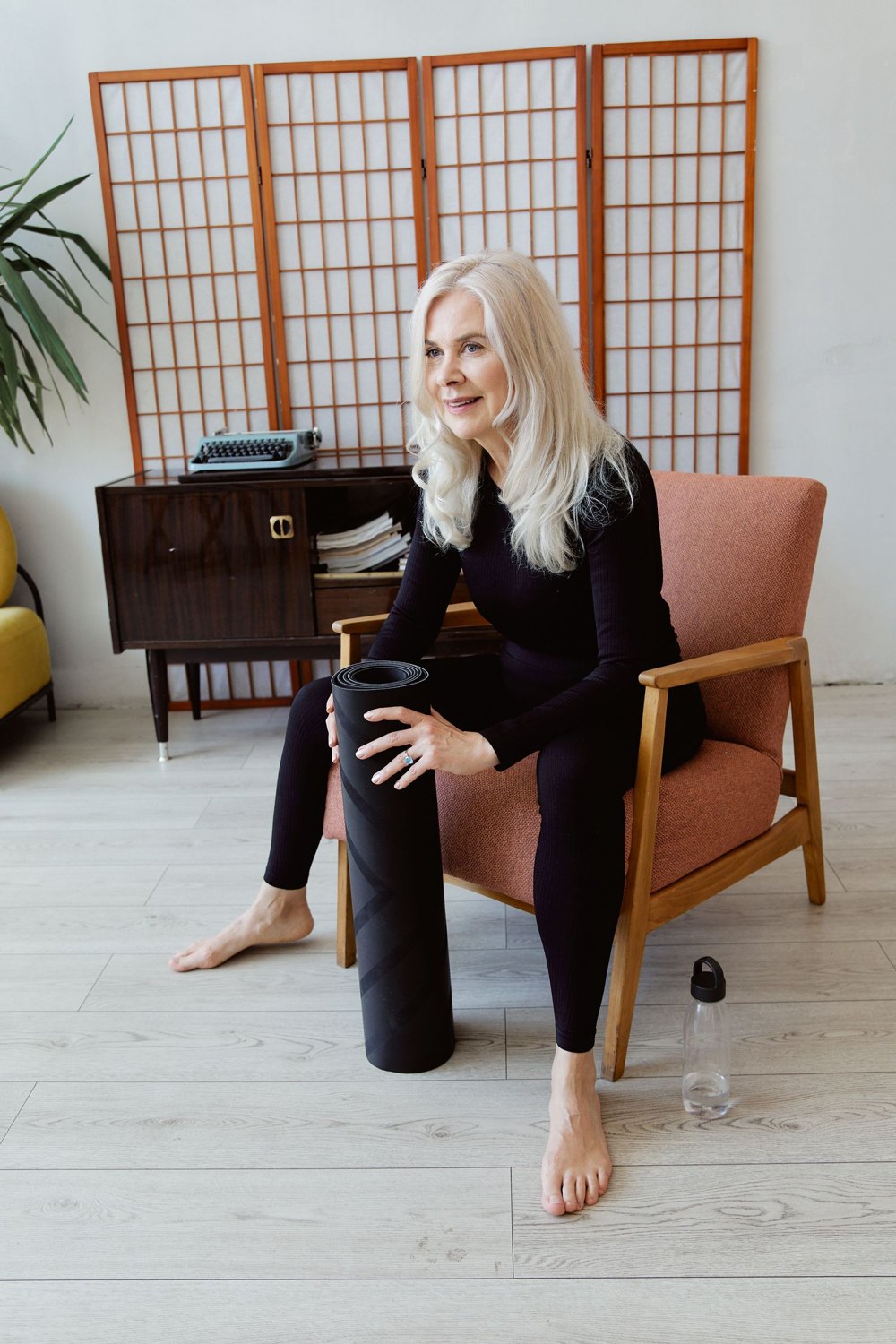
Touching your toes is a familiar image of taking a stretch break, but it is only one movement and it may not be comfortable or useful in your workspace. A break does not need a dramatic bend to interrupt a long period at the desk.
Start with the simplest available change. Stand if that is comfortable, walk to another room or shift into a different supported seated position. Let the shoulders and hands move naturally after keyboard work. None of these choices needs to be measured against how far another person can reach.
Make use of the room
A short trip to refill water creates a reason to leave the chair. A phone call that does not require looking at a screen may allow a little standing or walking in a safe space. If the call needs concentration or confidential notes, take the movement break before or afterward instead.
Seated options can be useful too. On a stable chair, gently lift and lower a heel or move an arm through a comfortable range. Avoid using a swiveling office chair as balance support for a standing stretch. What is convenient for work is not always dependable exercise equipment.
Do not pull hard at the neck or force the shoulders backward to undo sitting. A work break is not a treatment session, and there is no single posture that must be held perfectly for the rest of the day. Persistent discomfort calls for attention to the workstation, workload and individual health factors rather than an increasingly aggressive stretch.
If you want a reminder, attach it to a task transition. Before opening the next document, take a brief pause away from the screen. After a meeting, walk a little before sitting again. A reminder every few minutes can become easy to dismiss if it ignores the work you actually do.
Keep the activity modest enough to fit the gap. A short break can remain short; it does not need to satisfy the purpose of a full exercise session. You can still plan walking and strength work elsewhere in the week.
The useful question is whether the break is accessible and repeatable. If toe-touching feels awkward, crowded or unappealing, leave it out. Changing position and moving comfortably offer plenty of other ways to stop the desk from determining the shape of the entire day.