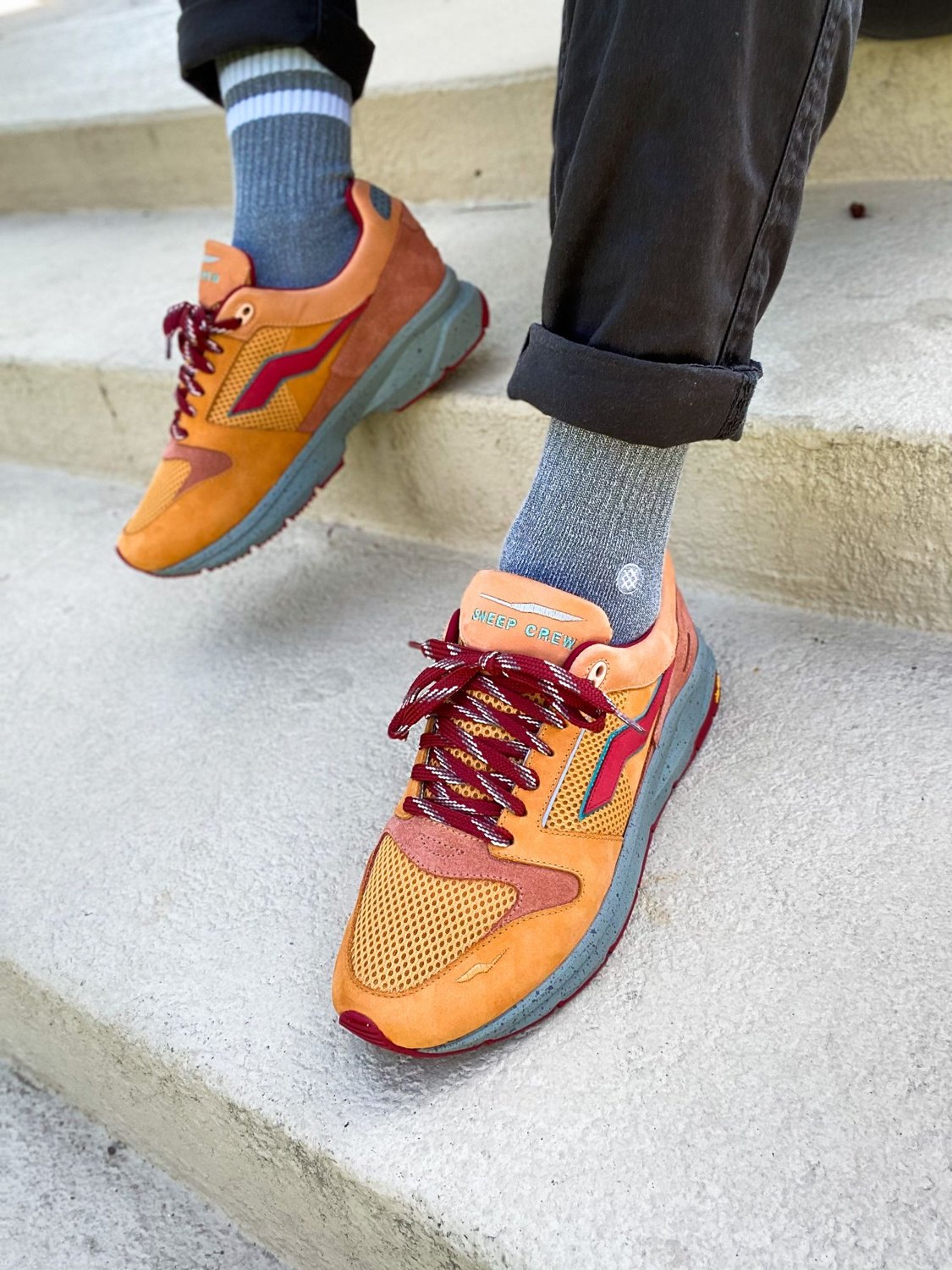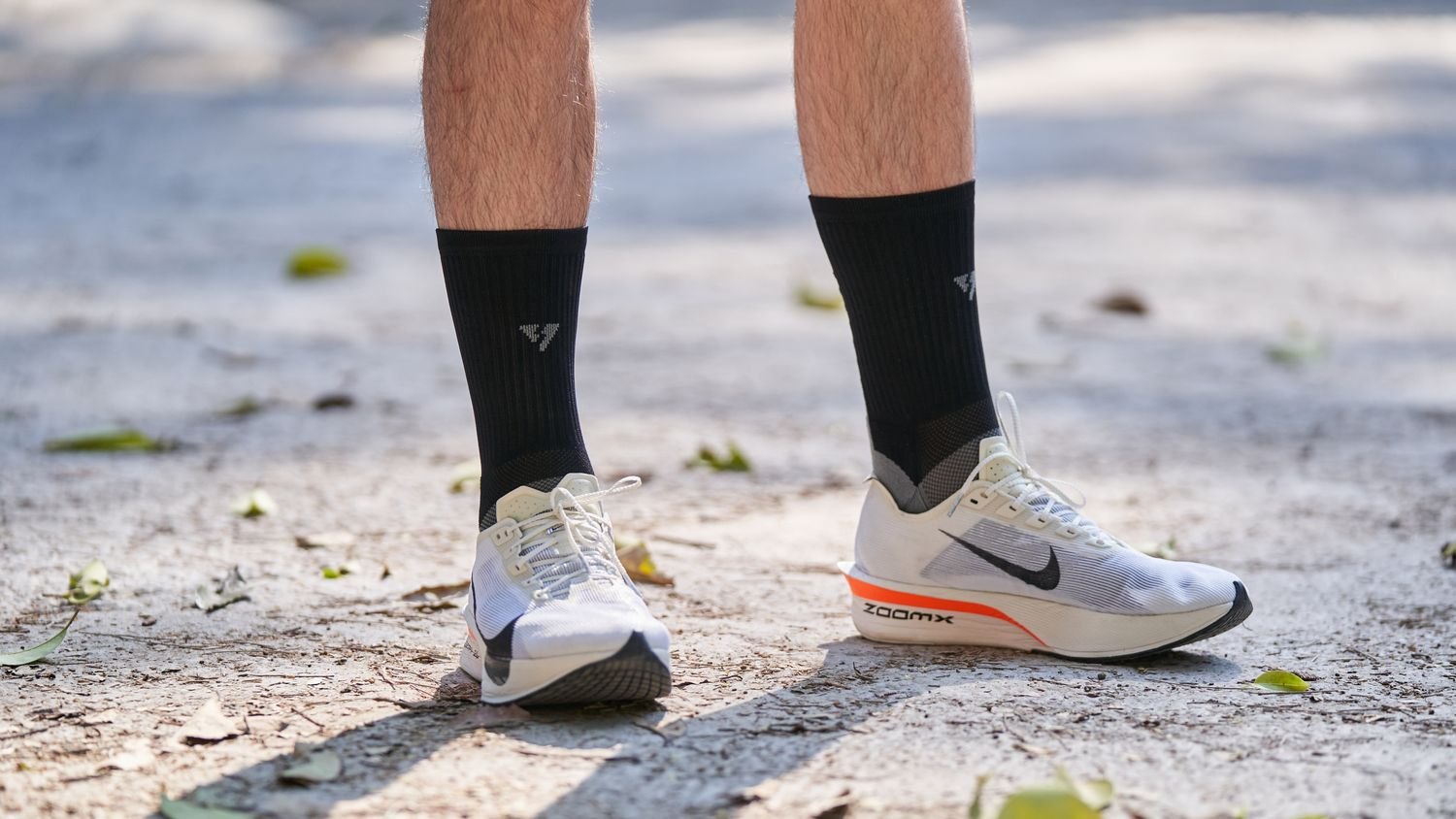
Trying a training shoe over a thin dress sock tells you how it fits a thin dress sock. If you normally exercise in a cushioned athletic pair, bring those instead. The combination changes the space around your heel, toes, and instep, so it belongs in the decision from the start.
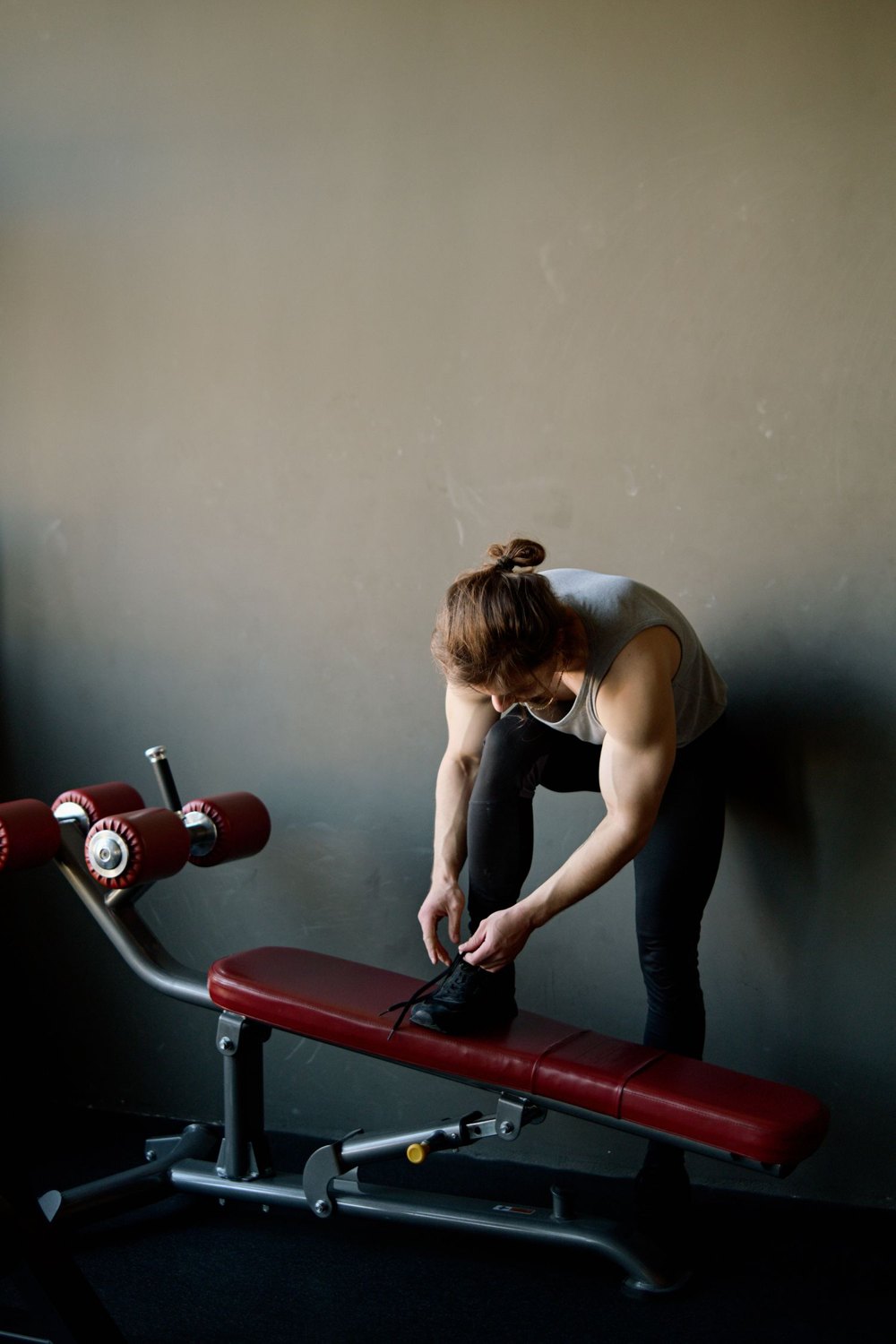
Try both shoes. Feet do not always match exactly, and a comfortable right shoe does not confirm the left one. Lace them as you normally would, then stand and walk rather than judging the fit while seated. Check that your toes can move without the whole foot sliding forward.
Use the movements you actually do
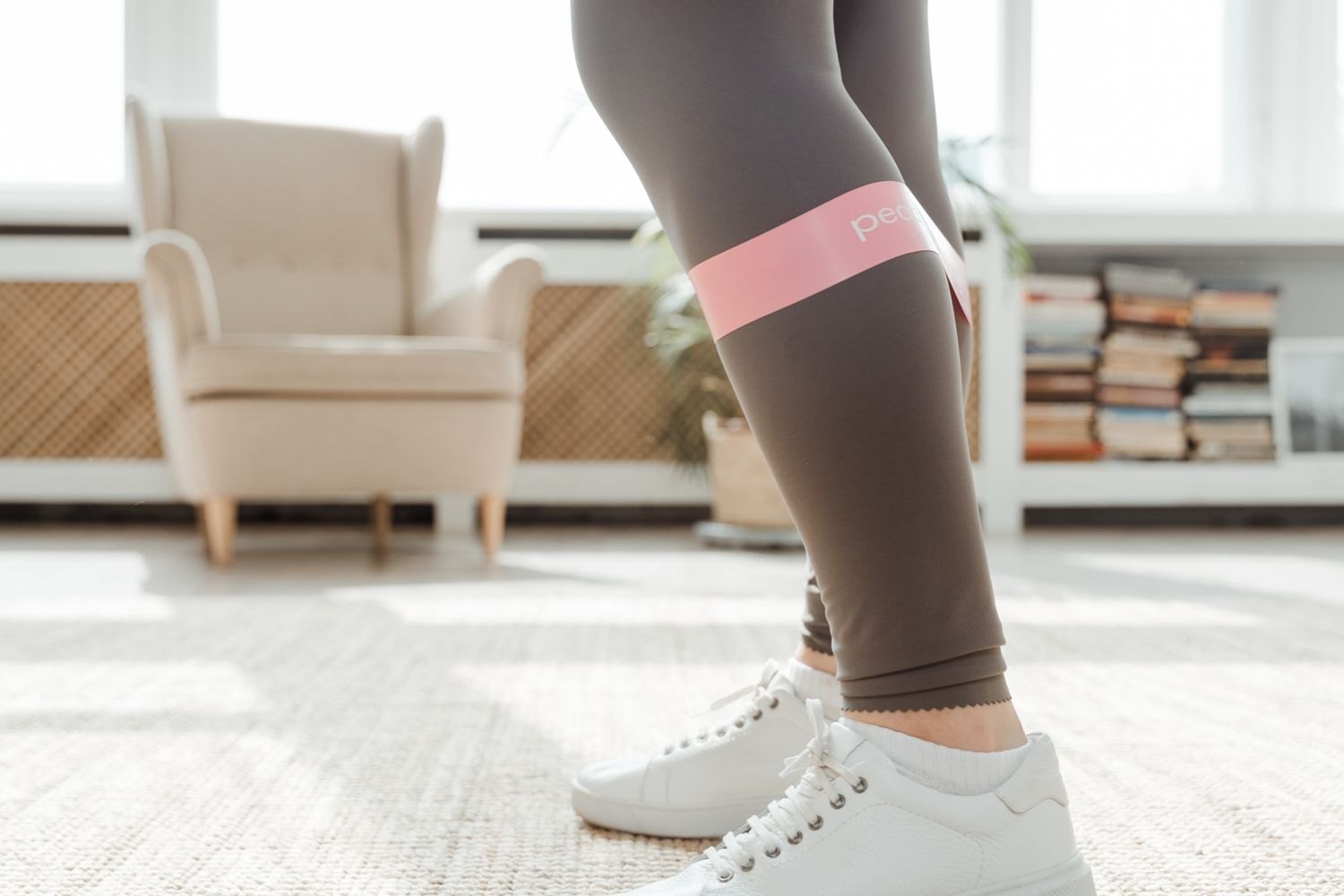
Within the store’s rules, try a few gentle movements representative of your session: a bodyweight squat, a controlled step, or a small change of direction. You are checking comfort and whether the foot feels held, not performing a workout. A shoe that feels pleasant while walking straight may feel different when you bend or move sideways.
Notice where the upper creases. Pressure from a seam or tongue is unlikely to become more pleasant simply because the color is right. A little adjustment to the laces may help, but lacing cannot turn the wrong shape into the right one. Avoid buying a visibly tight shoe on the assumption that it will stretch enough later.
Bring any prescribed or routinely used insert and ask how it should fit with the shoe’s removable insole. Do not stack layers casually if doing so crowds the foot or lifts the heel out of position. If an orthotic was fitted for a particular purpose, use the advice that came with it.
The first indoor trial at home should stay within the seller’s return conditions. Wear the intended socks and spend enough time standing and moving to notice obvious pressure. Keep packaging and avoid taking the shoe outdoors until you understand the policy. A generous return period is useful only if you preserve the required condition.
Record what worked, not just the size. You may need a different width, more toe room, or a heel that holds more securely. Sizes vary between models, so those observations are more portable than a single number. The aim is a shoe that disappears into the session because it fits the task and your feet, rather than one that repeatedly asks to be adjusted.